
Museum: Canoe House, Bill Read Teaching Centre, Carving Shed

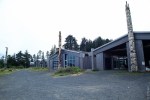
Carving Shed nearest, Canoe House next
More pictures today from the Haida Heritage Centre, continuing to the north of yesterday’s post. The first house is both Skaajang Naay and Yahl Skwansing Naay – the Canoe House and the Bill Read Teaching Centre. The second house is called Hyaa K’id Naay or the Canoe Shed – it is also spelled elsewhere on the Centre’s website as Gyaa K’id Naay and translated as the Carving House.
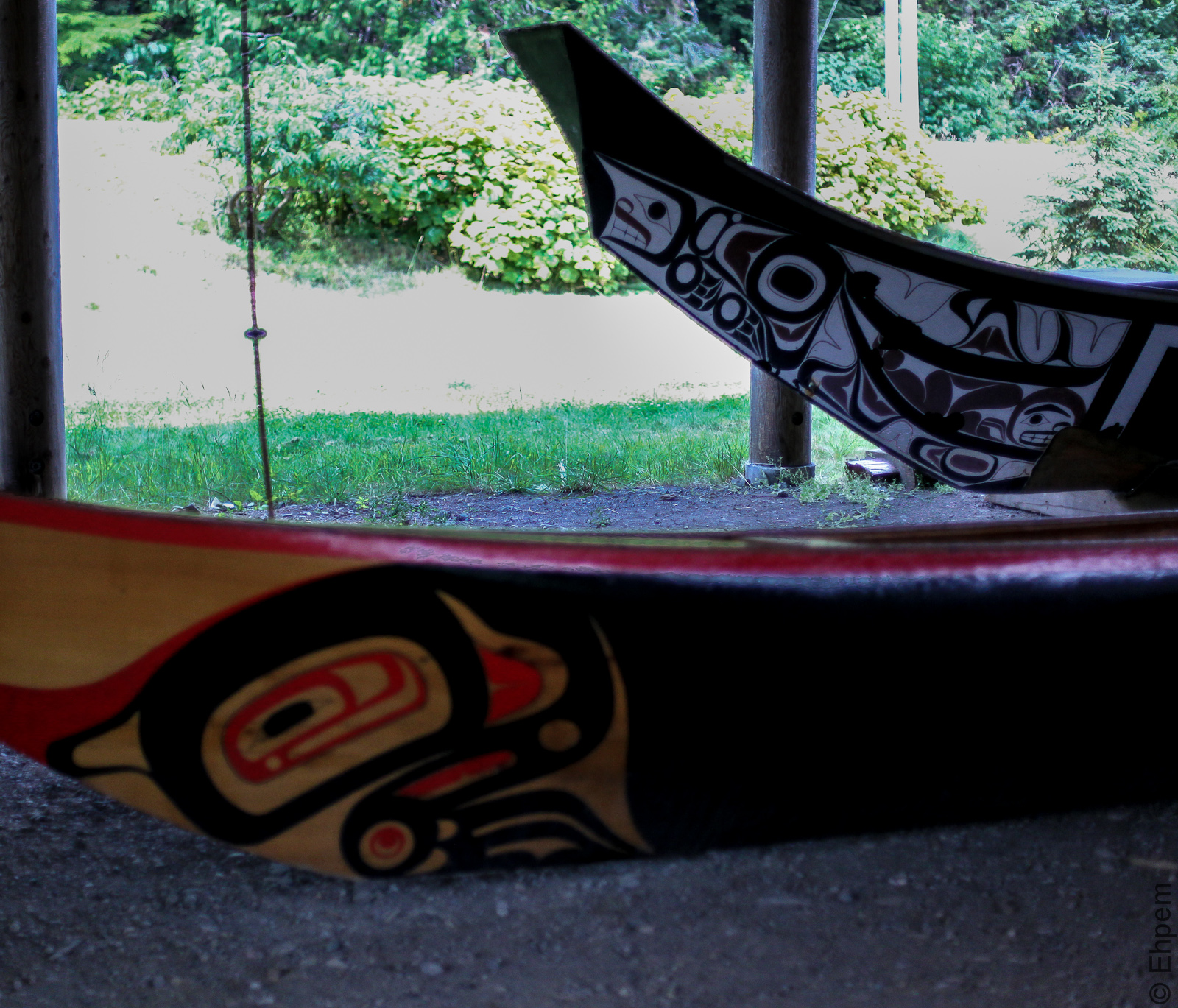
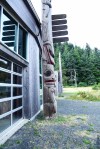
The Canoe House serves as an education centre about Haida canoes, but sadly was closed on the day of our visit. The Teaching Centre is in the same component of the Centre and acts as a studio and classroom for Haida carvers and designers, as well a location that accredited fine arts courses are taught. It too was closed when we visited, though I did find a gap to peek through (as I have shown a habit of doing) and have one photo from that intrusion. The Canoe House and Teaching Centre appear as one building from the outside, with a pole in front like the others.
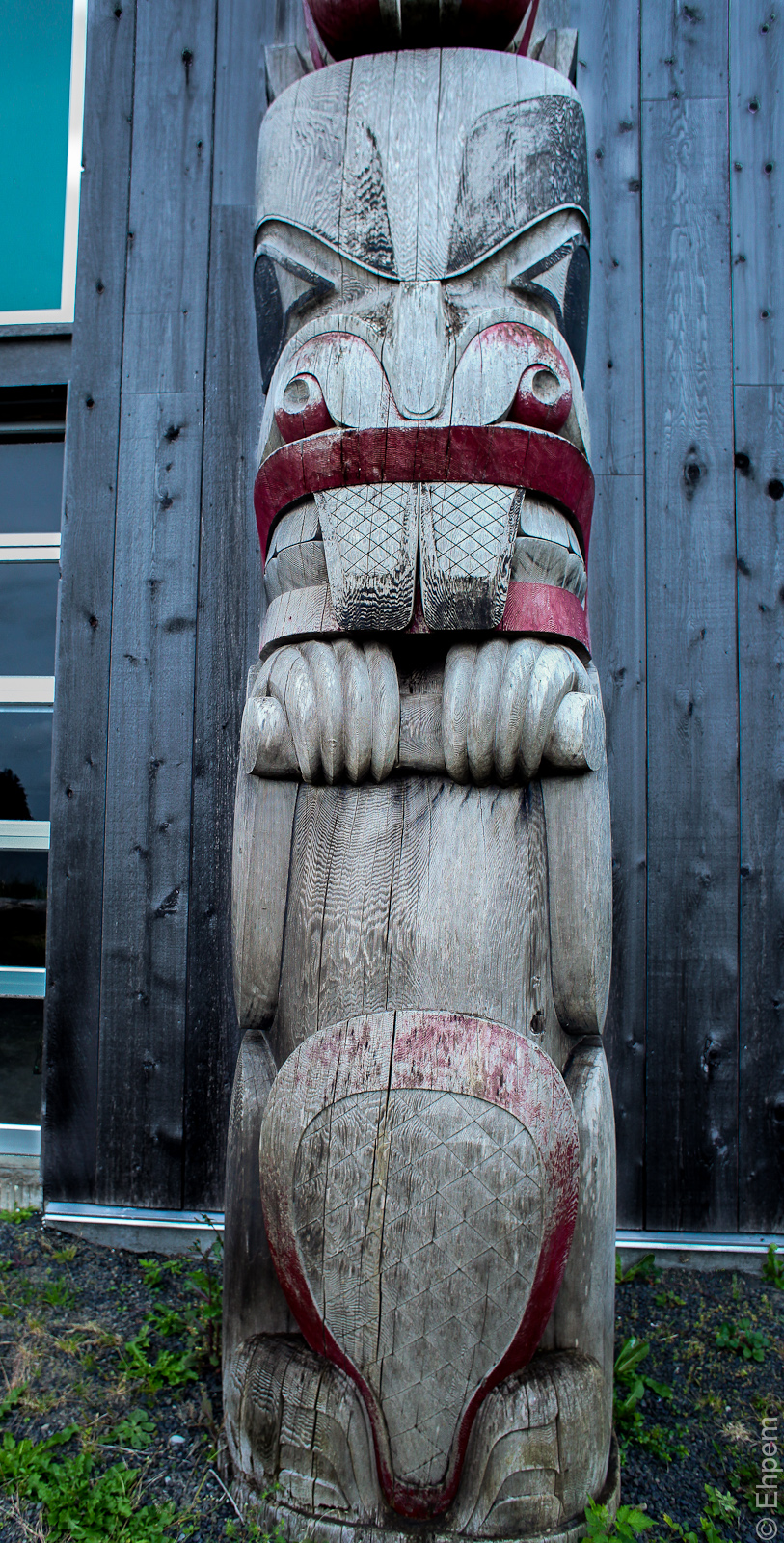
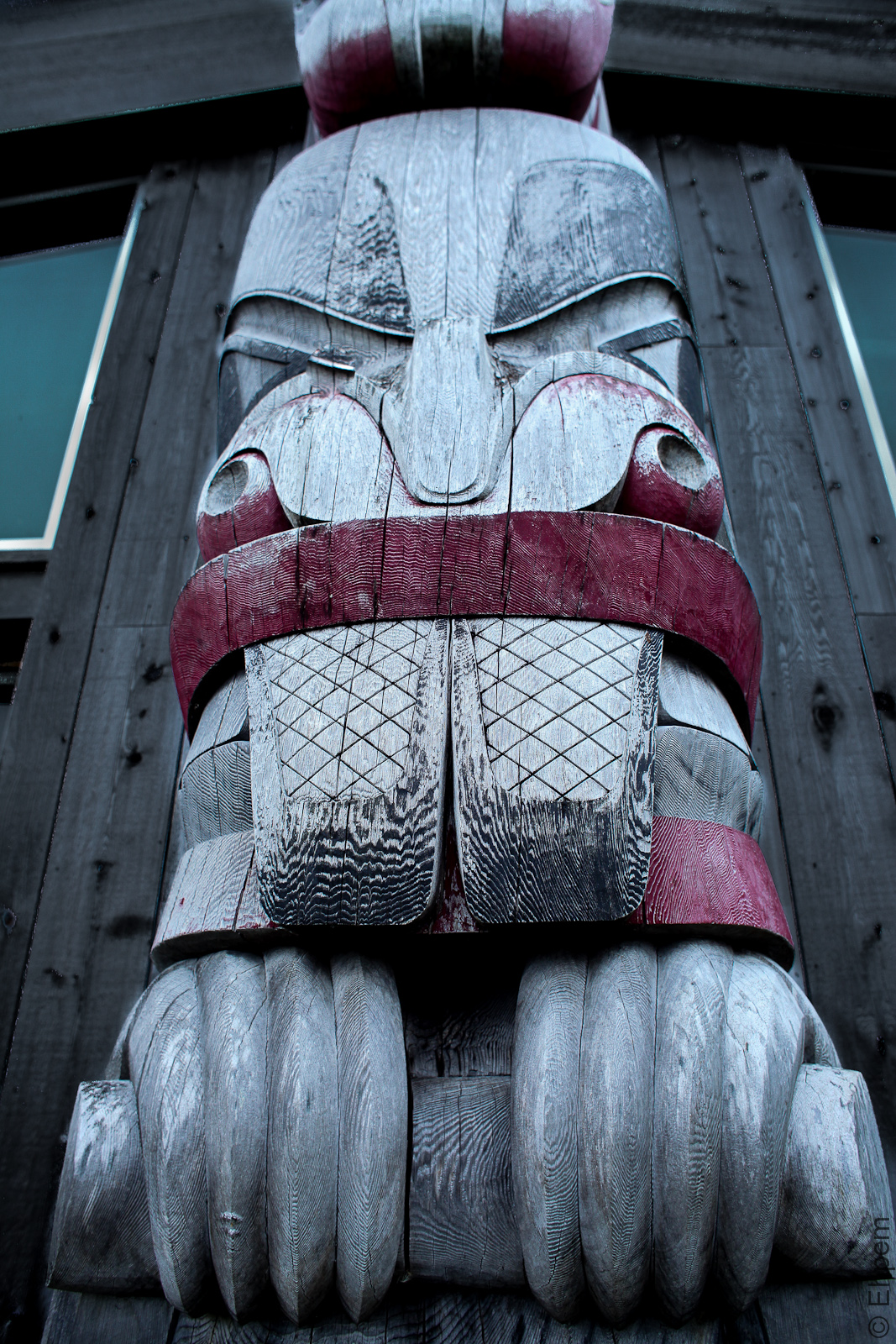
Beaver
.
The pole in front of the Canoe House represents the village of Ts’aahl Llnagaay widely known as Chaatl which is on the west coast of Haida Gwaii off the north corner of Moresby Island. Below is the information from the Haida Heritage Centre website, which for me does not display properly using either of two different browsers, so I am including it here with my pictures of the pole so you can see the figures and their descriptions in one place:
Location: Skaajang Naay – Canoe House and Yahl Skwansing Naay/Bill Reid Teaching Centre
Carver: Garner Moody (Stl’inll/Stl’inlas)
Clan: Gaagyals KiiGawaay of Skedans
Assistants: Billy Bellis & Tony Greene
The figures from bottom to top:
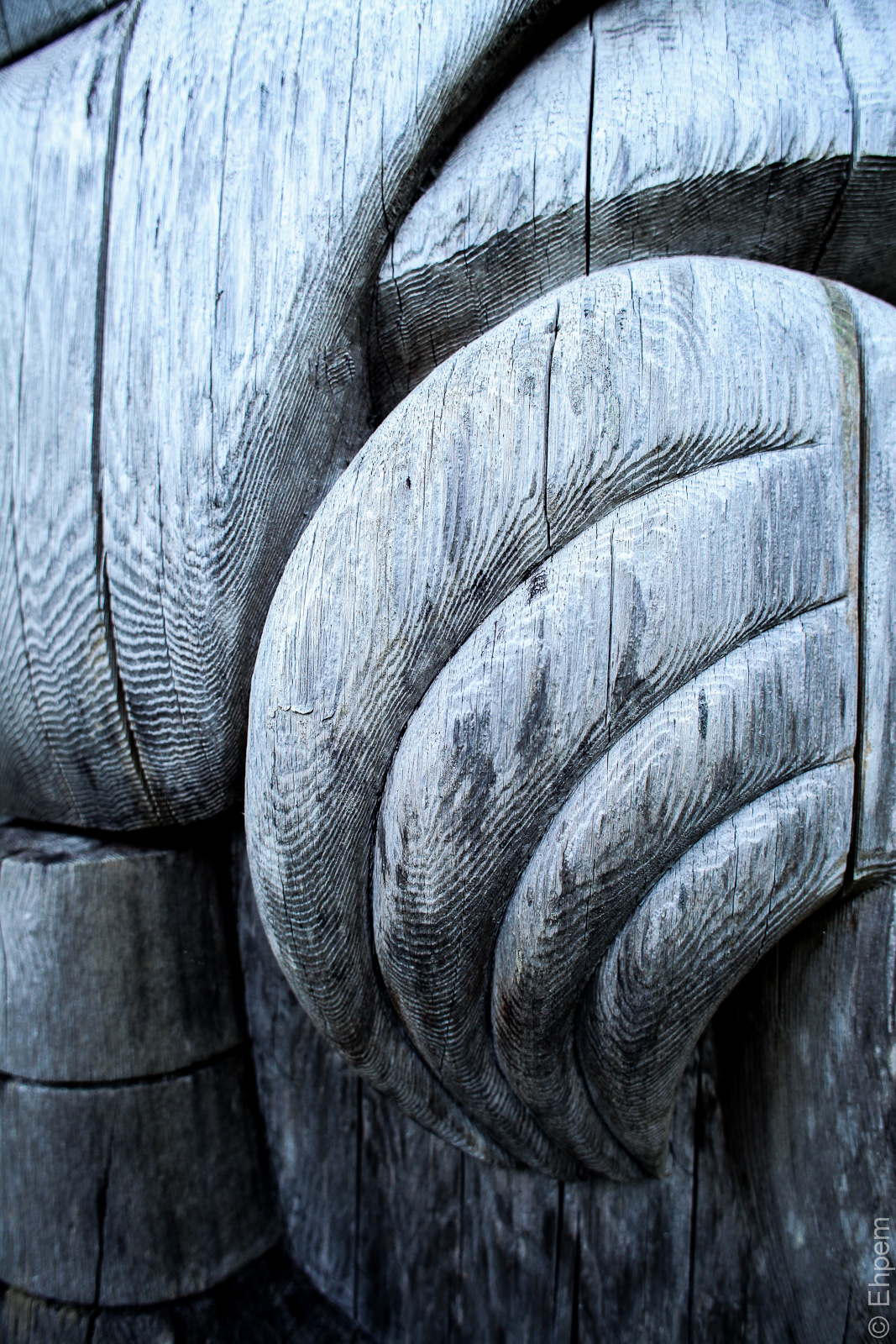
• Ts’ing or Beaver
• K‘aa Gwaay or Five-finned Whale
• Taan or Bear
• Xuuya or Raven
• Guud or Eagle

Peeking into Canoe House from hallway
The Carving Shed has open sides and serves as a place to store larger objects like canoes and large poles, and also is a place to create them.
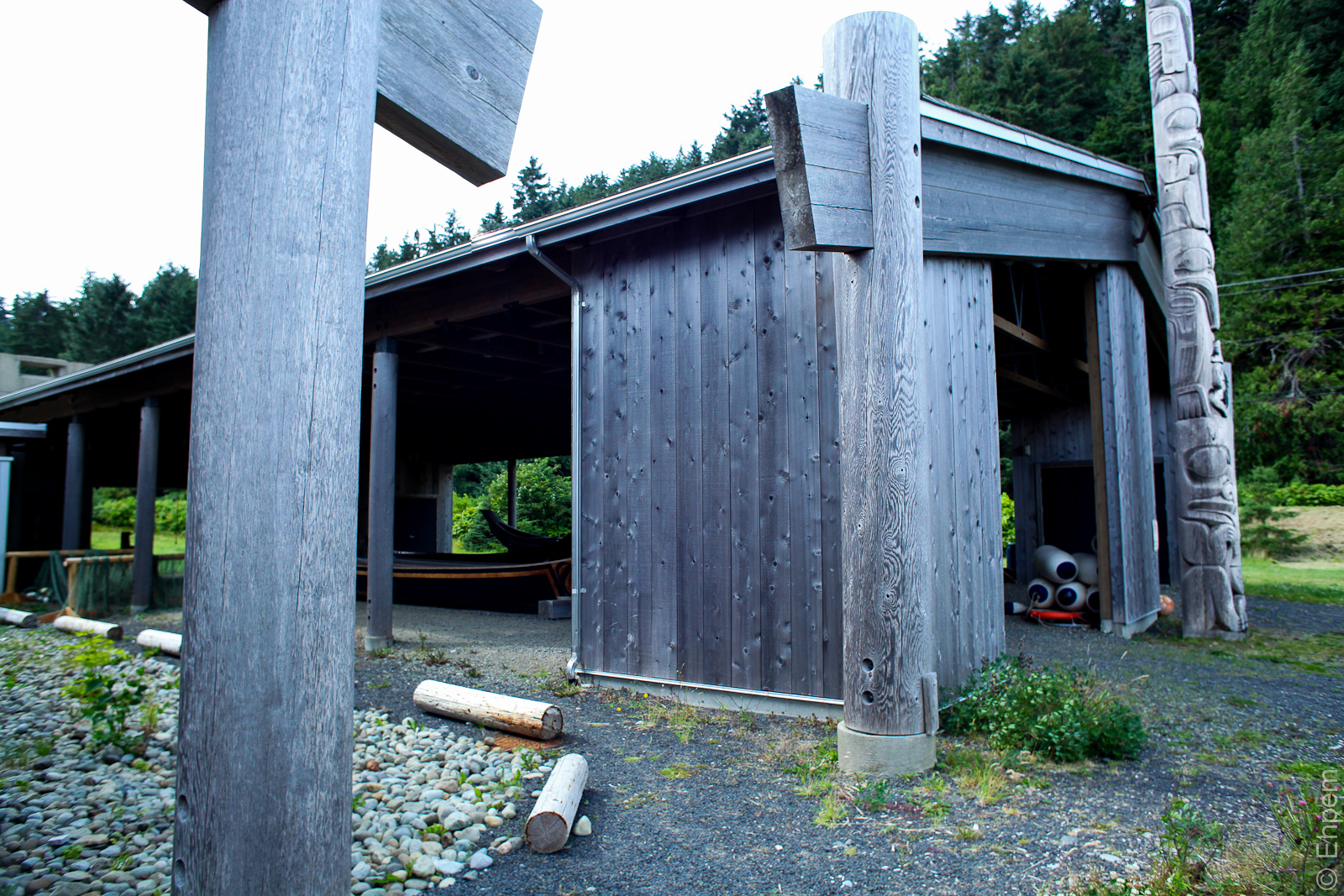
Carving shed
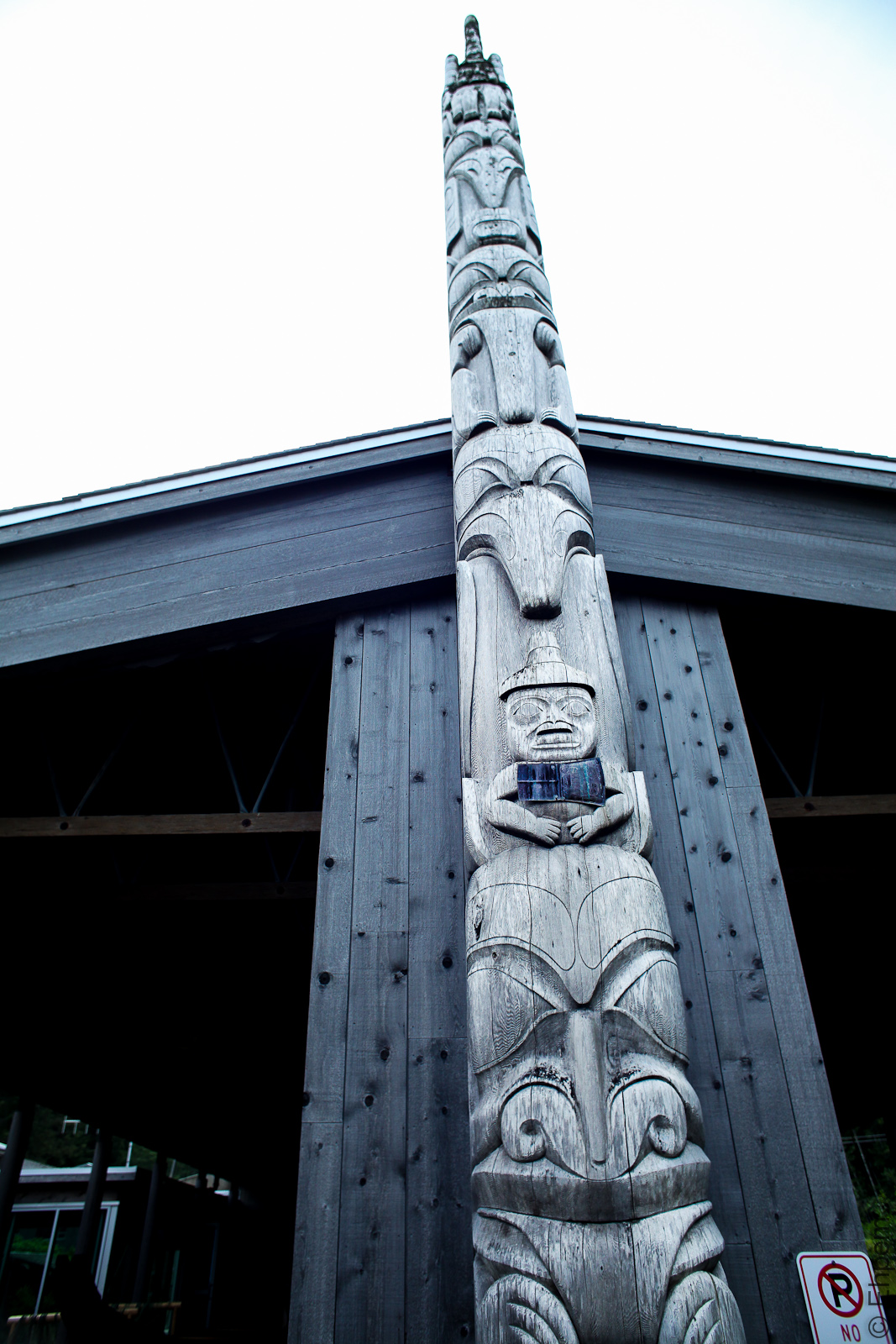
The pole in front of the Carving Shed is for the village of HlGaagilda Llnagaay known also as Skidegate. I especially like poles that are unpainted, slowly weathering cedar, I suppose they remind of the old ones seen standing at some ancient village sites. There a lot of stories wrapped up in this pole, like the others. I don’t know those stories, but I do like the man holding a copper with inscribed design that is located within the Five-finned Whale segment of the pole.

Man with copper
.

Small sealing? canoe
.
Pole information from the Haida Heritage Centre website:
Location: Hyaa K’id Naay – Carving shed
Carver: Gaahyah (Norman Price)
Clan: Gaagyals KiiGawaay (Those born at Dead Tree Point) of Skedans
Apprentices: Matt Ridley and Jesse Jones
The figures from bottom to top:
• Ts’ing or Beaver
• K‘aa Gwaay or Five-finned Whale
• Taan or Bear
• Xuuya or Raven
• Guud or Eagle
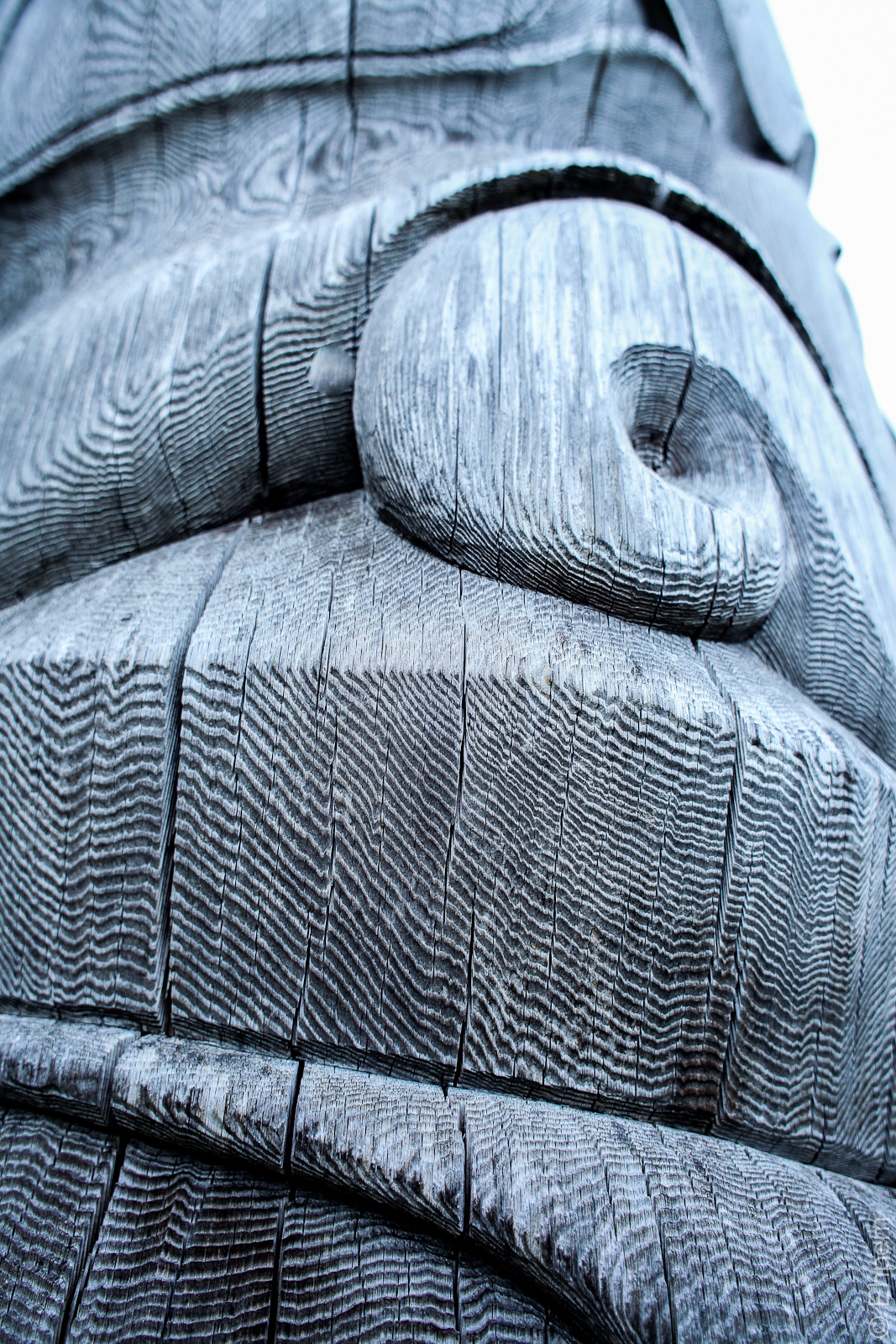
Beaver
.
This is one of a series of eight posts about the Haida Heritage Centre, the others can be found through this link.
To open larger versions of the images below, click on any one of them, use the arrows to navigate and escape to return to this page.
-
- Bows of canoes
-

- Small sealing? canoe
-
- Beaver
-

- Beaver
-

- Beaver

-

- Beaver

-

- Man with copper
-
- Beaver, lower part of five finned whale

-

- Most of pole
-
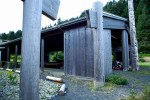
- Carving shed with port of Canoe house in foreground
-

- Peeking into Canoe House from hallway
-
- Beaver tail

-
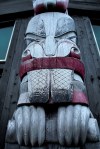
- Beaver head
-
- Beaver
-
- Canoe House

-
- Carving Shed nearest, Canoe House next
.


 burnt embers
Wow, this is just unbelievable! I just love the intricate nature of their work, that you in turn have brought to life here for everyone to enjoy!
LikeLike
Thank you Toad – the details are wonderful in these carvings, irresistible to the lens in fact.
LikeLike
Love the canoe images, great work, Ephem.
LikeLike
Thanks Karen – I like best the sealing canoe next to the big canoe – gives a better sense of scale and just how large the big canoes are.
LikeLike
Like the whole thing you have done on this Haida territory, the photography once again is beautiful and informative. In this post i have particularly enjoyed the photos of the carvings and their details.
LikeLike
Hi Joseph, thank you very much. I love the details – especially that slightly worn bare cedar with raised grain.
I edited the spelling of the First Nation name in your post, hope you don’t mind.
LikeLike
much obliged!
LikeLike
Impresionantes, me gustan muchisimo
LikeLike
Thank you!
LikeLike