
Pump House

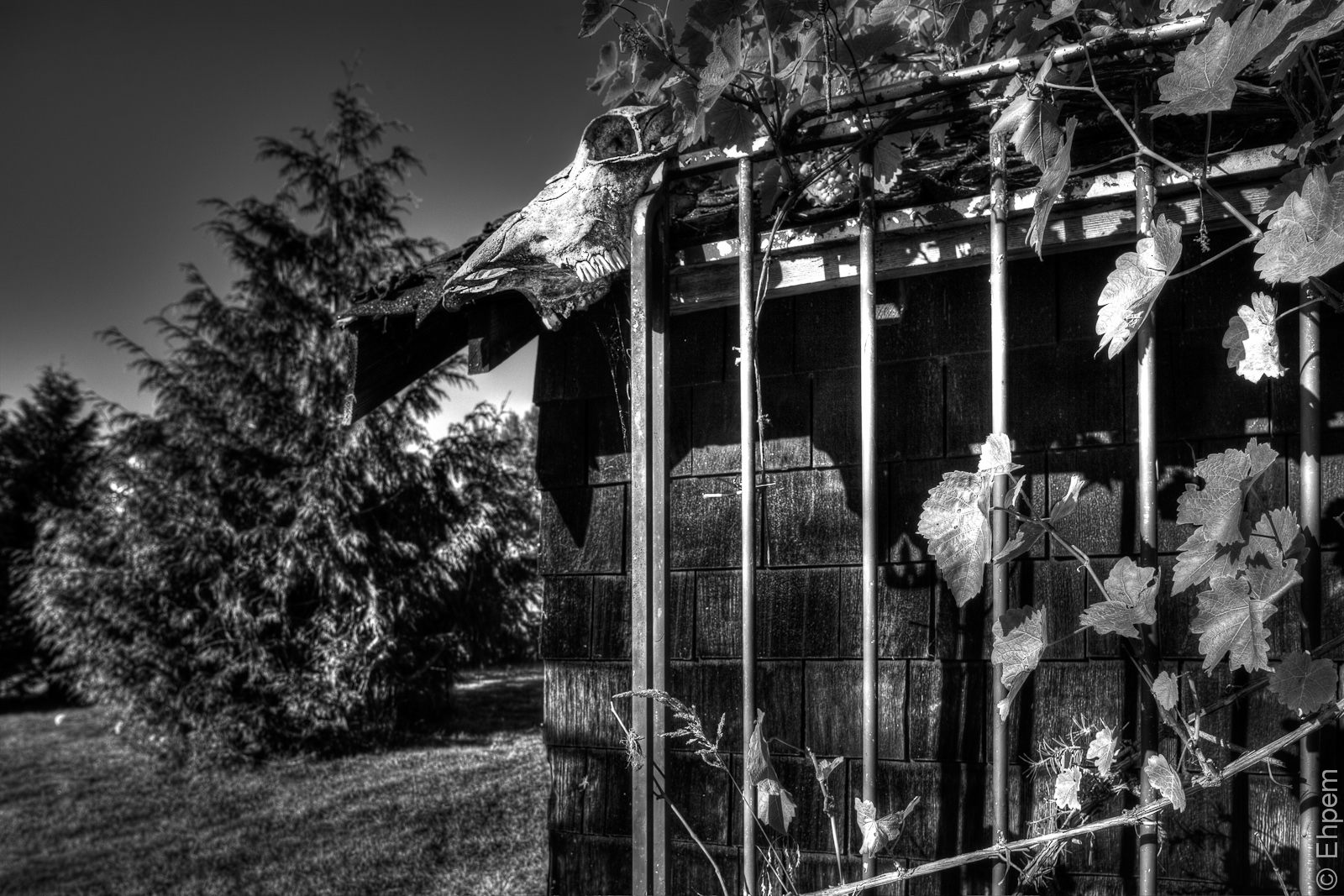
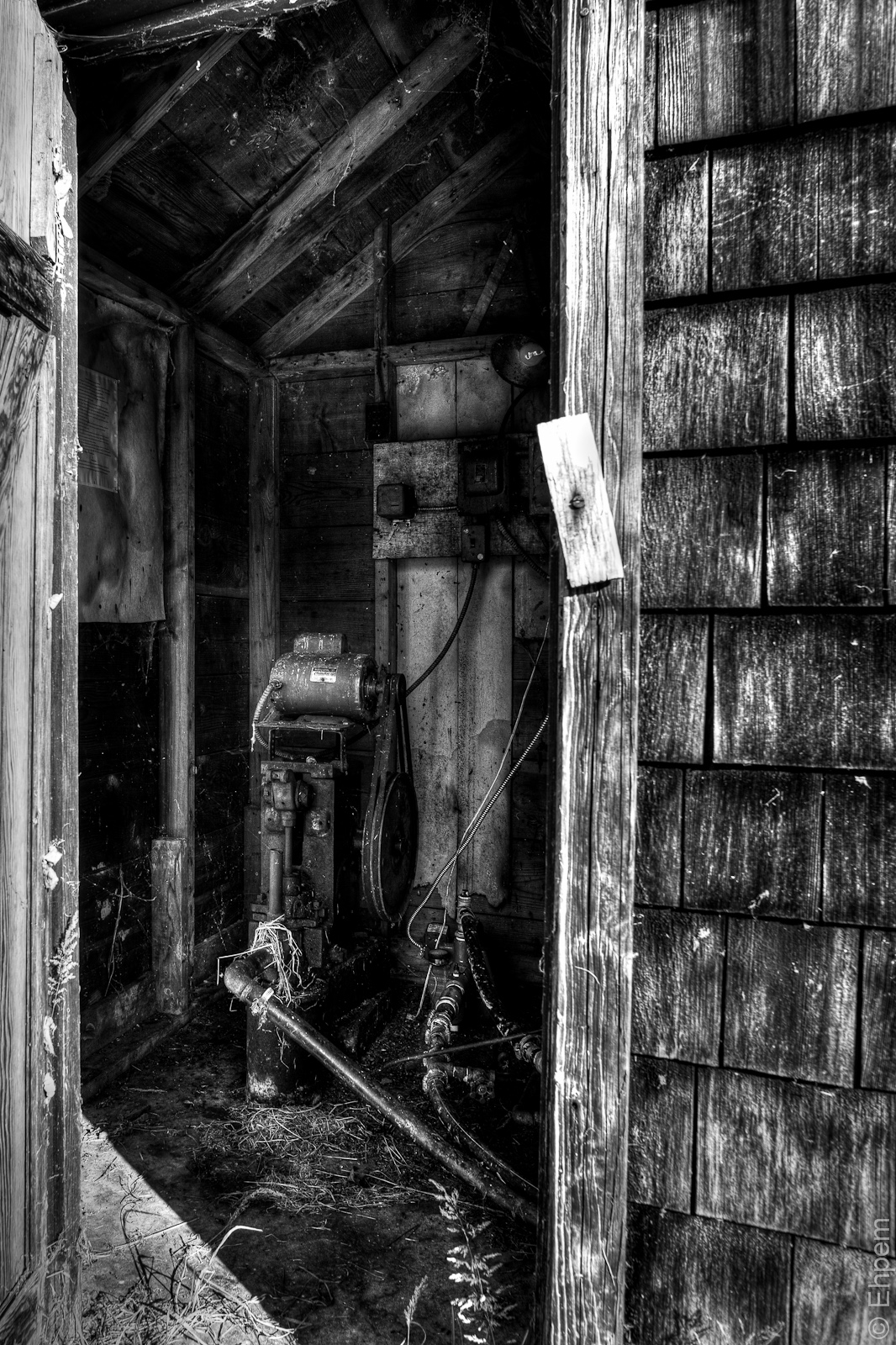
More of my black and white HDR experiments, this time of a pump house near the edge of a field in North Saanich. It was sunny day with strong shadows so I was interested in how well the processing could fill in the darker areas, especially the inside of the pump house. I used a full f-stop for the brackets, all use only 3 images. I could have got more from the interior of the pump house, but at the expense of the exterior balance. I suspect if I had 5 brackets to work with these might have turned out a bit better (I think I got the balance a bit better in the colour version). Even so, I am pretty happy with them.
I had rented a Canon TS-E 24mm f/3.5 L tilt-shift lens over the long weekend for documenting an archaeology project for the local archaeological society, and so I used it on these shots too. Part of my purpose was to learn how to use the tilt and shift features. It is an amazing lens, but truly difficult to use, especially controlling depth of field. I never came close to feeling like I knew what I was doing. But, since it is a completely distortion free 24mm lens I found it a wonderful to use in just its plainest mode. It is a lens that needs renting several times to begin to feel comfortable with it.
.
To view larger versions of photos below click on any thumbnail, use the arrows to navigate and escape to return to this page.
-

- f8, 1/125th +/- 1EV
-
- f8, 1/30th +/- 1EV
-
- f8, 1/80th +/- 1EV
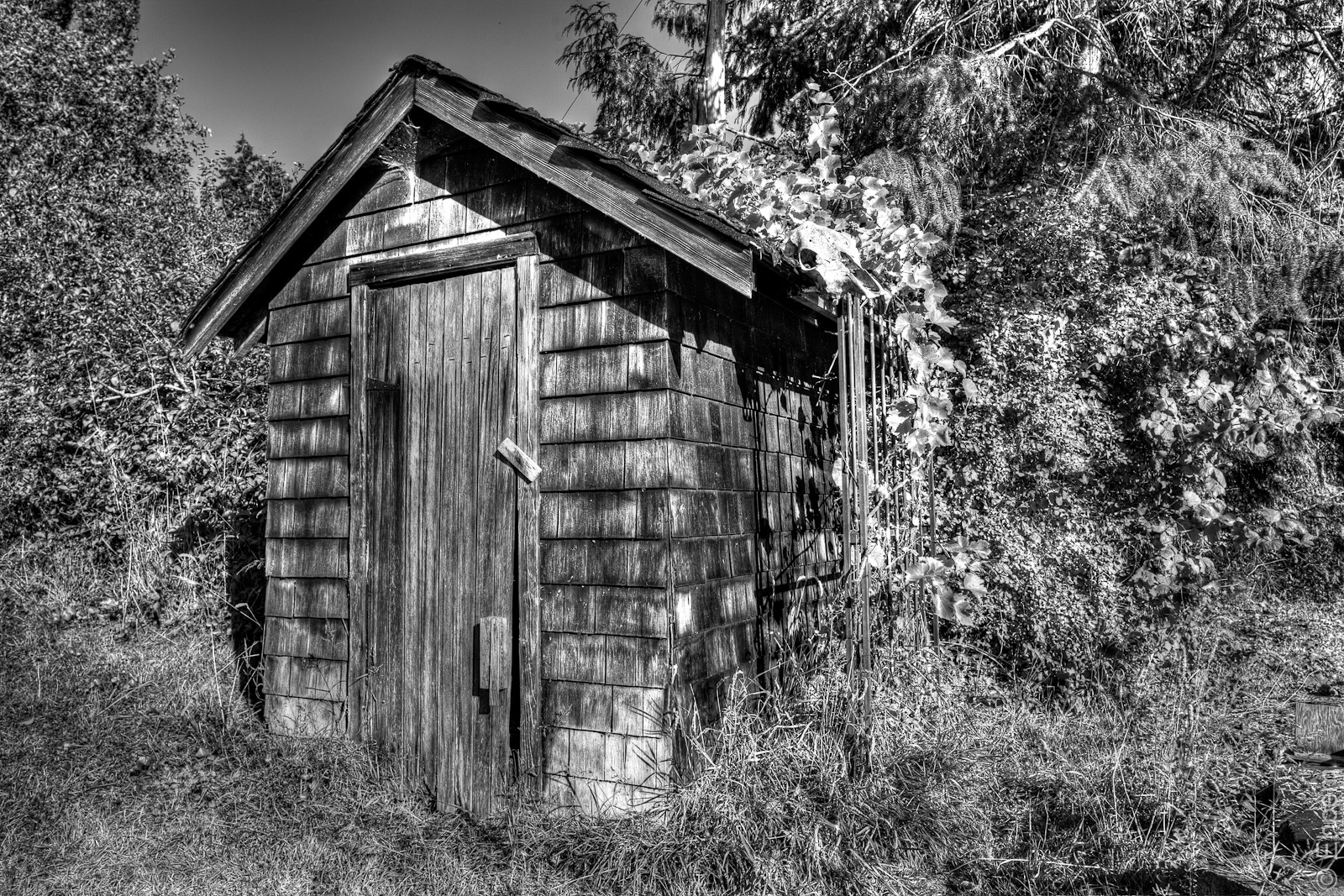
-

- f8, 1/40th +/- 1EV
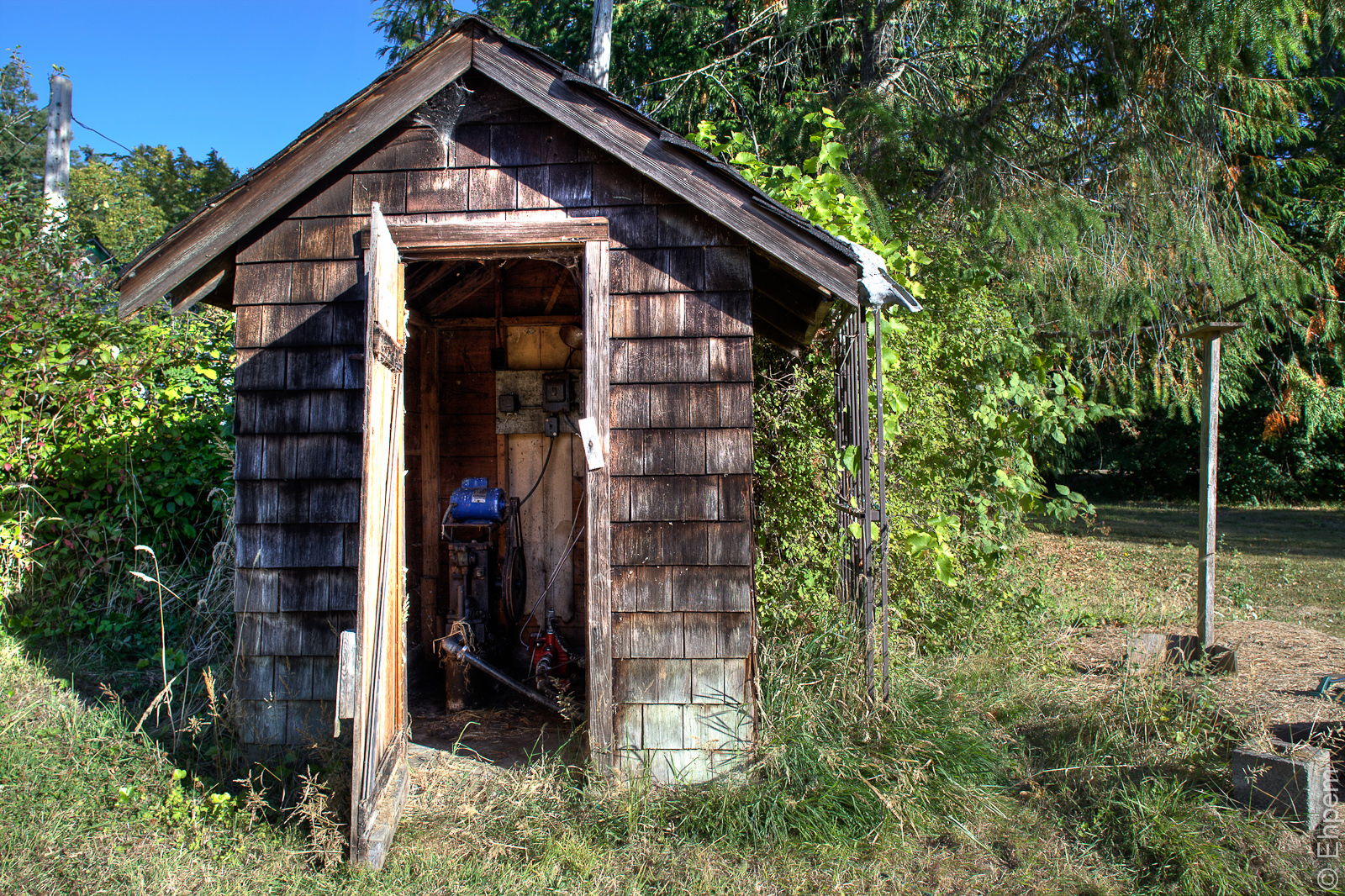
-

- f8, 1/40th +/- 1EV
.
Canon 5Dii, Canon TS-E 24mm f/3.5 L, all +/- 1 EV
.
.


 burnt embers
Pingback: Pump House – Red « burnt embers
I. Love. This. Post! GREAT photos here, Ehpem, you are really working the contrasted areas perfectly with your brackets! Great textures and details, these are pretty natural looking images here! I am so happy to see you working in this field, your results are a true highlight of my day to see!
LikeLike
Hi Toad – thanks a lot 🙂 I am having fun with these tools. The natural look is where I lean (heavily), though I have another pump house to show, and you will find the opposite there, in one of the images. And you will probably see where that temptation came from as well. On that second image (last in the gallery) I spent quite a bit of time trying to get the skull right, but in the end had to use LR4 to bring it up where I wanted it.
LikeLike
Another nice series presented here. I do like the choice in your processing on these and it’s in keeping with the rest of the photos. I had the Nikon version of the Canon tilt/shift lens years ago and it was a challenge to use, but a fine lens nonetheless. Traded it for a used N90 and never looked back. They are great lenses though and at times I wished I hand one with me.
LikeLike
Good morning Ken – thanks for your comment. I really like the textures in these natural (not painted) cedar sided buildings and they seem especially well suited to this kind of treatment. The tilt-shift lens was further complicated by the ability to rotate it so it was also a shift-tilt lens if you know what I mean, or in between the two. I don’t understand the physics of light and lenses, so I had no good starting point for learning how to make it work. I did manage to get a terrific dof from floor level which I had read about and actually set out to do, so that was satisfying. Otherwise, it was hit and miss (mostly).
LikeLike