
Celestial Objects

We have planets, or stars, or a constellation on the shelf above the kitchen sink. It consists of regular small marbles held in a glass flower frog, and larger hand-made marbles from Italy (I think – presents from my mother) and a basket-ball sized glass fishing float I found 20 years ago on a Haida Gwaii beach. Also, there are some glass paper-weights made by a relative on my wife’s side of the family from Minnesota, many years ago now. I don’t think she makes glass art any more – these are all signed Kim Scott and three are dated (1975). She goes by Kim Buell and makes jewellery these days. My mother-in-law would give us one of these occasionally and we ended up with four of them, or more – there are four on the ledge anyway. When I was looking for things to photograph indoors, two of the paperweights ended up in front of the lens. They seem like something from outer space when shot with a macro lens. I am tempted to re-shoot these with a star filter just for the fun of it, but that will have to wait.
(more…)
Cathi Jefferson – Potter
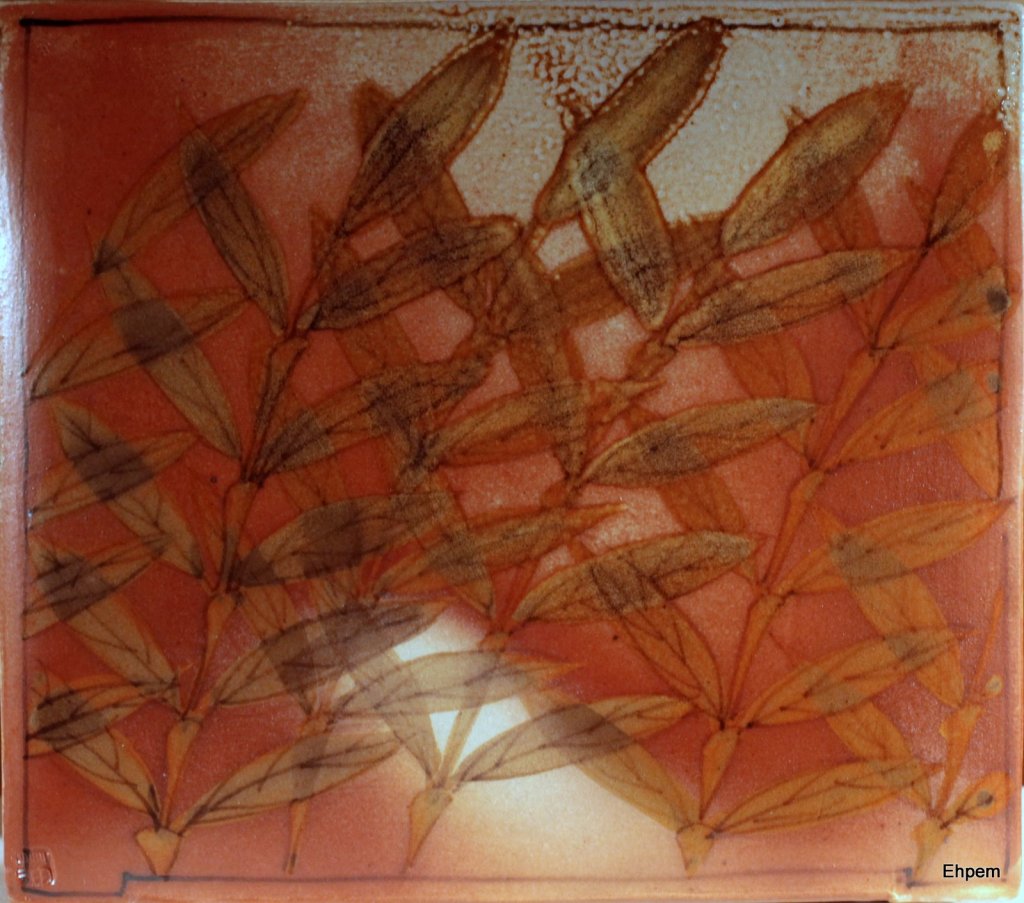
Cathi Jefferson is a ceramic artist who lives in the Cowichan Valley near Duncan, on Vancouver Island. We went to the Out of Hand craft fair last weekend largely to see her work and chat with her, as we do every year. Cathi is a terrific potter, who has been at it for more than three decades, and until a few years ago was based in the Greater Vancouver area. Now she has a studio and gallery on the banks of the Cowichan River in a patch of forest in which grows many of the plants that inspire her work. Its a lovely place to visit and she is very welcoming.
This blog is supposed to be about my surroundings and you may be wondering where this fits. Well, this is ‘burnt embers’ so that might be enough on its own for pottery, but it is also fair to say we are surrounded by Cathi’s pottery. We use one of her teapots several times a day, drink from her cups, have breakfast from her bowls, and so on. Every year we add a few more pieces as presents to each other and sometimes a family member gives us another. Our interest in her work started many years ago when I bought one of her mugs in a thrift store. We could not read her signature on the base and had never seen another of her pieces. Then she moved to Vancouver Island and we soon after saw her display at the Out of Hand craft fair and recognized right away the similarities of her current work to the older second-hand piece.
Her forms are terrific, and she does many sculptural pieces as well as a lot of functional work. Her work is characterised by beautifully painted designs that are applied with slips of coloured clays. The glaze comes from salt as it burns in the kiln – it is thrown in the kiln when it reaches a certain temperature and leaves patterns on the pots that relate to how the flames move around and how much salt settles on different parts of the pot. The brown more matte areas have seen little salt, the whiter orange peel glaze is from a lot of salt.
(more…)
Peeler up Close
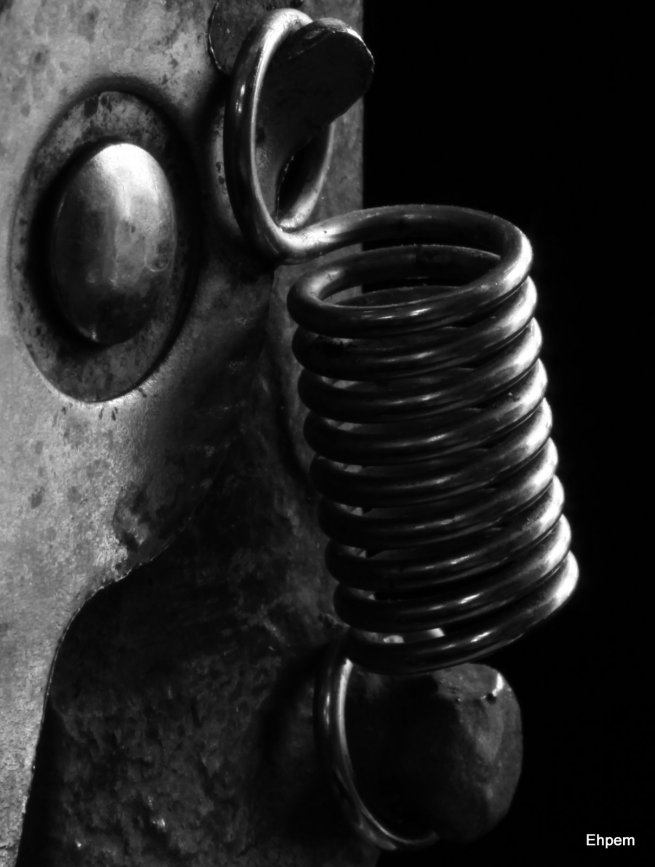
More macro photography today. This is one of those remarkable kitchen devices, invented in the 1800s, that have persisted in use to the present. And don’t these detail shots look as if it is some antique bit of industrial scale machinery? This machine is derived from the peeler first in invented in 1864, if this web site can be believed. Our one is probably 20 years old now, purchased second hand in a little thrift store in Courtenay BC, but is much the same as ones you can get in the hardware store today. It is in a long lineage of apple peelers that were transformed from a peeler into a combined corer and a slicer too. If you have not used one, and have apples in quantity, you might want to give it a try.
(more…)
Shingled Shed

This boat house is beside a narrow beach access on Harling Point. It is one of 4 ways to get down to the beach – this one leads to bedrock looking over Gonzales Bay towards Clover Point. It is right in front of private houses, and some of them have old concrete boat ramps to the water which make it hard to walk all the way around the waterfront. In British Columbia the intertidal zone is public land (with a few very old exceptions) so waterfront owners are used to seeing strangers on “their” beaches, though some of them don’t like it much. This is one of the spots in Victoria where I feel a bit less welcome on the beach than others, not sure why but perhaps because of the old structures on the beach and looming houses and the generally private feel of it.
(more…)
Close Feathers
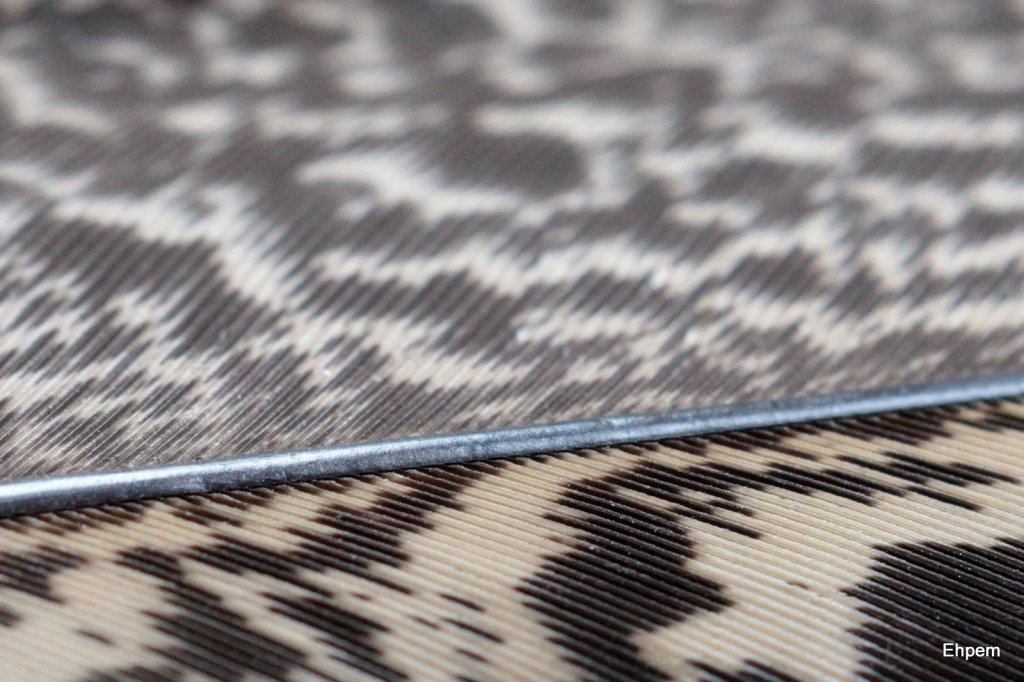
These are close-ups of a feather we have had around the house for many years, found on a beach or in a forest a decade or more ago. We don’t know what species it is from, but assume a large hawk as the feather is 14 inches long. It is showing its age now, rubbed here and there and full of dust. You don’t get to see the whole feather, just some details taken with my 100mm takumar macro lens. The second to last shot is taken with the addition of extension tubes.
(more…)
Grass Drops
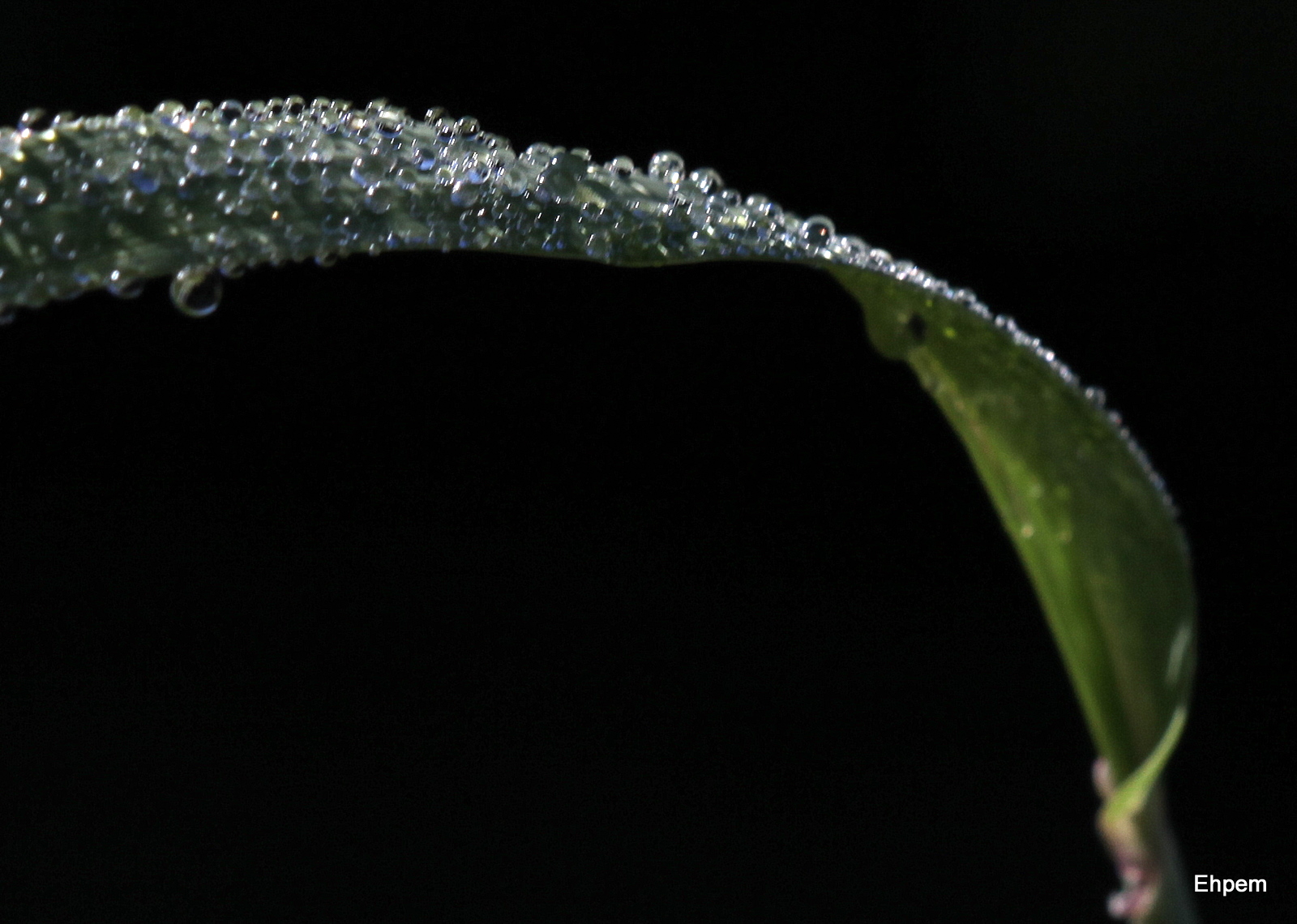
When I watered the neighbour’s garden last summer I spent some time taking pictures. This blade of grass has dew on it, not water from my own efforts to keep drought at bay. This is the garden on the other side of Ruby’s gate from my own backyard. I have previously posted pictures on this topic here and here and here.
(more…)
Top Posts & Pages – Click Thumbnail To View


Recent Comments
♦ FUJITA (藤田光学工業) H.… on Fujitar P.C 35mm F2.5 Asahifle… ehpem on Child’s Grave Kyle Hoyt on Child’s Grave ehpem on Charles Elliott Pole, Universi… Lisa Kadonaga on Charles Elliott Pole, Universi…


 burnt embers