Hummingbirds at the Feeder
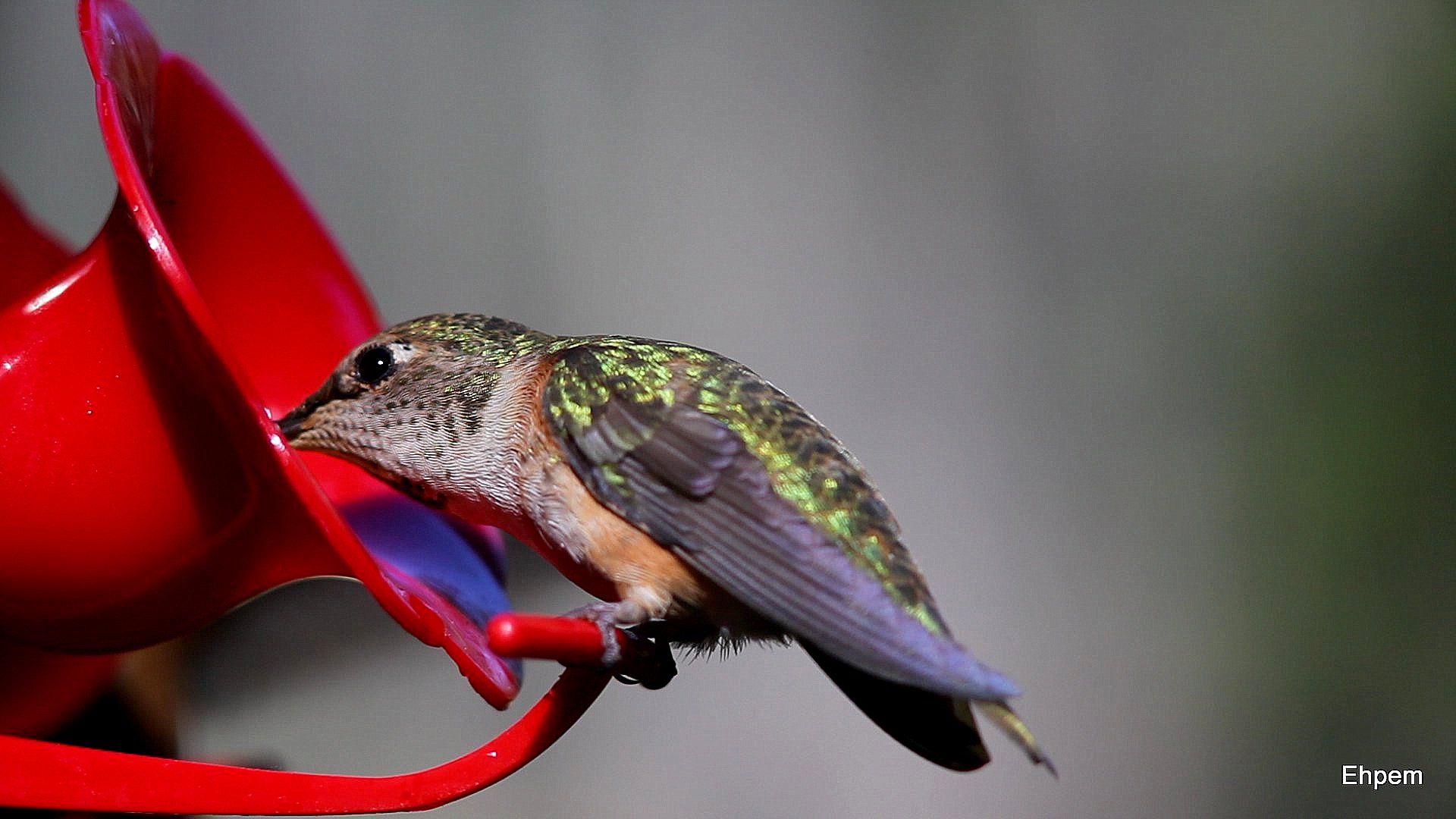
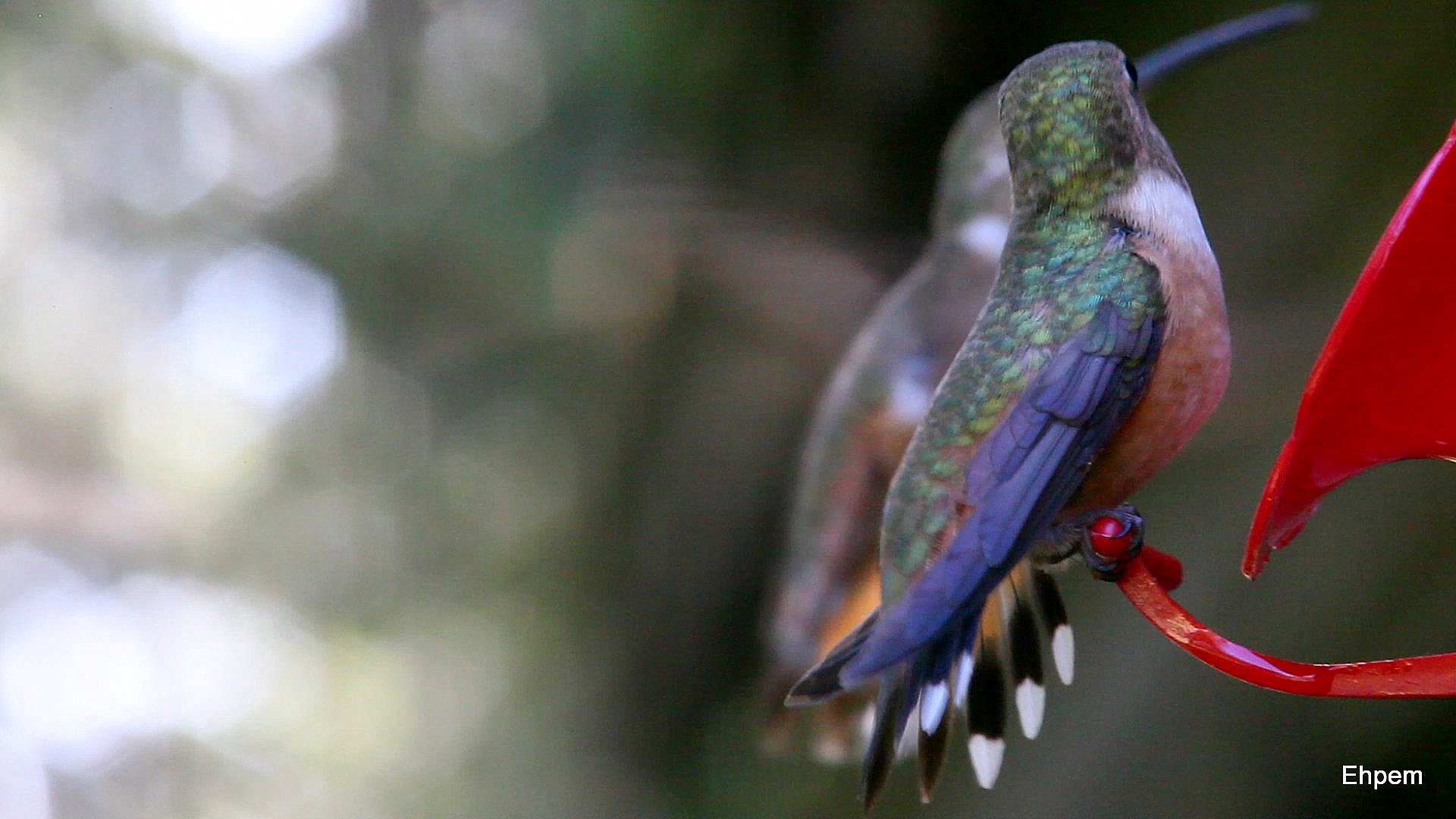
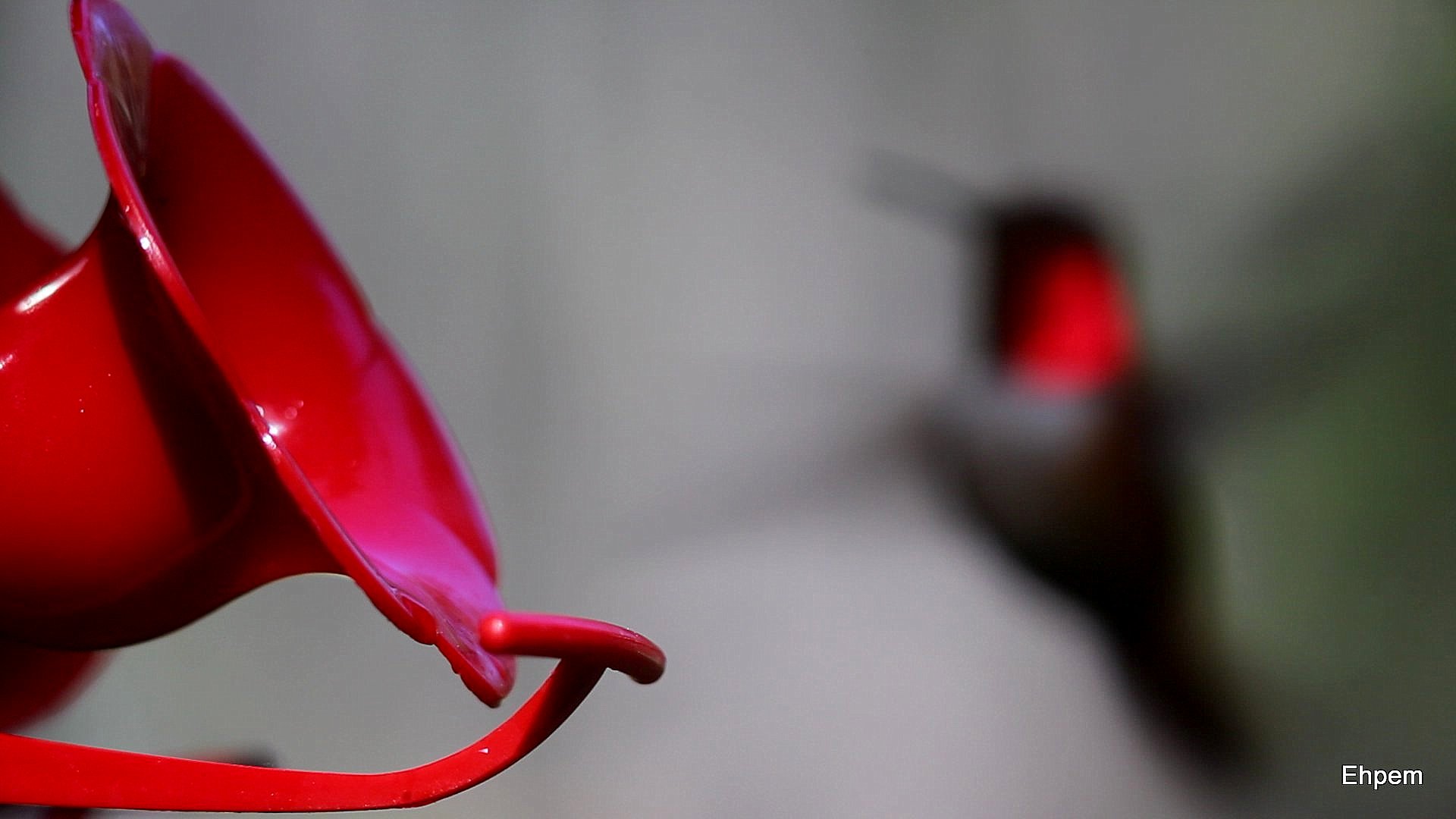
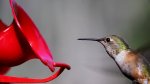
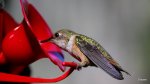
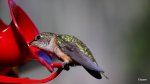
Another Friday Harbor post – one of many to come – this time of the hummingbirds at the cabin vying for time at the feeder. There were up to six birds at one time, with a lot of displaying and chirping and so on. I decided to take video of them to capture their movement and sounds and the background they provide for staying at the cabin. So, having never posted video on Burnt Embers until yesterday (and rarely taken it) you now get it two days in a row. The microphone on the 5Dii is very sensitive to more distant sound, and so the sound of a car or two and some of the sea plane sounds I did not even notice until I watched the video. The louder sea plane engine noise is a frequent nuisance, but one that we seem to get used to living near the water. I was sufficiently absorbed in taking the video that I forgot to take any high-resolution stills of the birds – all these images are captured from the video, which is also inserted further down. The gallery has a bunch more stills from the video.
This feeder is within a couple of metres of the front door step where the fawn was left (see yesterday) and on the outside of the living room window. It is located right next to the Douglas fir forest and there are few flowers other than small wild ones, so the hummingbirds seem to make much greater use of the feeder than at my home where the gardens are full of hummingbird food.
These hummingbird shots are photographically the opposite to yesterday’s unplanned photos of a fawn. In this instance, I set the camera up on a tripod, and mounted my SMC Takumar 200mm lens on the camera, with extension tubes to reduce the focal distance. I needed to stand very still with the camera for quite a long time before the hummingbirds started to ignore me, and I found that they were more inclined to do when I was on one side of the feeder than the other – perhaps when I was silhouetted they were not able to see me well enough to keep a good eye on me.

.
The telephoto, and the extension tubes, are old m42 screw mount models that I bought for my Pentax Spotmatic in 1974 to take macro pictures of insects and flowers. I used this combination very little as I soon bought the 100mm macro that I still use a lot. Also, I found that the 200mm lens was hard to get a good exposure with, something I have only really figured out how to do since I have modified it for use with the DSLR.
.
I think it is obvious I have been missing out on a lot of opportunities by neglecting this combination over the decades. And, there is a good lesson for anyone that, like me, finds that the DSLR body damn near exhausted the piggy bank. A lens like this can be had for around $100 in good shape from a reliable source (for instance cameratraders.com who are based here in Victoria and sell a lot on-line with real people in a real store that know a lot about lenses); the EOS/m42 adapters with focus confirm are in the mid-$30 range but without the chip are $15-$20; and extension tubes are just a few dollars as well. Considering that the Takumar lenses had superior optics, this is a pretty affordable route to go with lenses that will fit on a DSLR body and take high quality images. (You do need to do quite a bit of internet research before you buy a lens to adapt it though, some older lenses just won’t work on some of the new bodies).
One of the great things about the old lenses is that they have a manual focus and aperture control on the lens – this works really well for video to give that cinematic feel that the combination of DSLR and manual focussing has become known for. However, for this video I focused in live view on a fixed point and did not change it during filming – the depth of field is very narrow with this combination of gear and once filming I find it hard to focus accurately on screen.
.
.
To open the gallery click on any thumbnail image below and use arrows to move between them and escape to return to this page.
-

- 10
-

- 9
-
- 8
-

- 7
-

- 6

-

- 5

-

- 4

-
- 3

-
- 2

-
- 1
.
Starting tomorrow I am taking a busman’s holiday in southern Haida Gwaii (formerly the Queen Charlotte Islands), helping out on a research project in Houston Stewart Channel. I am taking my camera gear, but as I am going to be stationed on a small island with no trails, I will probably not get too many chances for photography. If I get something useful, you will be seeing it here later in June I expect. Please leave comments in my absence, if you feel so inspired; I will enjoy reading them on my return.
Canon 5Dii, SMC Takumar 200 mm/f4 lens, set of 3 extension tubes, video mode, all close-ups are captured from the video.
.
.


 burnt embers
Hi Al, I can’t get the video to work but the photo’s are wonderful. Thank you for posting them.
LikeLike
Hi Jenny, thanks for commenting! I am not sure why that link is not working for you – all you should need to do is click on the bottom large image – the one above the gallery. If that does not work, you can go straight to the youtube version through this link: http://youtu.be/QTlzTO9OQj0
LikeLike
Pingback: Hummingbird Clarity | burnt embers
Wonderful video, ehpem! And I’m really impressed with the quality of the stills you captured from it. Also really like the baby fawn video (timely – this year’s new fawns showed up in our yard for the first time yesterday). I haven’t tried using video yet with my T3i – it’s been on my to-do list – but you’re inspiring me to give it a try. Hope the Haida Gwaii trip is going well.
LikeLike
Hi Laurie – thanks for your comments. I hear the T3i has really good video capabilities too. This was really a pretty simple video to shoot, once I had set up and lulled the hummingbirds into some level of trust.
Haida Gwaii was fantastic, as usual. The trip to the south end was highly successful. The weather was mixed, with some cold wet windy days and some nice warm sunny ones. It could have been a lot worse (has been on previous trips). I hope to share some pictures over the next few weeks 🙂
LikeLike
Love the details in the first image!
LikeLike
The video rocks!
LikeLike
Thanks David! Have you used the video much in your 5Dii? It sure does the job (if one knows how to use it, which I certainly don’t).
LikeLike
The photos are great and the video just knocked my socks off – fantastic! I am really impressed with how well the Canon does video, although I know it is known for that capability. Inspires me to get a better video camera – I want to start shooting in hi-def. I’m more of a Nikon user but Nikon isn’t quite there yet with video. I find it hard to get good photos and vids of hummingbirds, so I can see the advantage of having a feeder with perches so that they remain still for a bit. I plant salvias on the deck to attract them; I am going to add perches next to the flower blossoms to see if I can get better shots. Thanks for a great post!
LikeLike
Hi Lynn. My sister wanted me to shoot them on the branches they usually perched on when approaching the feeder, but it looked to me like if I hung out there, they would choose another branch to sit on, and there was no where comfortable to set up with the camera and be still. So, if putting in some perches, you might want to make sure of a comfy place to sit down and wait for them to get used to you and from which you can operate your camera. A remote shutter release would probably be a very useful bit of equipment.
LikeLike
Hummingbirds have been longtime soul friends of my family. These photographs make me nostalgic for time spent with my grandmother, admiring the birds while playing in the garden.
LikeLike
Thanks for the comment Ryan – I am glad to have touched a chord like that through the photographs and video. It was fun taking these videos, something new for me to try out.
LikeLike
Great, great set, my friend! These lil’ fellers can be tricky to capture well, and I think you’ve done a great job here!
LikeLike
Thanks so much Toad! They are irresistible. I really liked getting that old gear into working order too, nice to get value from a lens and tubes that I fully paid for 38 years ago. Will have to find other uses for that combination.
LikeLike
Nice! Such adorable little rascals. We sure enjoy watching ours. I should try my hand at photographing them, too. You did a great job with yours.
LikeLike
Thanks Danita. They seem to adjust to having someone close (and still) pretty quickly. I have taken pictures before just with the 200mm lens (without extension tubes) but it was not quite enough magnification. This worked out pretty well. I would think a 300 or 400mm lens would be really good, and could keep one back a bit further too.
LikeLike
Excellent videa and the stills have a surprising amount of detail. Well done!
LikeLike
Thanks Ken. The 5Dii turns off half (or 2/3?) of the sensor capacity when in video mode. There are a lot of blurry frames with these little guys but every now and then a really sharp one could be captured. I sharpened all of them a bit too.
LikeLike
I just looked it up – the sensor uses every third line to downsample to HD resolution. Seems like a waste of sensor capability, but I guess there is no way of displaying such high quality video anyway. You can press the shutter in the middle of filming, and it will take a full resolution shot with a momentary stutter in the video while it processes the data.
LikeLike
Great video—love seeing the hummingbird tongues!
LikeLike
Thanks skadhu – hard to believe the stories of the Romans feasting on hummingbird tongues. I rather think not – maybe a delicate garnish on some “special treat”.
LikeLike
Congratulations on posting such a great video 😀
And I look forward to seeing what you capture on your trip 🙂
LikeLike
Thanks James! And I have every intention of having a great time 🙂
LikeLike
Fantastic video – I really enjoyed watching that through. I would never have thought one could achieve such good results or get so close to Humming Birds. Have a great trip
LikeLike
Thanks Andy – these hummingbirds are pretty used to having people around. And, we are pretty slow and easy to dodge so are probably not to scary. I was probably 6-8ft away from them, but I leaned on the wall of the cabin and did not move. I really needed a remote shutter release as my arm got pretty tired holding it up on the camera waiting for them to arrive.
LikeLike