Island View Blue

Yesterday I went to considerable lengths to remove the blue from the view of Mount Baker taken from Island View beach.
Today I go to a fair bit of trouble to keep it in, and emphasize it.

.
This is the outcome of an experiment to see what happens with rippled water in HDR, merging from three images. I believe that is the source of occasional darker, harder edged ripple – these are probably ones that lined up in two or three of the images. What I was hoping for was that they would blur against each other and that I might be able to get the feel of a long exposure, without having to get out the ND filter. Maybe if there were more brackets and I played with it a bit more I could get that feeling, so I might explore the idea a bit more before giving up on it. For one thing, I processed this image by using the Photomatix add-on to Lightroom to produce a 32bit HDR image without opening Photomatix and importing the image. This automatically deals with ghosting, not always successfully. But since I don’t want ghosting dealt with in any way for this, or at least I don’t think I do, I need to try it the long way around with more control.
.
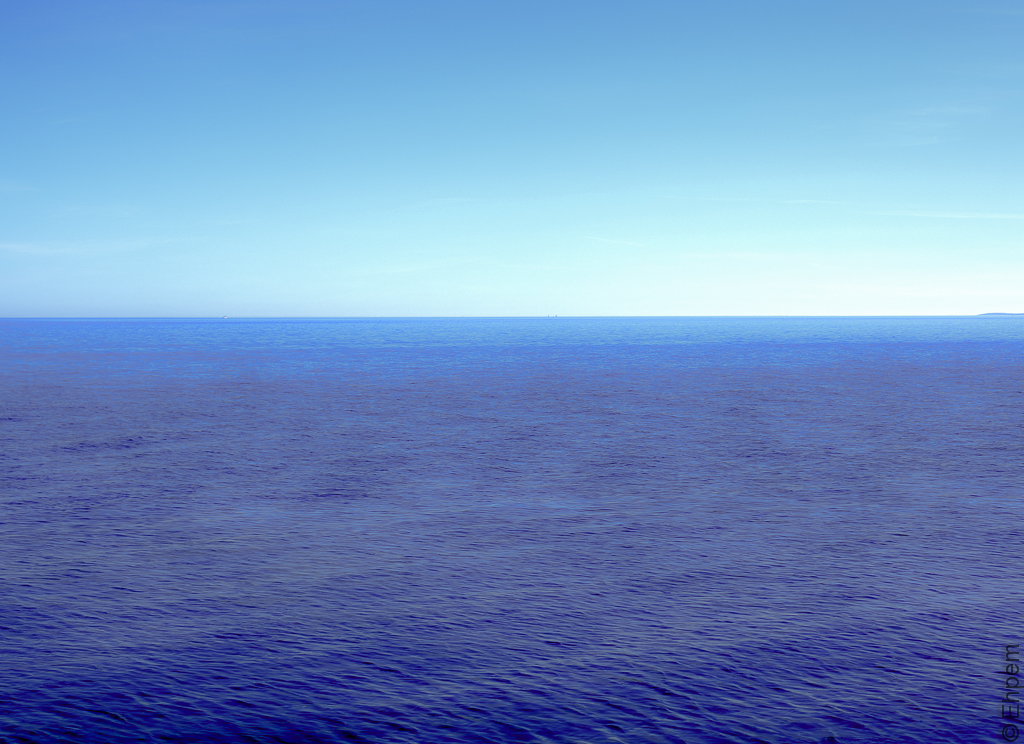
And so I wrote that last paragraph and then thought I had better just do it, instead of write it, which is what the image above is – a new HDR processed image adjusted in Lightroom. I could not get the same HDR settings as I had the first time, so the colour is quite different in this image. The outcome of that experiment is that the water does not look much different when I did not de-ghost during the HDR processing. There is some difference in the middle distance, but the foreground is pretty much the same, and the more distant water might even be a bit clearer.
The first two versions of the image are from different treatments in Lightroom after processing the HDR 32bit version, emphasizing different colours that are present in the original. I like the first one better. I think they would be better images, all three of them, if the water were smoothed out in a long exposure so that it had no texture.
Canon 5Dii, Canon 100mm/f2.8 macro lens, ISO100, f5, processed from 3 brackets around 1/1250th +/- 1.3 EV
.


 burnt embers
I just love your experiments and how you share the findings and results here. These all can stand on their own as truly excellent, but that first one really captured my mind in an almost abstract way. Love the colors and tones here, my friend, this is most definitely a great post!!
LikeLike
Oh, I love the last one, Ehpem! The gradations are more subtle and it really looks as if it is reflecting the different depths of water. I also like the patterns on the water but I agree, it would be interesting to see it smoothed in a long exposure. So much blue – I can feel myself relaxing . . . 🙂
LikeLike
Thank you Lynn. I like that last one as well. The middle one is kind of muddy by comparison to the others. I think I need an additional ND filter for a very bright day like this one, I did not try it since I was not carrying my tripod, but I suspect I could only have got about 15 seconds at best, and this probably needs more than that to really smooth it out.
LikeLike
I prefer the first one myself. It has a slightly warmer tone than the last and I like that. The only way I know to blur a subject in Lightroom is to push the “Clarit” slider all the way to the left. This removes any sharpness and detail but will not cause the out of focus look I think you’re going for. You can use the brush tool to add clarity to other parts of the photo at your discretion. Worth a try.
LikeLike
Hi Ken – thanks for the idea. I will have to try that. I also need to try taking a lot of brackets and seeing if the in-motion parts might blend the way I like. Just for fun really since I know how to get the effect I seek with a long exposures, and sometimes one does not carry an ND filter, or a tripod…. And I don’t have a graduated ND filter either, which is a problem sometimes (that might be addressed with HDR and 2 or 3 long exposures, one for the sky). So many things to try!
LikeLike