Half Frame Concession
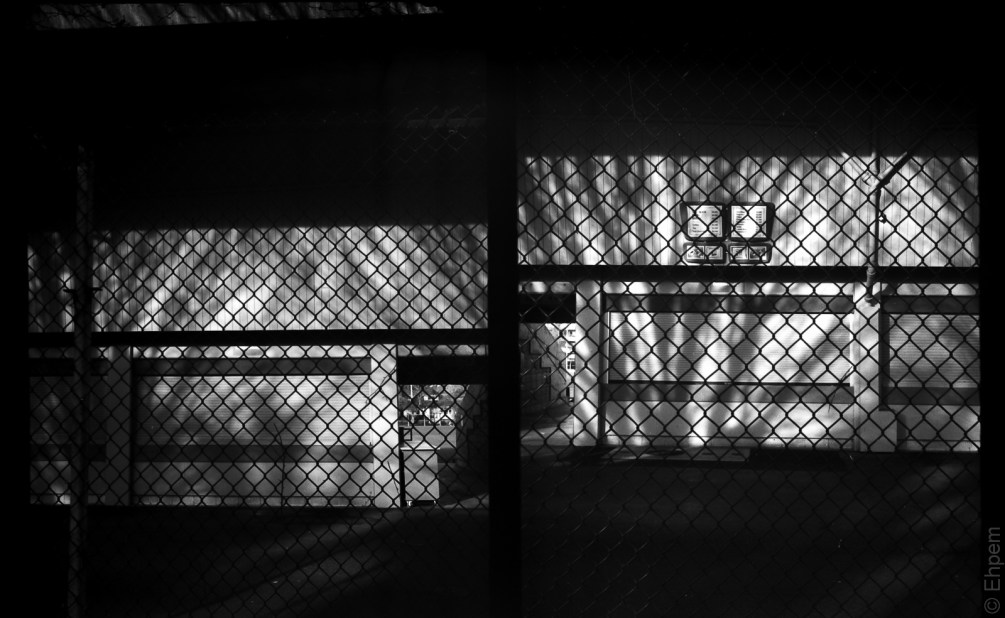
This too is from the first roll of film I put through the Olympus Pen half frame camera. These two frames are scanned as a single image and are of the Royal Athletic Park concession stands. The place was all closed up, but I thought the lighting and tree shadows and chain link made a good combination. What this shot could do with is a bit more symmetry in the horizontal alignment between the two halves. This kind of pairing discovered on the roll of negatives is what has given me ideas for when I start using the camera seriously.
Half Frame Church

More from the first roll of film I put through the Olympus Pen half frame camera. Today I concentrate on making the most of some of the images with some editing in Lightroom. I have described the testing process and since I have comparison shots you will find at the bottom of this post the brackets and the DSLR comparison shots (not edited), as well as a detailed crop with both cameras. I must say I am very pleased with the quality of these images. The first is the only one that is scanned as a single image only, and not subsequently cropped from a series of negatives scanned together, and yet there is very little grain, good definition, loads of information lurking in the shadows and so on – nice to work with.
Restless for Film IV
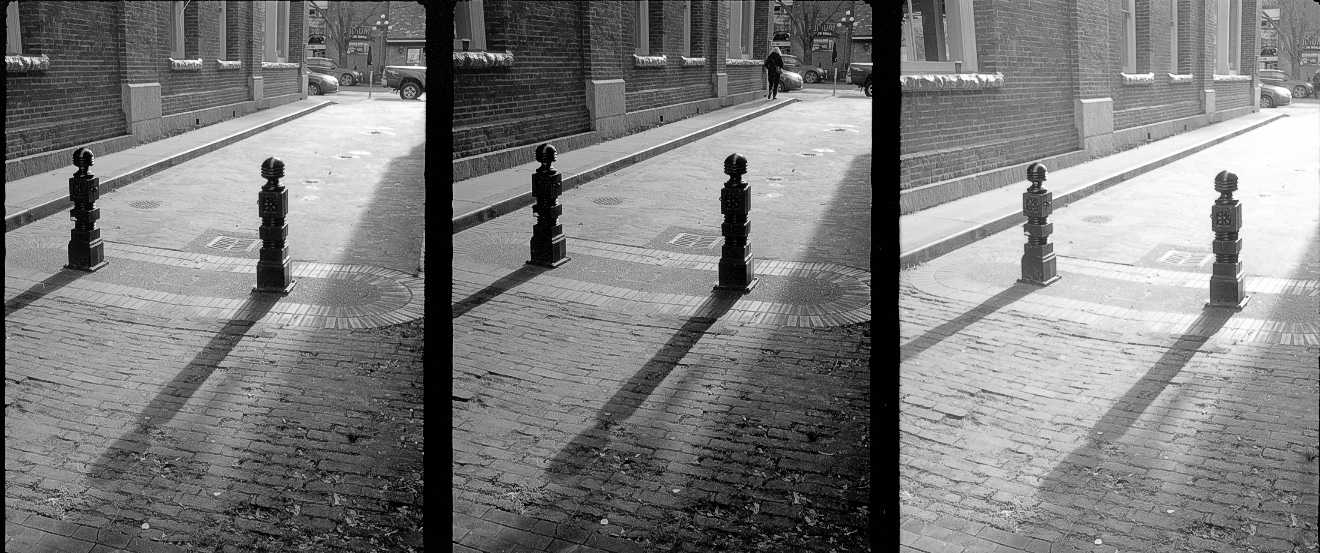
Film Scanning Profile: Fuji Neopan 400, 600 dpi
My series of experiments with the Olympus Pen half frame camera continues. Today is about scanning negatives and some of the experimenting I did once I got my processed film home. Here I show examples of the same set of brackets scanned in different ways. These are the third scene I photographed with this camera, without the aid of a light meter, using the Sunny 16 rule and compensating for backlighting.
The negatives are scanned with an Epson Perfection V700, a great scanner, using the bundled Silverfast SE software. That software has a plug-in (I suppose that is what it is called) called NegaFix which includes presets (or as they call them, “profiles“) for many different types of film – negative, positive, colour, black and white. However, it does not have a profile for the film I was using – Fuji Acros Neopan 100. They do have one for the 400 version of Neopan, and I used that for my initial scans. After doing some reading, I decided to try some other profiles, all of which needed one level or another of adjustment prior to scanning. Profiles and scanning resolution are listed in the captions. At the bottom are some 100% crops from the image below which was scanned at 6400DPI (the scanner will do 12800, but I did not go there) – its kind of hard to find the grain in this film.
These images have not been adjusted in Lightroom other than a small amount of sharpening and clarity. The crops at the bottom have some contrast and brightness adjustments as well.
Restless for Film III
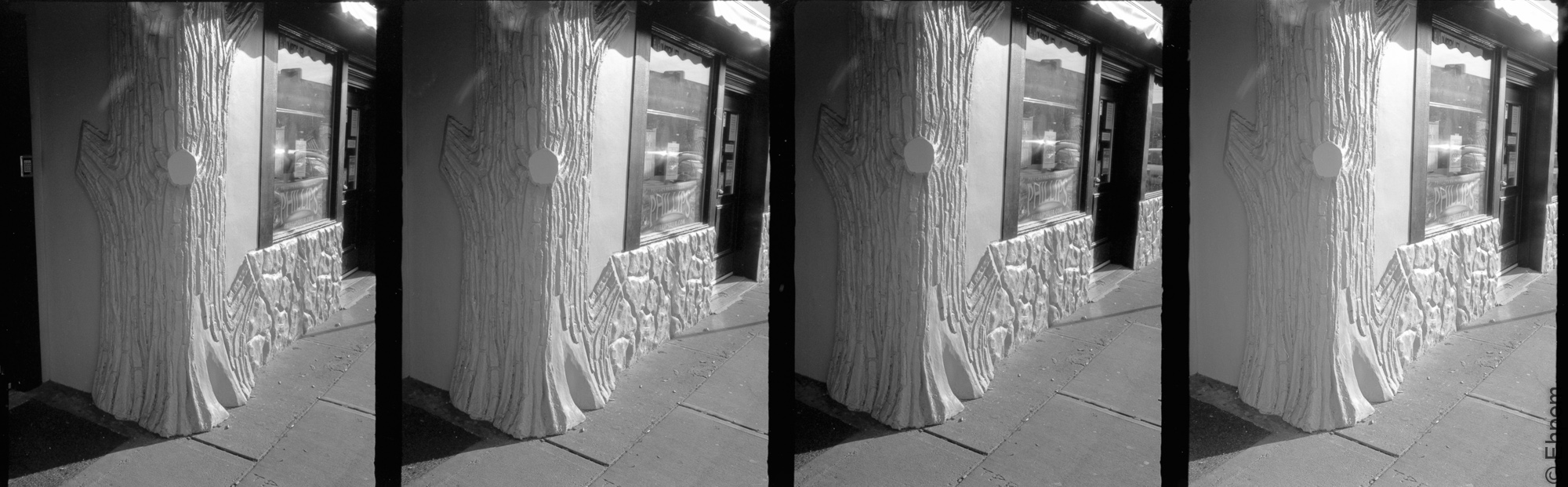
Bright Sun: Olympus Pen Half-frame, ISO100, 1/100th, aperture left to right: f14, f14, f15, f8
More shots from my experiments with the Olympus Pen half-frame film camera I had picked up in a thrift store. The series above are taken with the Pen, the image below with the DSLR. Since I am interested in being able to estimate exposures without a light meter (the Pen doesn’t have one), what I did with my tests was to first estimate the exposure, dial it into the camera and take a shot. Then I took a shot, in shutter priority mode, on the DSLR as a form of note taking, and to check the guesstimated exposure. After that, because I also wanted to check that the camera does not need a global exposure adjustment, I then corrected the exposure to agree with the DSLR shot, and then took brackets.
Restless for Film II
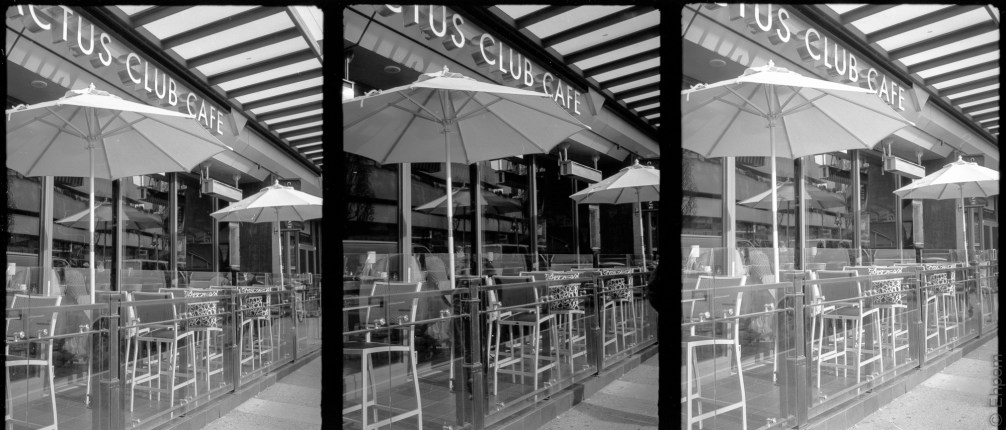
A few days ago I posted about a small half-frame film camera I had picked up in a thrift store. Well, I got the first roll of film back. The camera works just fine! Good exposures, and the lens is pretty good too, operator error aside.
There is quite a lot to say, but I have spent many hours since getting home from work figuring out the best way to scan this kind of film, and working up some of the images. And it is nearly midnight. So you get this one (three?) image(s) as proof things are going to be fine, and only a few more words.
The image above is a lot bigger than this – click on it for a more detailed view if you are interested (you might need to right click and select open image in new tab). Seeing it larger will allow you to see the dust. I live in a dusty house and I could not believe how much ended up on the scanner bed and film in this one operation. I am in need of some compressed air I think.
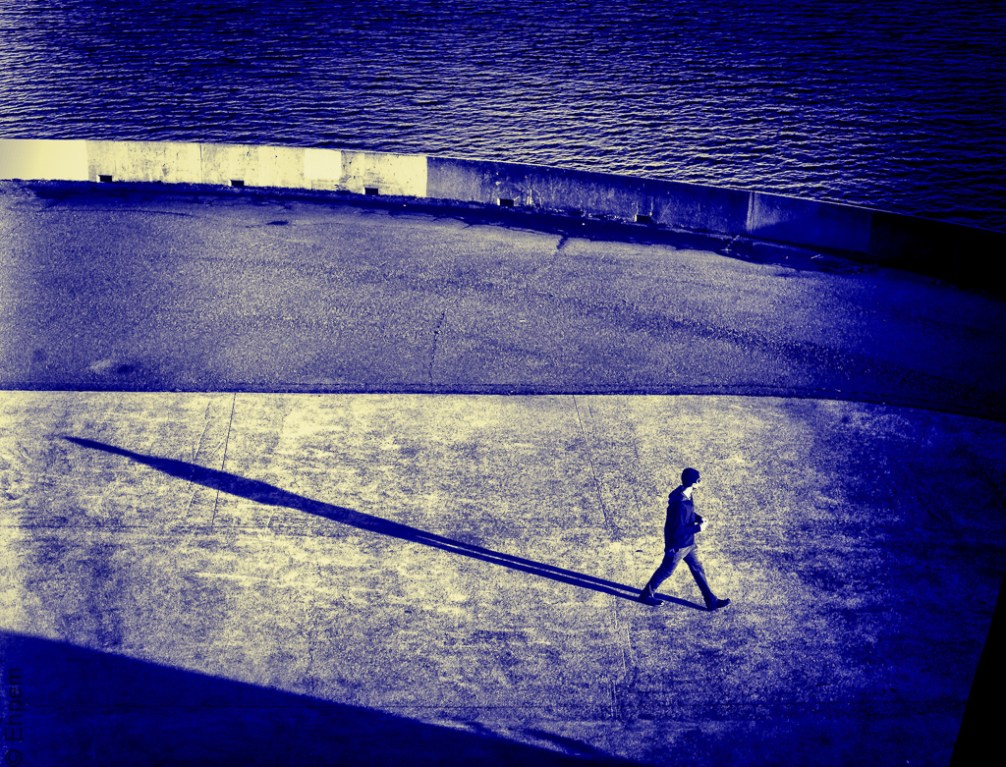
No Man Shadow

I like this one nearly as much as yesterday’s, but the man whose shadow this is makes that shot better.
However, this shot is much more abstract and that I do like.
Top Posts & Pages – Click Thumbnail To View


Recent Comments
♦ FUJITA (藤田光学工業) H.… on Fujitar P.C 35mm F2.5 Asahifle… ehpem on Child’s Grave Kyle Hoyt on Child’s Grave ehpem on Charles Elliott Pole, Universi… Lisa Kadonaga on Charles Elliott Pole, Universi…


 burnt embers