Sunset Sphere
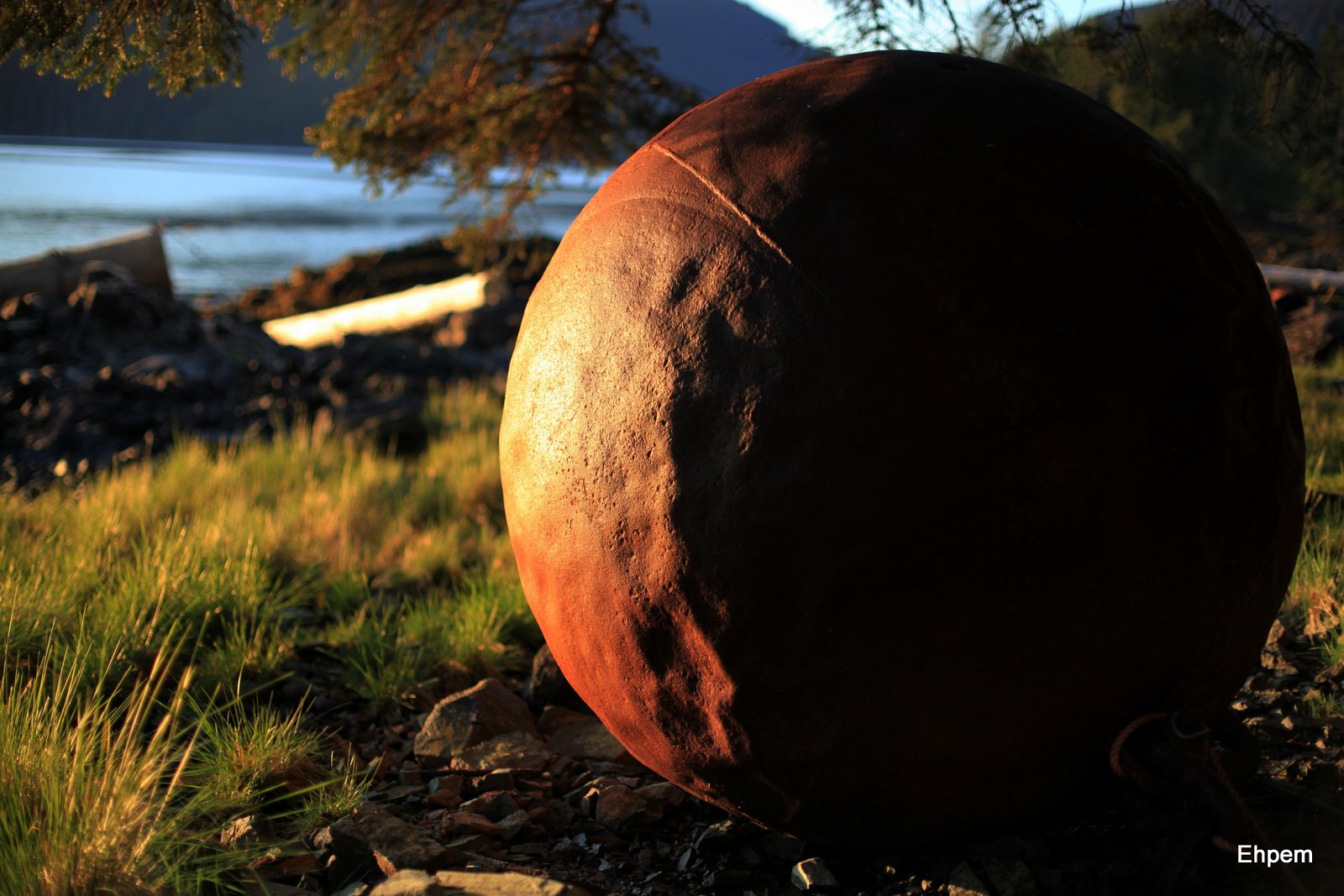
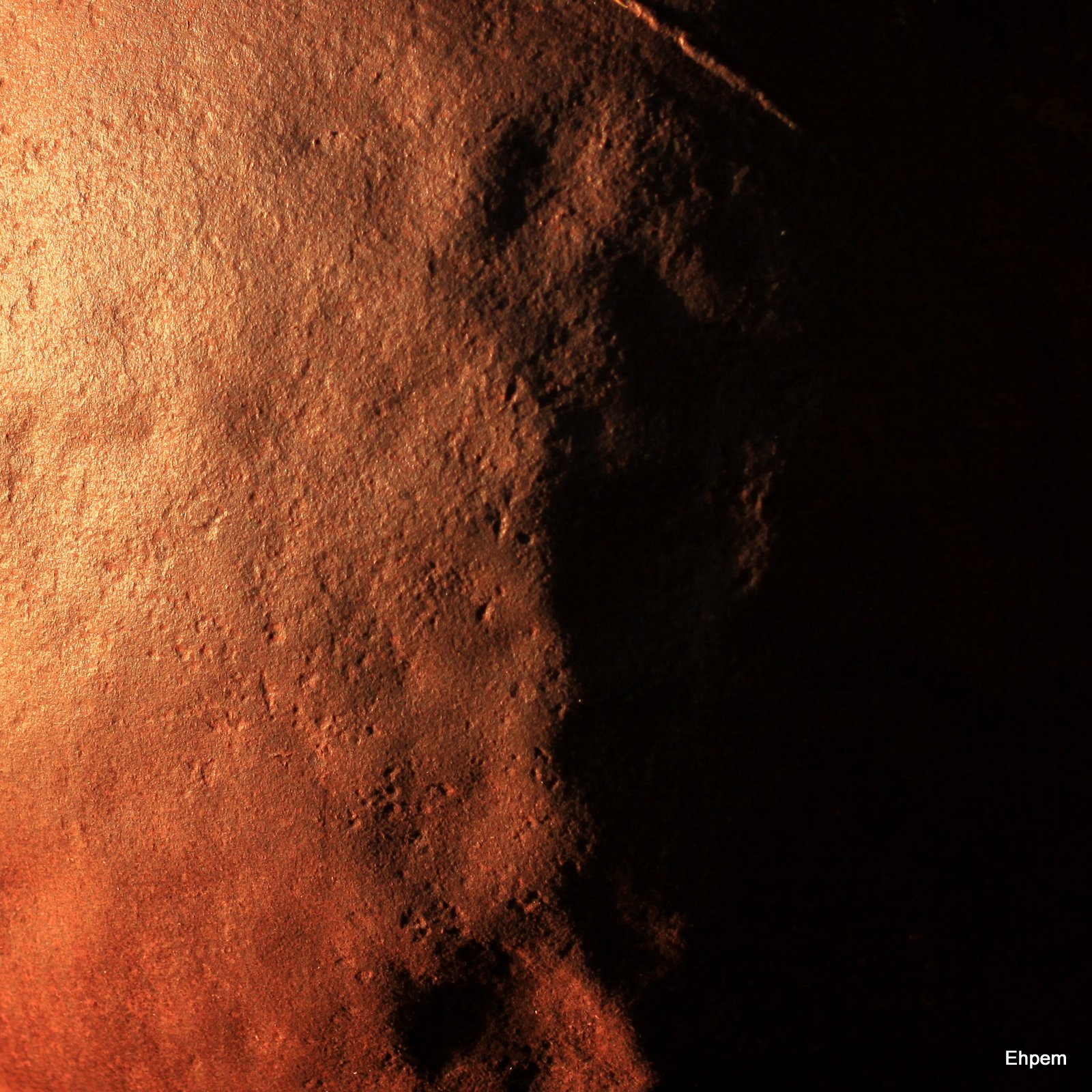
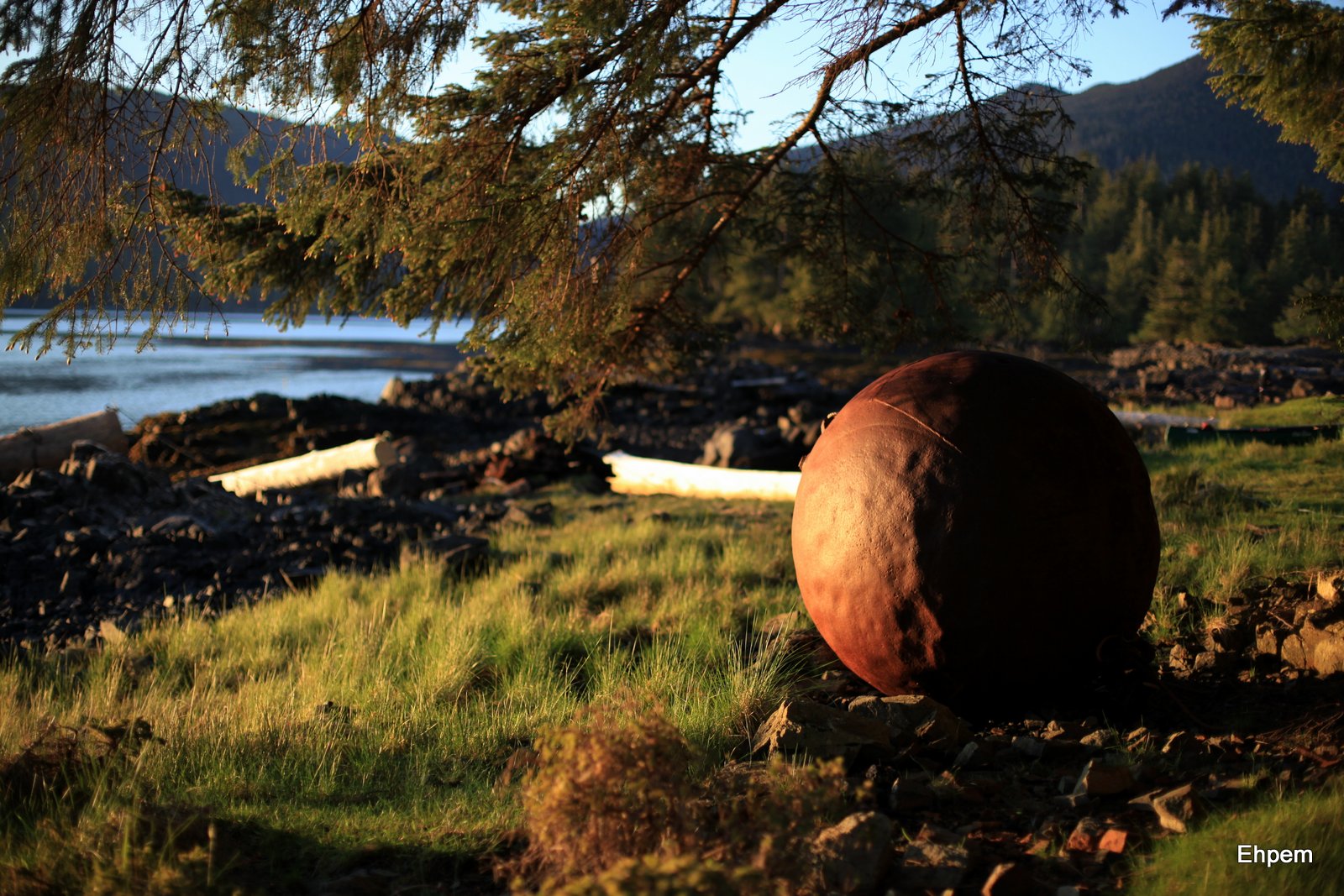
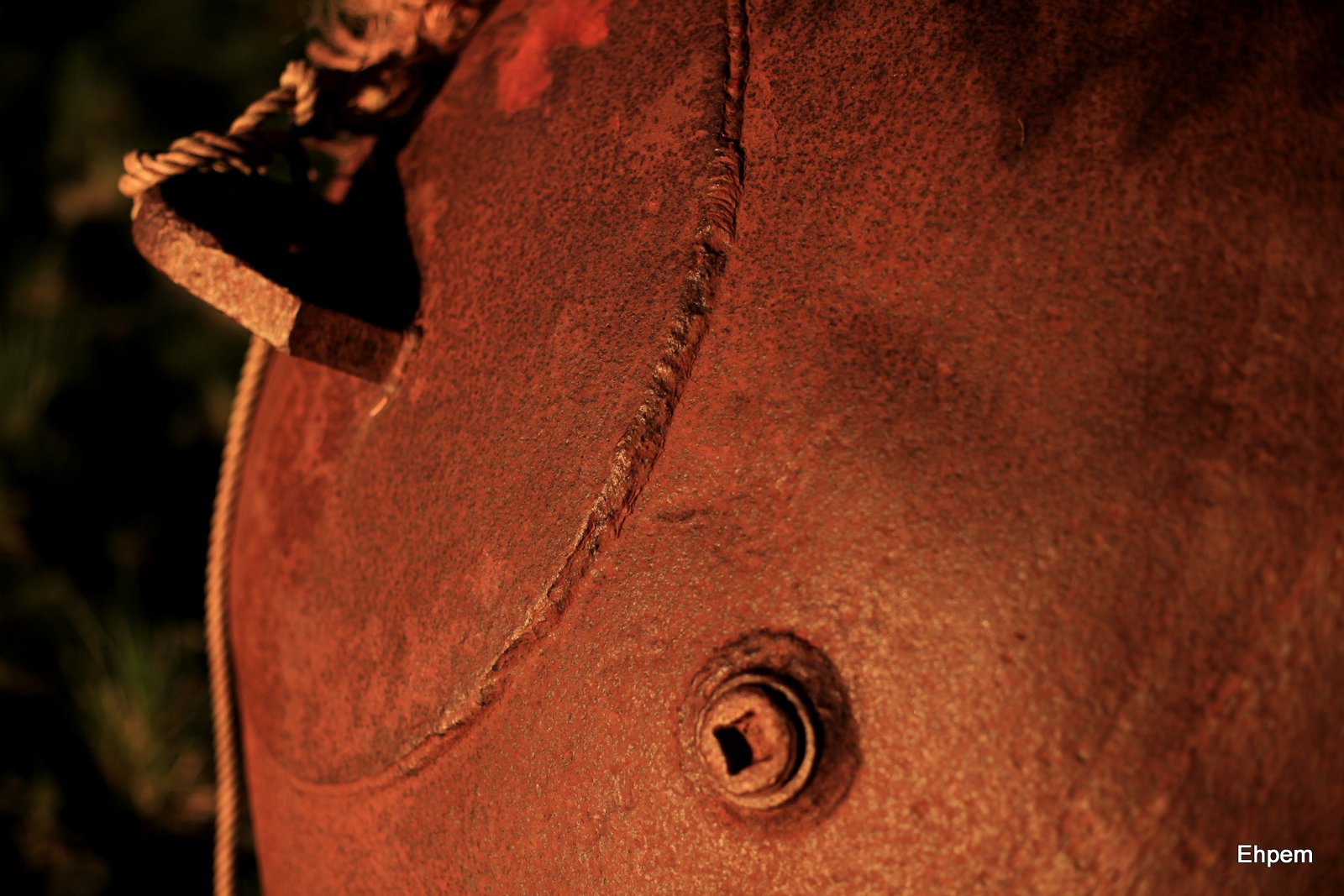
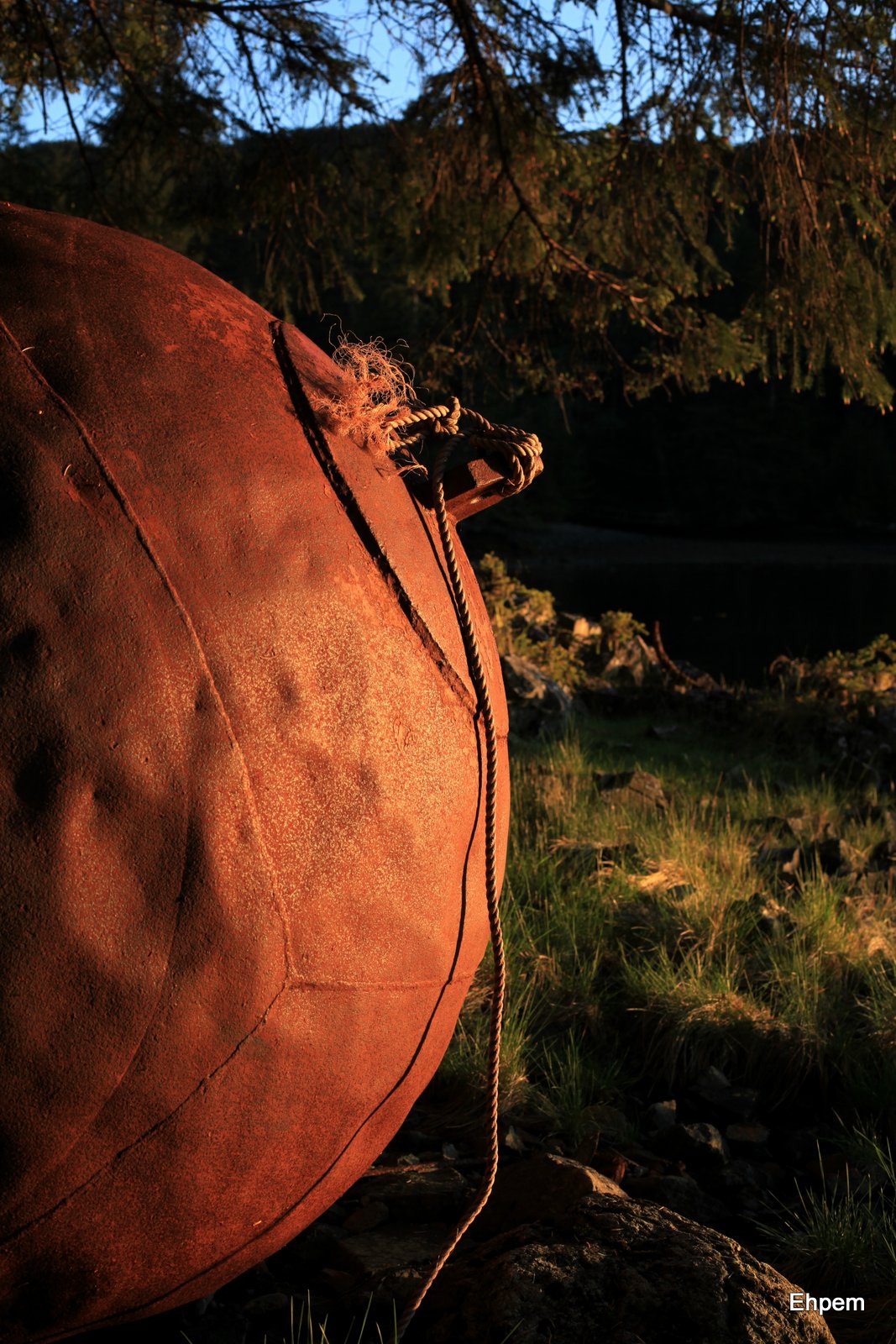
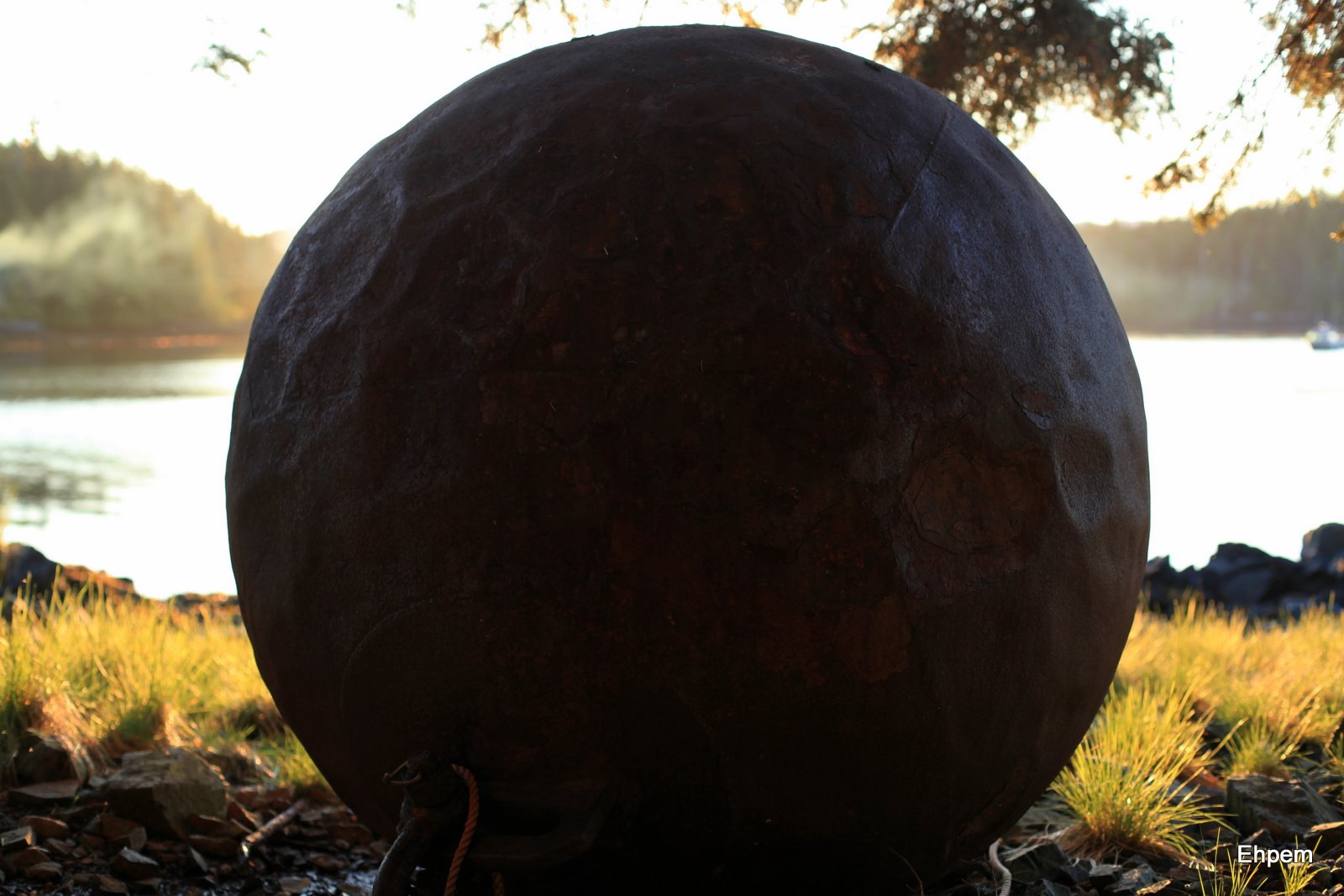
This sphere is on the beach under overhanging trees in Rose Harbour, near the rusting try-pots featured in an earlier post. It too is a remnant of the whaling station and must have been a buoy for tying whaling ships while in harbour. Now, at sunset, it is reminiscent of a washed up moon pitted with craters.
.
There are many interesting features left of the whaling station, and after the try-pots I think this is my favourite. You can’t really tell how big it is from these photos, but I would estimate about 4 feet in diameter, maybe more.
.
.
.
.
.
For more views of whaling station equipment taken at the same time with Tansy check out this post: Whaling Station.
.
This link catalogues my posts about volunteering on the Kilgii Gwaay archaeological site project.
Canon 5Dii, Canon 50mm/f1.4 lens, ISO 200, various exposures.


 burnt embers
LOVE the textures and details in these pictures, Ehpem! Great work here! Also, the shadows are exquisite! They really add a touch of drama to the setting. What an interesting, interesting place!!
LikeLike
Thank you Toad. I am pleased you like this one – I know you like old objects, including rusty ones. Probably an excellent subject for HDR.
LikeLike
It looks like it could be a planet!
LikeLike
And, to the micro-organisms that dwell in that atmospheric film of rust, perhaps it is!
LikeLike
So cool! I think it would make a great garden piece!
Also, “washed up moon” is the best descriptor ever – I will probably borrow that line in the future.
LikeLike
You would need a large garden. And in fact, it kind of is a garden piece now, right in front of a house and so high in the intertidal zone that it is barely on the beach.
I look forward to seeing how you might use ‘washed up moon’ to describe something, or someone.
LikeLike
Neat photos! Great place… Thanks for sharing!
LikeLike
Thanks Judy! It is a great place. Especially so on a sunny day.
LikeLike
I’ll bet you had a ball shooting these (pun intended).
LikeLike
When I saw this I waited for it to be lit by the setting sun as if ablaze. I wore an iPod and I put on Jerry Lee Lewis and snapped away to the song “Great Balls of Fire”.
(not).
LikeLike
I think it might be a metal, and whale-sized equivalent of a glass fishing float.
LikeLike
It is! Though this one has not come from Asia (I don’t think), We had people bringing large styrofoam floats to the cabin for Parks Canada to deal with while I was on this trip.
It has been suggested that maybe this was to keep a harpooned whale afloat. I am not sure if that kind of whale hunting was practiced commercially. But, it would be an interesting parallel to the aboriginal whaling in this area – the Nuu-chah-nulth and Makah for instance, on the west coast of Vancouver Island and Washington State, practices whaling from canoes. They attached to the harpoon a series of floats, made from seal skins, that prevented the whale from deep diving and tired it out so that it would either die or could be lanced when it came to the surface.
However, I think the most likely function of this object was as a buoy, firmly anchored in the bay, to which a large vessel could tie when not at the dock and thus not need to set an anchor in these tricky waters with very large tides.
LikeLike
How cool is THAT?
LikeLike
It is cool isn’t it. Doubt I will see another any time soon.
LikeLike