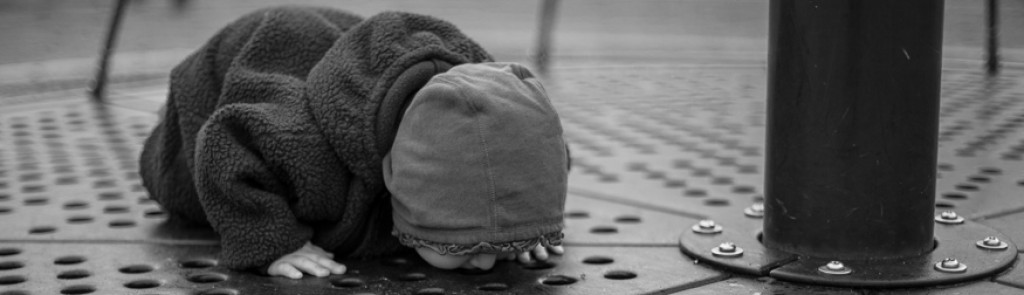
Street Knitter

I see this woman sitting in this sunny spot quite often and she is always knitting.
This is one of my attempts at candid street photography.
It is something I have pretty much given up on since it doesn’t feel quite right, and often proves to be a waste of film.
.
Olympus XA2, Fuji Superia X-Tra 400 film, scanned with Epson V700, processed in Lightroom 5.
.
.
If you see an advertisement below, it is there because WordPress makes it so and I don’t pay them money to stop ads.
If the ad is inappropriate or tawdry and you don’t like it, then click on the “About these ads” link above the ad and file a complaint with WordPress.


 burnt embers
Pingback: Not for the Street | burnt embers
I like it. Candid.
Living in the country, in a rural area of a small town, I don’t get a lot of opportunities to try my hand at street photography. When I do, it feels invasive. I love to see other photographer’s work at it, though.
LikeLike
Hi danita. I think that it would be impossible to do candid photography in a small town. And your comment may shed light on some of my discomfort – Victoria is moderate sized city, but is in essence still a small town. Every time I am out on the streets I see people I know, often people I know really well. I don’t have a big Victoria based following to my blog, that I am aware of anyway, so it is less likely that people will spot themselves in my pictures. But it is not impossible either. I think that candid street photography somewhere like NYC or Melbourne or Paris or Mexico City is bound to be a much more anonymous experience for both the photographer and their subjects and that must make it easier to take and publish such photos.
LikeLike
I feel we are friendly enough here to discuss this without being judgemental. I like (some) street photography and have seen some great shots on exhibit and posted on many blogs I follow. I have even done some myself, though I admit it was very little. The problem I have with it is that, no matter how good the photos are, if the person in the photo is recognizable, it shouldn’t be on public display without their permission. I’ve heard many folks express their desire for more privacy and less invasion of privacy and it all sounds reasonable to me. Personally, I would not want my photo published without my concent whether I know about it or not. Of course, this is my own personal feeling and everyone has a right to their own opinion. However, this has not stopped me from taking the shots. Posting them is another matter. My favorite shots of all time have folks that are recognizable in them but I don’t feel I should share them because I took them candidly and without their permission. I’m embarrassed to say that I did publish some photos on my last (deleted) blog that shouldn’t have been posted and that is the reason that blog is gone. I don’t expect everyone (anyone? ) to agree with this but it is important to me.
LikeLiked by 1 person
A person sitting knitting on a public sidewalk can reasonably expect to be photographed by passers by – she is a making a spectacle of herself like a musician or street performer. Also most of her face is hidden by her hat. I thought she might be a man before I read ehpem’s remarks.
LikeLike
Hi Val. See my response to Ken. I agree that it is likely someone that stands out from the usual on the street is more likely to be photographed, and that street performers are fair game. But if for someone like this woman the street is her living room, then it is a bit different. As I noted elsewhere in the comments, the fact much of her face was hidden rendering her unrecognisable (except being the only street knitter I have seen, her knitting identifies her) was a factor in deciding to post this photo.
LikeLike
Thanks for the thoughtful reply Ken, and no judgment detected. I know you have touched on this very topic in other places over the past year or two.
I totally see your point – I think that as our privacy is eroded through social media, state spying, computers figuring out how to target ads to us, grocery stores tracking our purchases, and on and on that people are more likely to want to retain the scraps of privacy that they can control.
This is perhaps a unreasonable while people are out and about in a public space – it is not a private space. But for many street people it is their only space so in some ways pointing a camera at them without permission is a perhaps more akin to doing so through your or my living room windows. Most candid shots are not of street people, but of housed people out in public, doing what people do. Rather like all the people caught on Google Street View – with their faces blurred out for privacy, at least in Canada.
And then there is the undeniable fact that people shots, especially candid ones, are among some of the most powerful and lasting photographs ever taken. We are people, and we are curious about other people and about how they live, behave, emote and so on. And thus people pictures are of central interest to many viewers.
I think that many newspapers used to have a policy they would not publish a photograph if the main characters in a shot did not give permission and were named, though not the ones in the background. And I suspect if the shot was powerful and illustrated the story well, those rules could be overlooked.
I guess that the bottom line is probably one defined by societal norms. There are people that don’t like it, but if they are a small minority, should their preferences guide behaviour for all of society? There are after all also a few people at the other end of the spectrum that have abnormal preferences for displaying everything about their lives in minute detail, whether clothed or not, in the bathroom or living room or on the bus. We don’t set privacy rules (or lack thereof) by these people’s wishes either. I am not sure where you can find these rules, though in Canada there is some jurisprudence around photography of people in public places, and each province and the federal governments have protection of privacy statutes (which are almost always bundled with freedom of information legislation, thereby illustrating the conundrum quite well).
I think I will just have to go with my gut. Mostly I will be taking pictures with permission, and using them if I think I have permission, or think it is not necessary (as with street performers). Sometimes if I take a really powerful photograph that tells a story, and probably a story that needs telling, then I could see a decision to use the photo without permissions even if on one level it does not seem quite right. Ultimately, if I am thinking about it, and not just doing it, then probably I will be striking a balance that works, at least most of the time.
There is no simple decision matrix for these dilemmas, so I expect I will continue to wrestle with them for some time.
LikeLike
It tells a story and that is what photography all about
LikeLike
thanks ffb, and thanks for dropping by and commenting – much appreciated! That is the conundrum about street photography, it does tell stories, and they are stories that don’t usually exist if you ask to take the picture, since the moment is lost.
LikeLike
I hope you dont give up on such pictures, they are among your most interesting – to me anyway. Is it really so intrusive?
LikeLike
I think it is a bit intrusive. It is not illegal in Canada, and people’s pictures are literally everywhere, and probably I was seen on several security cameras as I walked along this street, and this woman too. In this case her face is not really visible which was part of the calculation in deciding to post it.
LikeLike