
Makituk Pingwartuk – Bear
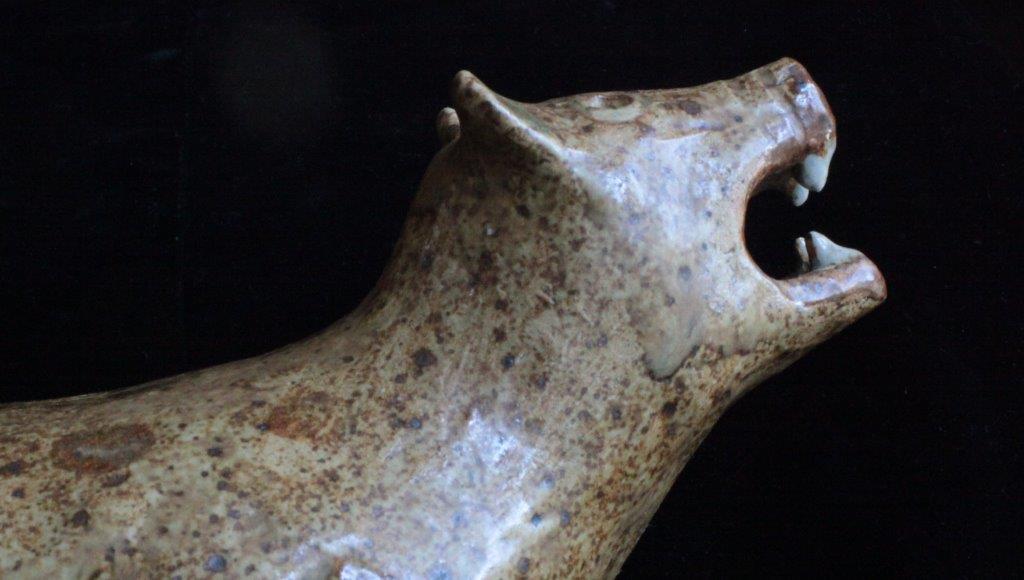
This ceramic polar bear was sculpted by Kingnait (Cape Dorset) artist Makituk Pingwartuk while a student at Kootenay School of Art in Nelson, BC.
- Length – 12 inches (~30 cm)
- Width – 6 ½ inches (~16 cm)
- Height – 7 ¼ inches (~18 cm)
This is part of a series that details the collection of my wife’s family, made while they too lived in Nelson and were friends with Makituk.
More information about Makituk and this collection can be found in my initial post in this series, at this link.
Drain with Self
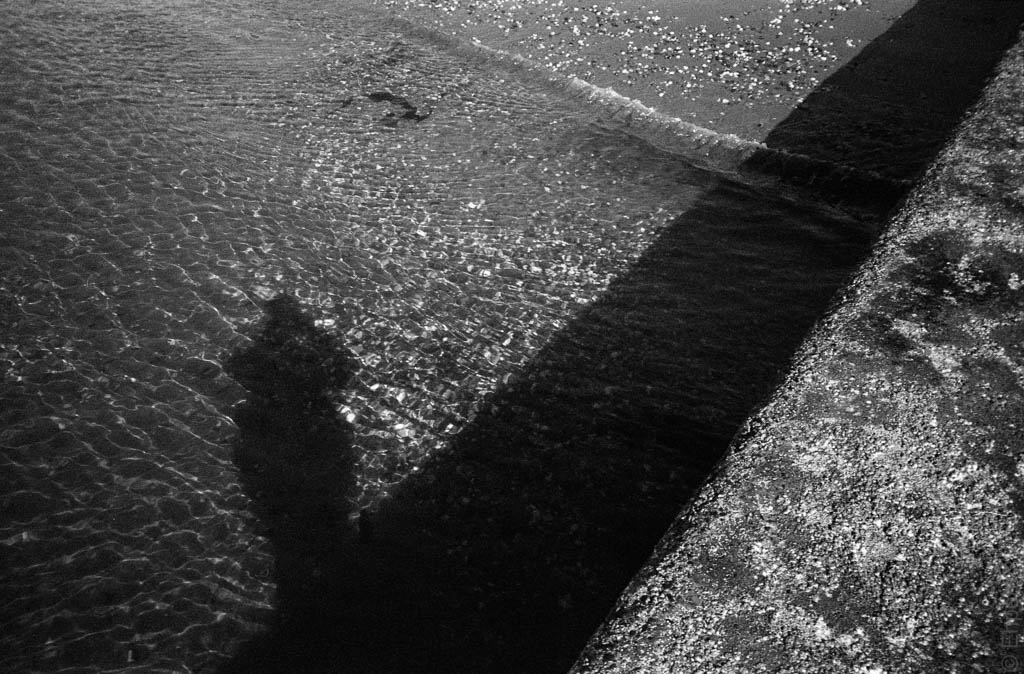
I find myself in some of the Ross Bay storm drain photos which is inevitable given how often I take pictures there.
Usually, though, I don’t present as a Neanderthal Venus figure.
This is a b&w conversion from the underexposed results of testing a Minolta AF-S camera.
Others have been seen on this blog in the past week.
And the colour originals along with lots of info about the camera can be found here.
(more…)
Makituk Pingwartuk – Inuit Ceramic Artist
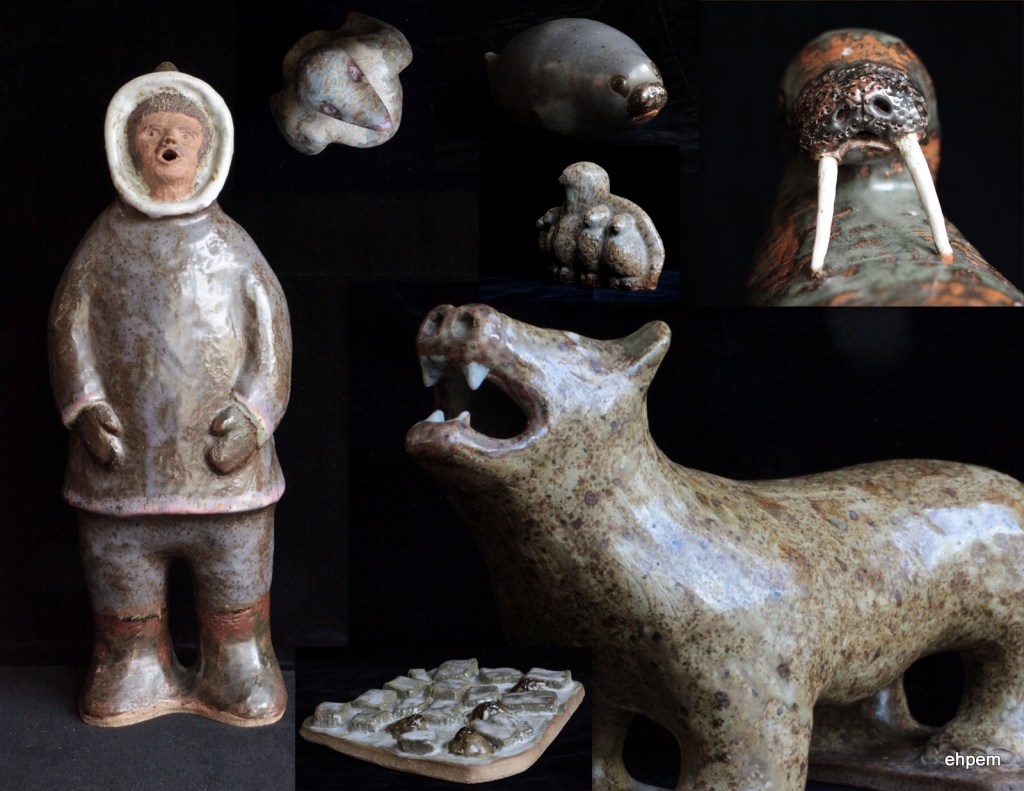
Makituk Pingwartuk is an Inuit potter from Nunavut. She lived in Nelson, BC for some time in the late 1960s while she attended the Kootenay School of Art. It was in Nelson that she made friends with my wife’s family who have several of her ceramic sculptures – hence my interest in her and her work. In future posts I will feature one sculpture at a time (this link will display all of them once published). This collage shows all that we had found when I was taking these photos four years ago. Since then a small seal has turned up. There were two other small seals as well, and one of them should be around this house somewhere. In this blog I will give a bit of information about Makituk that I have been able to find out from various sources. If I learn more I will either edit this post, or add information to future posts.
I prepared this and the other posts in this series in September four years ago a few weeks after I started blogging. I did not post at that time for a number of reasons. One was that my wife, though a child in Nelson, was befriended by Makituk and has been trying to find a way of getting in contact with her again. Another was that I attempted to find out more information from the Houston North Gallery and Houston family who had been selling Alma Houston’s collection of Makituk ceramics – [Edit: I did hear back from John Houston well after these blogs were published who told me of his family closeness with Makituk. He spells her name Makittuq Pingwartuk, but I use the spelling Makituk because that is how these pieces are signed]. Also, I was hoping to interview Walter Dexter, one of Makituk’s ceramics teachers and a family friend who also lives in Victoria. He had been very ill so that chance never arose and sadly he died just a few weeks ago. This year we also tried to contact a person we think is a member of Makituk’s family, but have not yet had a response.
Since these pieces will soon be out of the family’s hands and in a national public collection now seems like the time to post these words and photos.
Drain with Branch
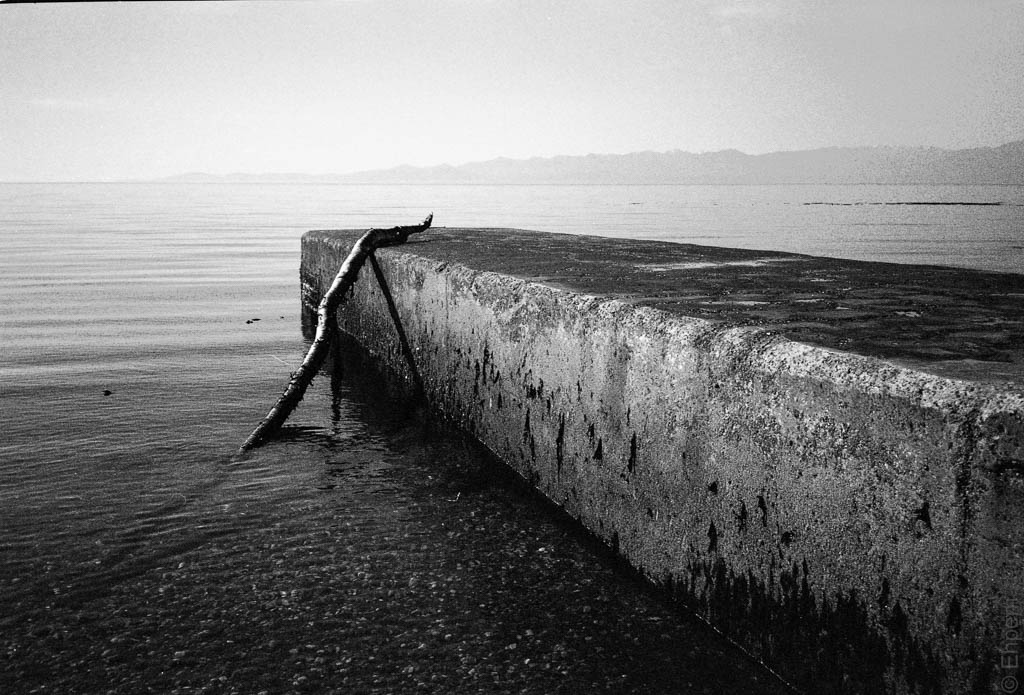
More photos from the Ross Bay storm drain taken while testing a Minolta AF-S camera.
This branch is from an alder tree, or is perhaps the trunk of a young alder.
See yesterday’s post for more shots converted to black and white.
I have published the original colour shots and lots of info about the camera on 52Rolls at this link.
(more…)
Testing a Minolta AF-S
This is my 27th post at 52 Rolls, which means I am more than half way through the project. It is the companion to my other post from this morning, and for the next few days as well.
Here at Burntembers I am running black and white conversions of images from the same test roll, even though it did have some luscious blues and greens in the underexposed originals.

 Today’s post for my 27th week includes frames from a couple of rolls of film used to test a Minolta AF-S. I picked it up for a few dollars in a thrift store and it turned out to not work as expected due to significant under exposure, but I have worked out how to use this camera if I choose to run more film through it.
The Camera
The AF-S is the quiet version of this camera, and by quiet I mean it does not speak to you like the AF-Sv or “Talker” (the ‘v’ stands for Voice). This is a good thing in my books, though I think there is more of a market and thus higher value for the AF-Sv just for the curiosity factor. The AF-S is distinguished from the AF-Sv by the blue stripe on the side (vs red on the talker) and the letter “v” under the Auto…
View original post 1,088 more words
Drain with Kelp

These photos from the Ross Bay storm drain were taken while testing a 1984 Minolta AF-S point and shoot camera with Fuji Superia 400 colour film. It turns out that the camera under exposes by about 3 f-stops, so these shots are converted to black and white to see what can be recovered from the negatives.
I tested the camera on two different days including quite a few shots at the storm drain. On the first day there was a bull kelp draped across the drain which is the subject of today’s post.
Much more information about this camera, including many of the (very blue) colour versions of the test shots, is published simultaneously as one of my 52 Rolls project contributions at this link.
(more…)

Top Posts & Pages – Click Thumbnail To View


Recent Comments
♦ FUJITA (藤田光学工業) H.… on Fujitar P.C 35mm F2.5 Asahifle… ehpem on Child’s Grave Kyle Hoyt on Child’s Grave ehpem on Charles Elliott Pole, Universi… Lisa Kadonaga on Charles Elliott Pole, Universi…


 burnt embers