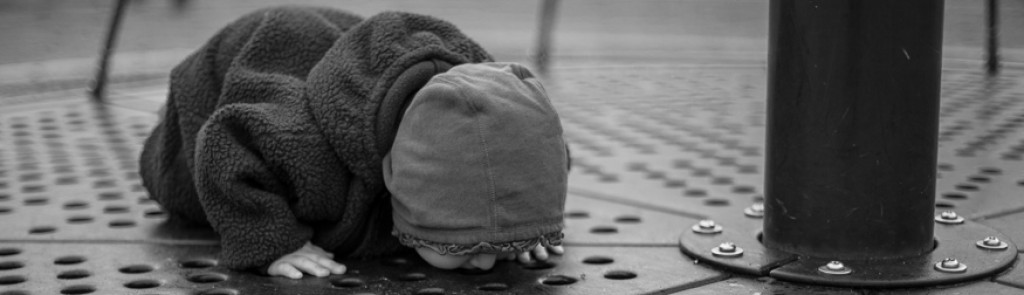
Rose Harbour B&W

I have previously posted about the evening we spent at Rose Harbour across the water from our cabin. Those posts highlighted the spectacular colours that came with the sunset. This post is more about the textures I saw around Rose Harbour, often emphasised by the strong evening light. The shed above did have a red door knob – this is processed using a “focal black&white” filter narrowed in to just the red bit.
Try-Pot Sunset Details
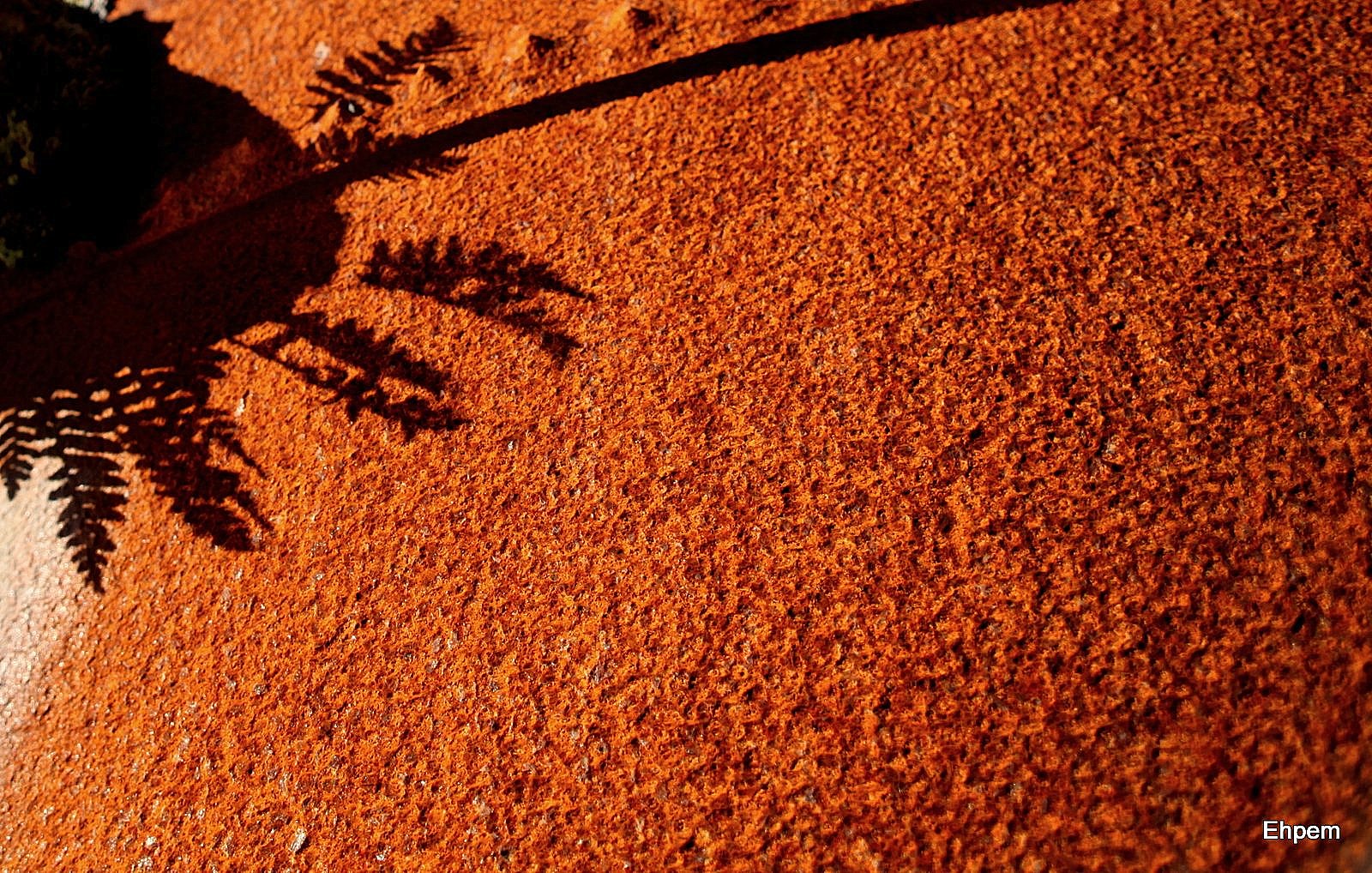
I have previously posted about the sunset from Rose Harbour – originally in Rose Harbour Sunset and a few days ago in Try-Pot Sunset.
The latter post has more information about the whaling station at Rose Harbour. I saved these details aside from that post because they seem different, the feel and topic seems to stand on its own from the first post. I hope you agree. It would be nice to extract some beauty from these two tanks that between them rendered oil from the carcasses of more than 5,000 whales.
(more…)
Sunset Sphere
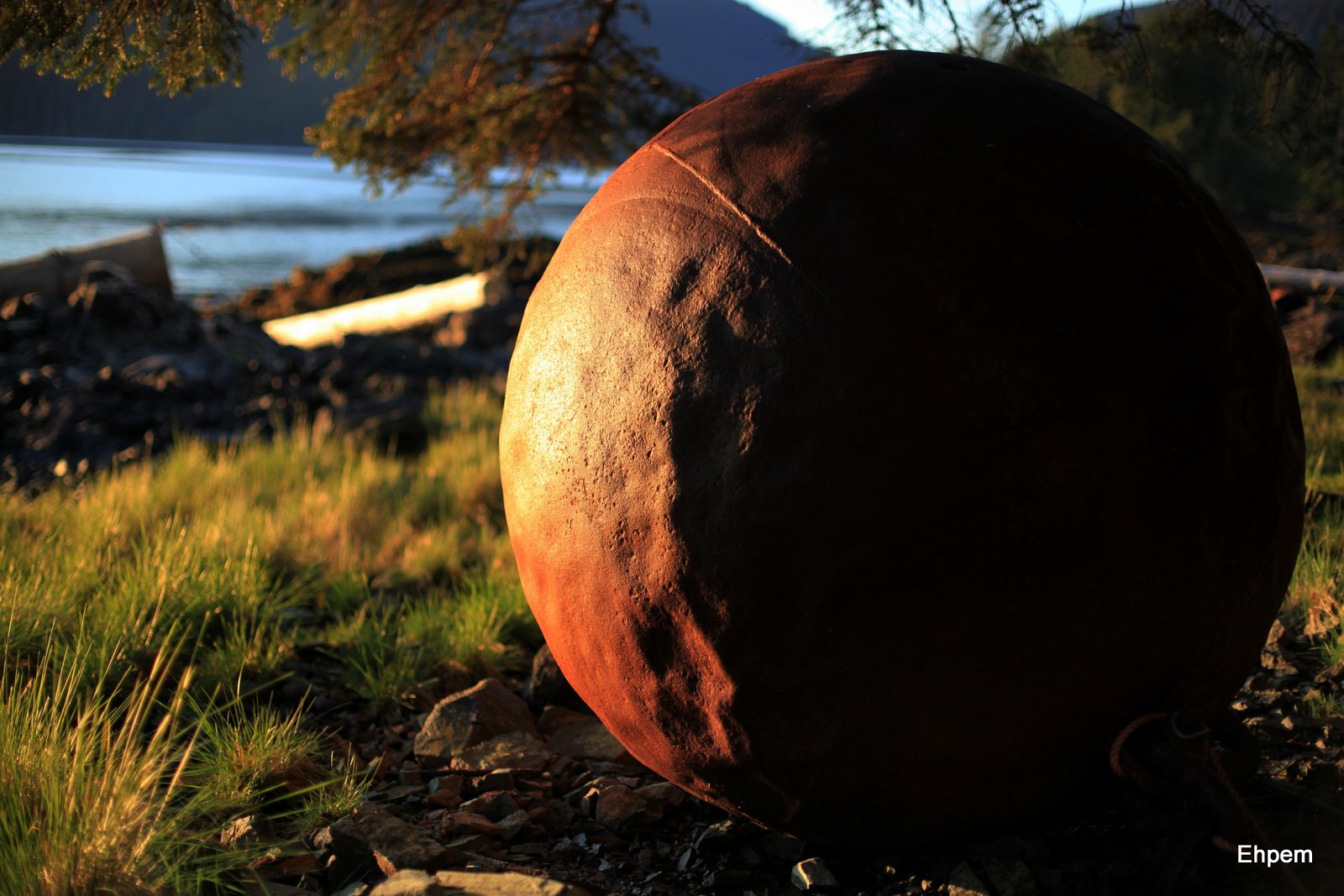
This sphere is on the beach under overhanging trees in Rose Harbour, near the rusting try-pots featured in an earlier post. It too is a remnant of the whaling station and must have been a buoy for tying whaling ships while in harbour. Now, at sunset, it is reminiscent of a washed up moon pitted with craters.
(more…)
Cinquefoil Fly
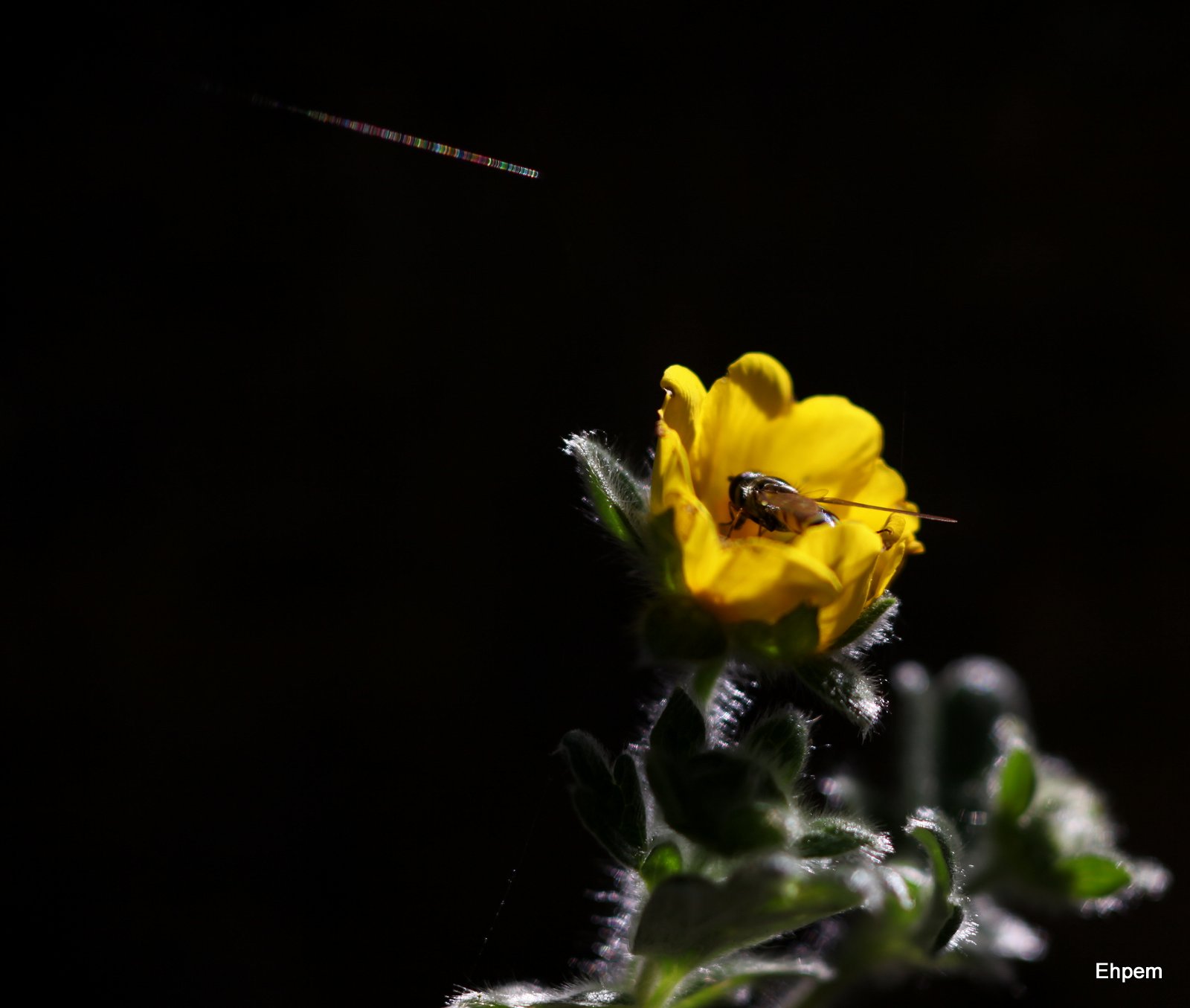
Between the cabin and the site is a glacial erratic in the intertidal zone. It is quite high up, with its feet rarely in the water. At the base of the erratic are sporadic and small clumps of the hairy or northern cinquefoil (Potentilla villosa). On the stone itself there are large clumps of the flowers. While we were on Kilgii Gwaay it was in full bloom and I went to the rock one day to take pictures.
(more…)
Haida Gwaii in Green
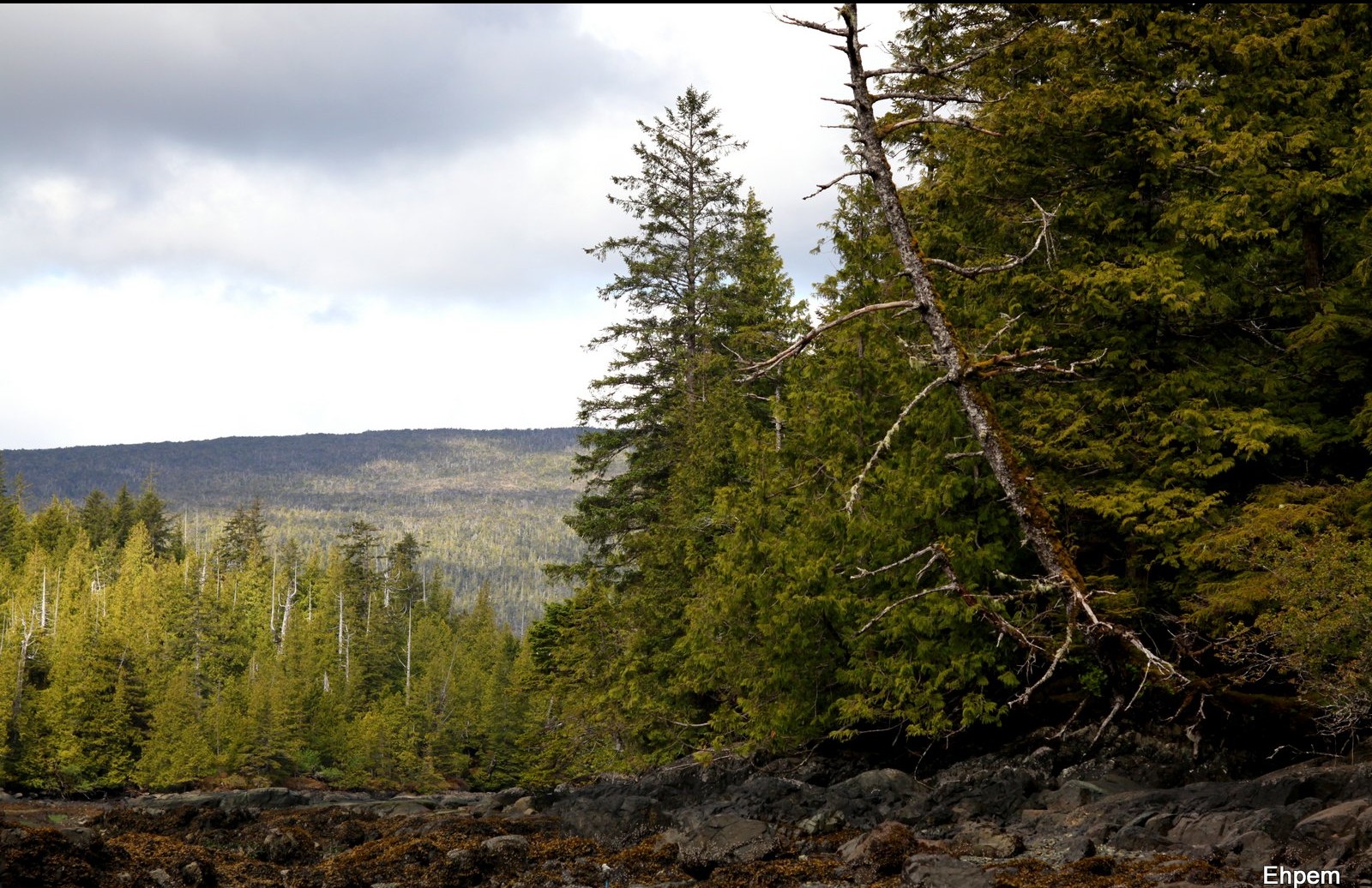
A dominant theme in Haida Gwaii is Green. Green seems to come in all shades, including yellows, especially when lit with morning and evening sun. Here is a selection of some of the greens I met in Haida Gwaii on my trip in June.
(more…)
Try-Pot Sunset
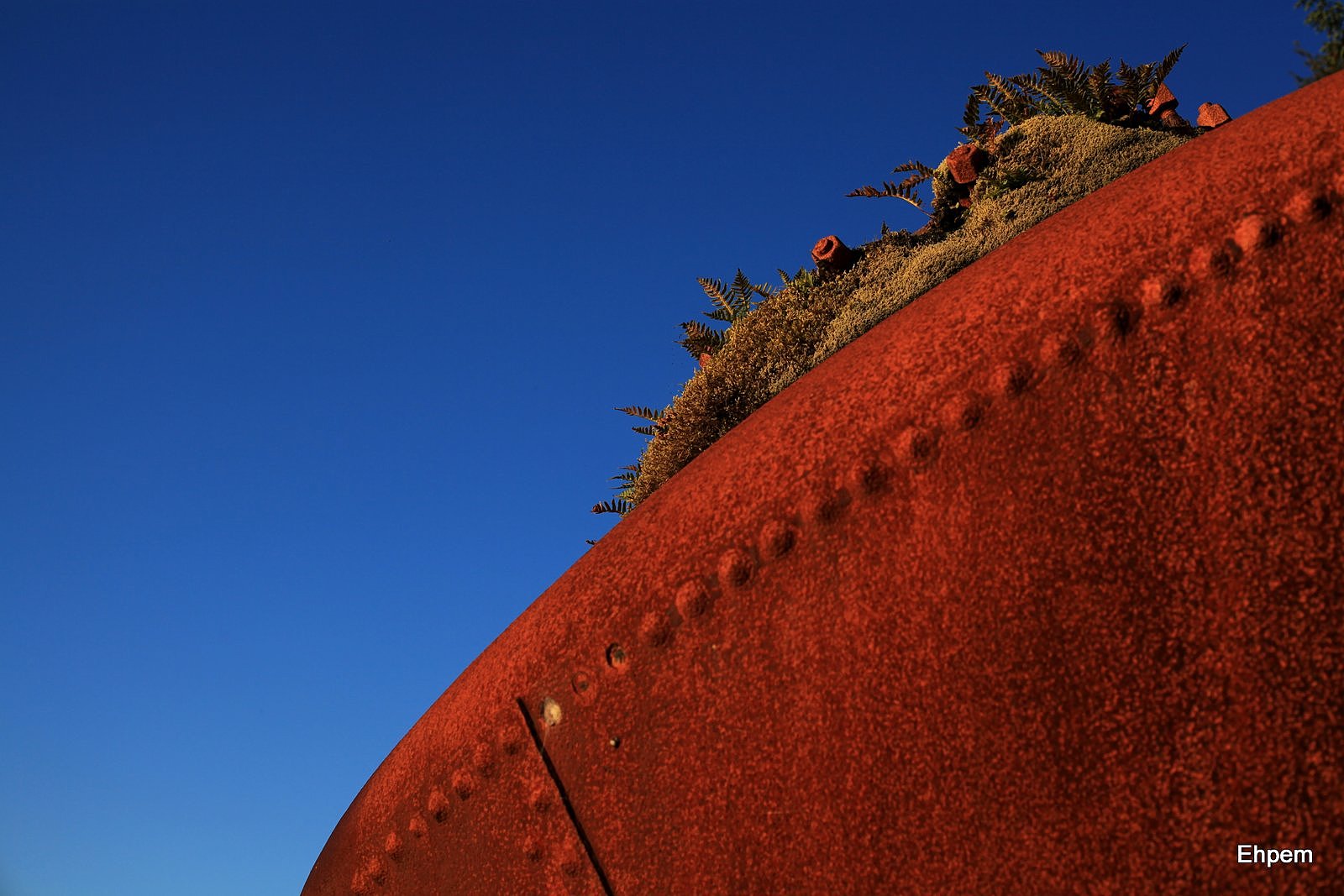
I have previously mentioned that we spent one very pleasant evening in Rose Harbour across the water from our cabin. That post, Rose Harbour Sunset, showed the distant view over Houston Stewart Channel. Today’s view is of the same sunset shining on two try-pots sitting in the upper intertidal zone at Rose Harbour. The Rose Harbour whaling station was operated by the Consolidated Whaling Corporation from 1910 to 1943, taking more than 5,000 whales during that time. Try-pots are the vessels in which whale oil is rendered from the blubber. These are industrial scale try-pots, smaller ones were used on board whaling vessels and at whaling stations in earlier years. Some historical photographs in the BC Archives show the whaling station and can be seen here, here, here, here, here, here, and here. Looking at those images I would imagine that these try-pots were in a building on a wharf, probably back a ways in the complex of buildings that occupied this location. In front of the try-pots are some footings for a pier or wharf.
(more…)
Kilgii Gwaay Finds
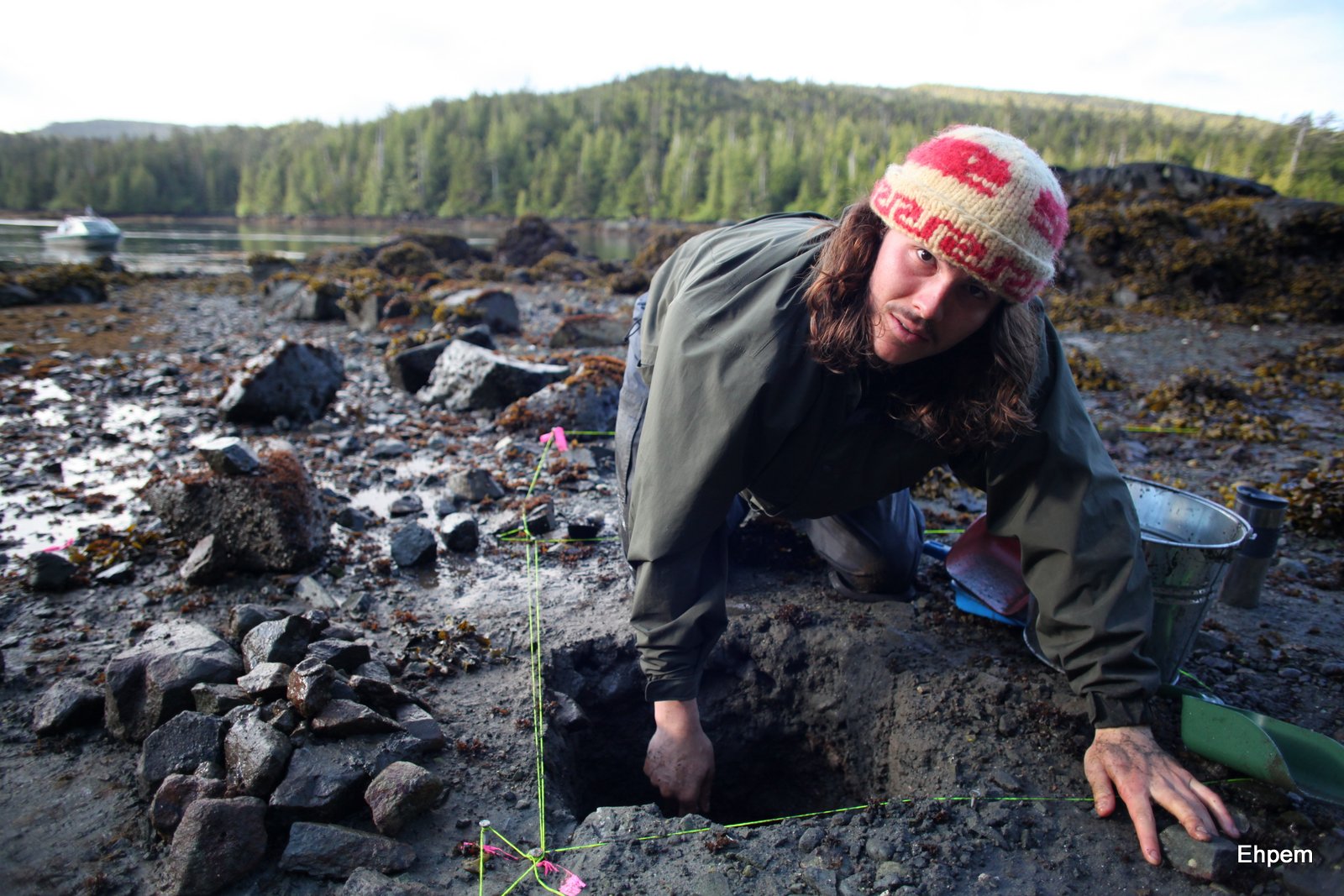
I am sure some of you have wondered what we actually found at the Kilgii Gwaay archaeological site that we invested so much energy into, and which I have blogged about for three weeks now. I can’t tell you about the new stuff from 2012 as it has not been published, or even analysed, and in any case the project leaders are still slogging away in the field on other sites and beyond asking permission for now. But it should be OK to show you some of the things from this year that are the same as were found 10 years ago and that have already been published, and to draw a bit from that work to illustrate the importance of the site.
Before I go on, I would like to say that this is my 300th post, the first 200 seem to go by much faster than the last 100. What keeps me going is all of you great readers, so many of whom like or comment. Thanks for sticking around and encouraging me. I really appreciate it.
(more…)
Top Posts & Pages – Click Thumbnail To View


Recent Comments
♦ FUJITA (藤田光学工業) H.… on Fujitar P.C 35mm F2.5 Asahifle… ehpem on Child’s Grave Kyle Hoyt on Child’s Grave ehpem on Charles Elliott Pole, Universi… Lisa Kadonaga on Charles Elliott Pole, Universi…


 burnt embers