Setting up Kilgii Gwaay
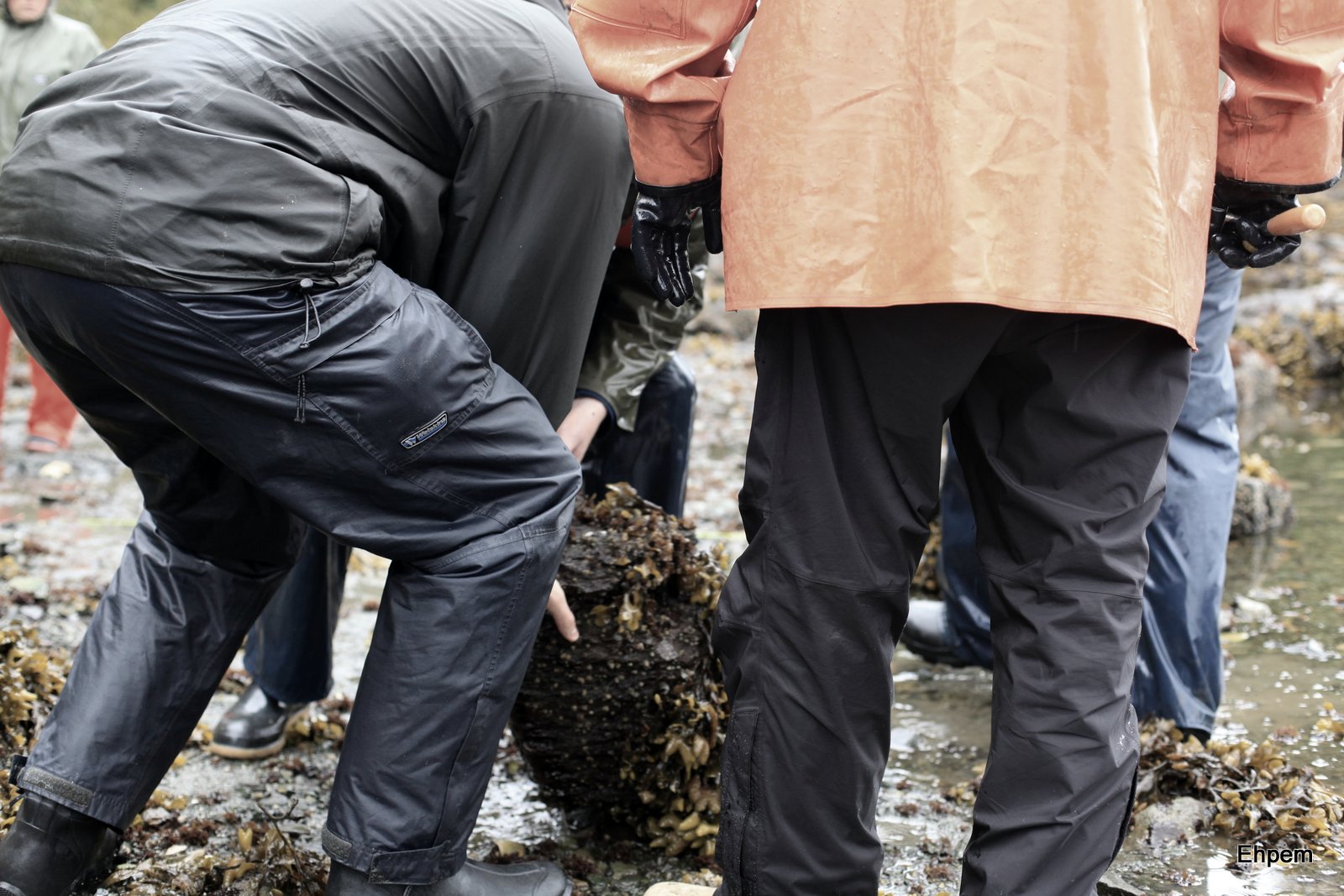
Today’s post sets up the next few posts about volunteering at the Kilgii Gwaay archaeological site with some background about the site. It also shows some of how we set up a site for excavations in the unusual conditions that prevail here. I think the rest of my posts will be much less wordy and reference readers back to this one for information. I have to go back to work this week, and writing time is going to be in short supply.
Our arrival at Kilgii Gwaay was in the early afternoon with many hours of daylight left. However, since it was at higher tide we could not start to set up the site for our work, other than moving gear to the site area. Tides matter because the site is in the intertidal zone and work must be done when the tide is out. Indeed, the dates for this project were chosen to coincide with some of the lowest tides of the year. Working with the tides creates all kind of logistical hassles and often means working at night, or in the wee hours of the morning. In previous years the low tides have sometimes been in the middle of the night and we worked with halogen lights for an hour or two before dawn. This year we faced 4am starts slowly moving to 8am during the two weeks. At first we arrived at the site at or near low tide, but later we could arrive on a falling tide and get more hours of excavation.
(more…)
Settling In to Kilgii Gwaay
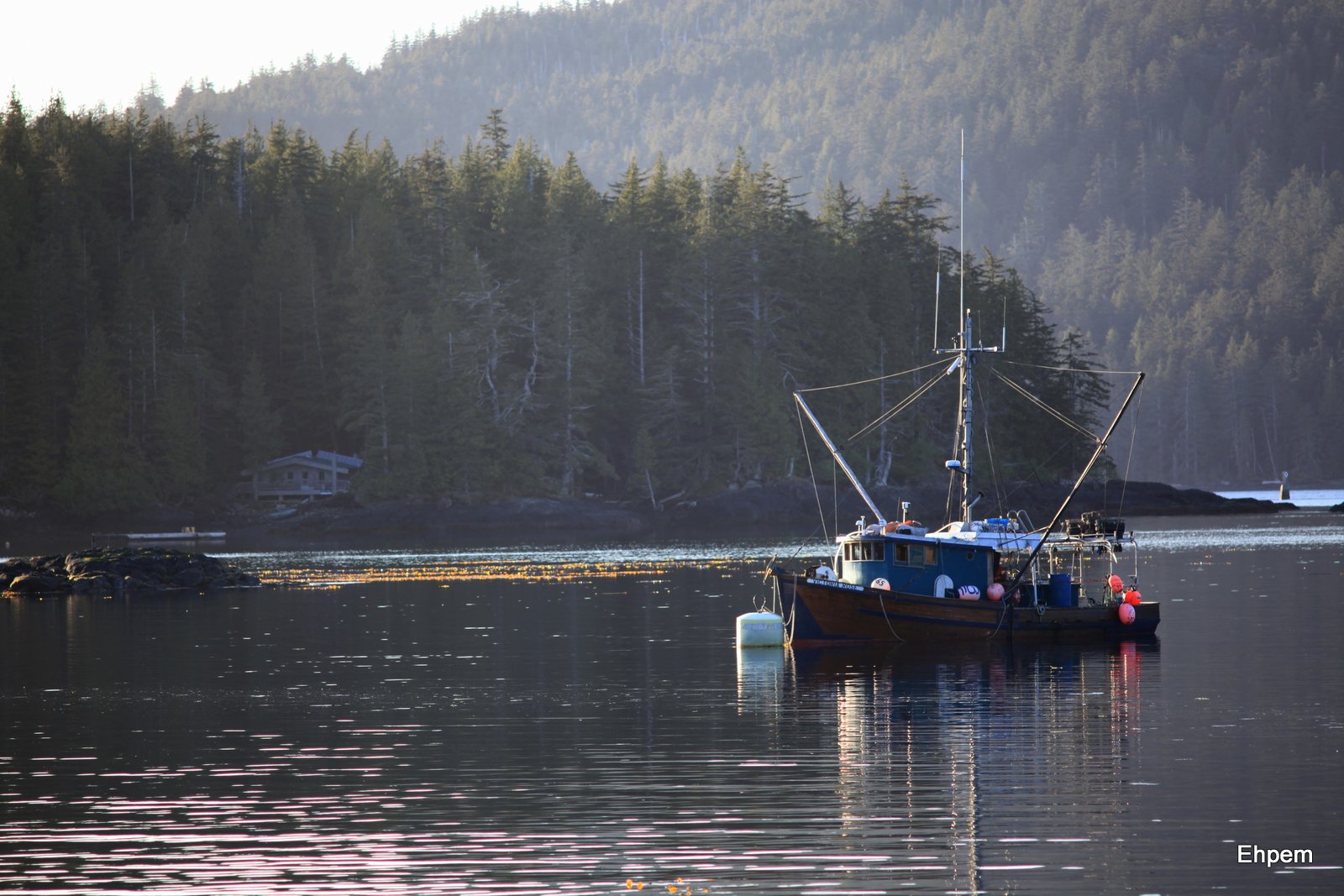
I continue my account of two weeks volunteering on an archaeological project in Gwaii Haanas with some information on our luxurious camp. We were fortunate to stay at a cabin, formally termed by Parks Canada as the Ellen Island Operations Station. Ellen Island is known in Haida as Kilgii Gwaay which is also used as the name for the archaeological site that I was working on, located around the corner from the cabin. The cabin is the southern centre for field operations within Gwaii Haanas park. It has been designed as a comfortable and convenient place for staff who can be away from home for several months of the year.
The cabin design, by architect Malcolm McSporran, is based on traditional Haida two-beam houses. This one is 1200 square feet and sleeps eight. It includes two bedrooms with bunks, a mud room, utilities room and living area with kitchen in one corner and office in another. It has solar power that runs the lights, radios, fridge, wood stove blower, recharging of batteries and laptops, the electric components of a composting toilet system and pressurizes the water system. Water is collected from the roof. Cooking and hot water is from propane. The interior is brightly lit by large skylights and with the northern latitudes electric light is not often needed during the summer. Apart from the propane and maintenance requirements, this building is pretty much self-sustaining. It really is the most comfortable accommodation I have ever had in the field and is so much superior to tents that it is not really comparable. I have spent several years in total living in tents, and am so thankful to not have to do that here, especially in the rain.
This link catalogues my posts on the project and will grow as I post more.
Southward Skies

Yesterday I began to illustrate the story of my two weeks volunteering on an archaeological project in Gwaii Haanas. See my post Around Charlotte for an introduction to the project and a send off on today’s journey. On the way south from Charlotte the crew split into two rides – one was a very fast and brand new landing craft chartered to get the gear and some people to our destination which left directly from the government dock in Charlotte for a 200km one way trip.
I went on the second ride which involves taking a truck over the ferry to Moresby Island and from there driving on logging roads to Moresby Camp, the end of the road to the south. From there we picked up a Parks Canada boat, the Storm Petrel, launched it and headed about 165km south through mostly protected waterways.
I should back up and say our day started off perfectly – an old friend of the project and former crew member invited us to his home in Skidegate for breakfast. We are talking 6 am – that is some friend. The sky and water were brightly lit across from his house and I stopped to take the picture above, not guessing that the sky would become the theme of the day’s journey across water.
Around Charlotte
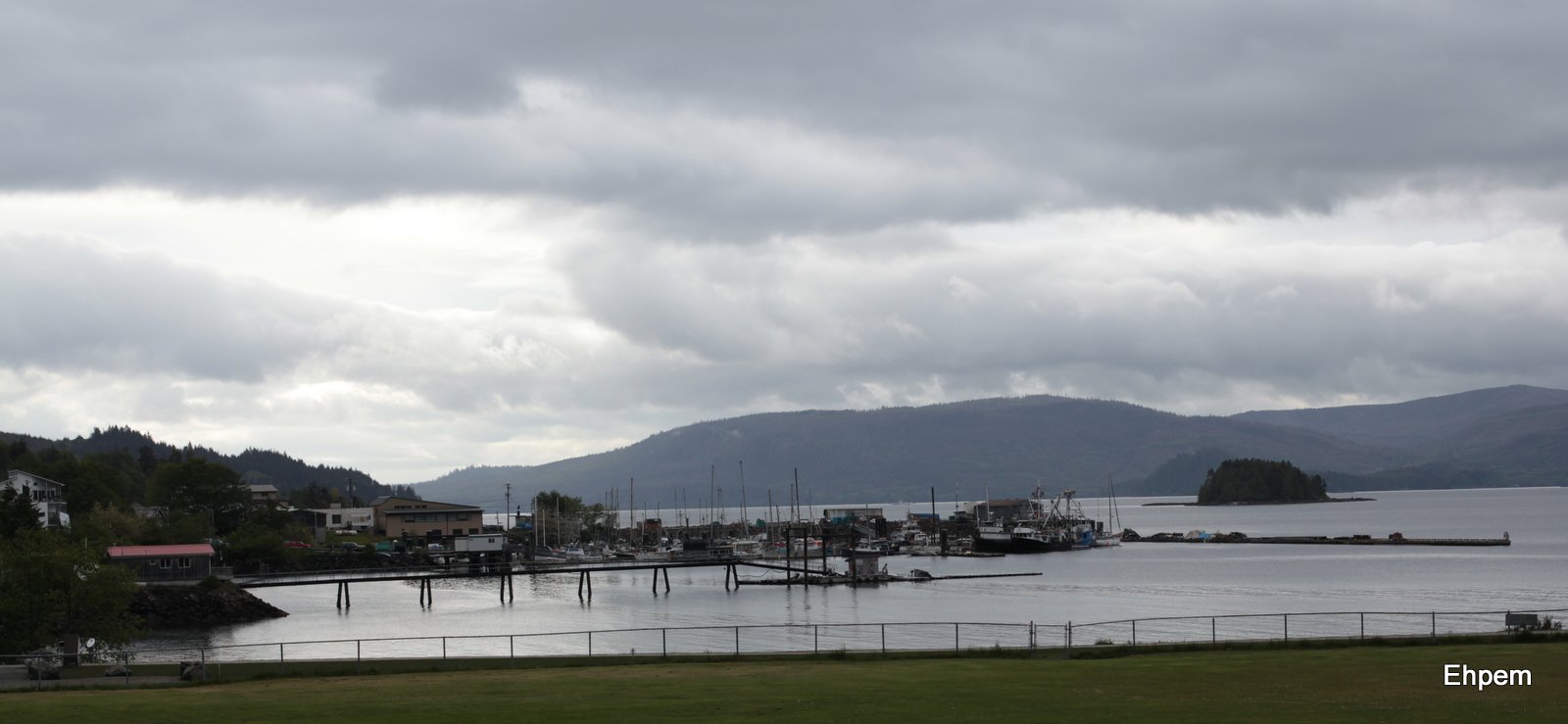
I have been away for two weeks in the Haida Gwaii archipelago (formerly known as the Queen Charlotte Islands). I had the fantastic opportunity to volunteer on an archaeological dig at a site that was occupied 10,700 calendar years ago while sea level was rising in this area, and which is now on an old beach edge currently located in the intertidal zone. The age of the site makes it one of the oldest in British Columbia, but even more remarkable is that it has good preservation of wood and bone as well as the usual stone artifacts. Such sites are uncommon in any time period and no others this old have been found on the west coast of North America.
The trip included brief layovers in Charlotte (or the Village of Queen Charlotte to give its proper name) located on the south shore of Graham Island. One stop was to allow us to get gear and supplies together for the trip to near the south end of Gwaii Haanas (National Park Reserve and Haida Heritage Site to give the rest of its name); the other was on my way home waiting for the flight out and running some errands around town to help close off the first phase of the project. My first few posts are about getting to the site. It is not an easy place to access – it is 165km by water from the nearest road and about 140km as the raven flies from Charlotte to the site. The airport at Sandspit on Moresby Island is 800km NW of Victoria.
(more…)
Square Grass

A final Friday Harbor image prepared before I went on holiday. I may post more from that visit, but expect in advance to have a new supply of images to draw on.
(more…)
Dock Water
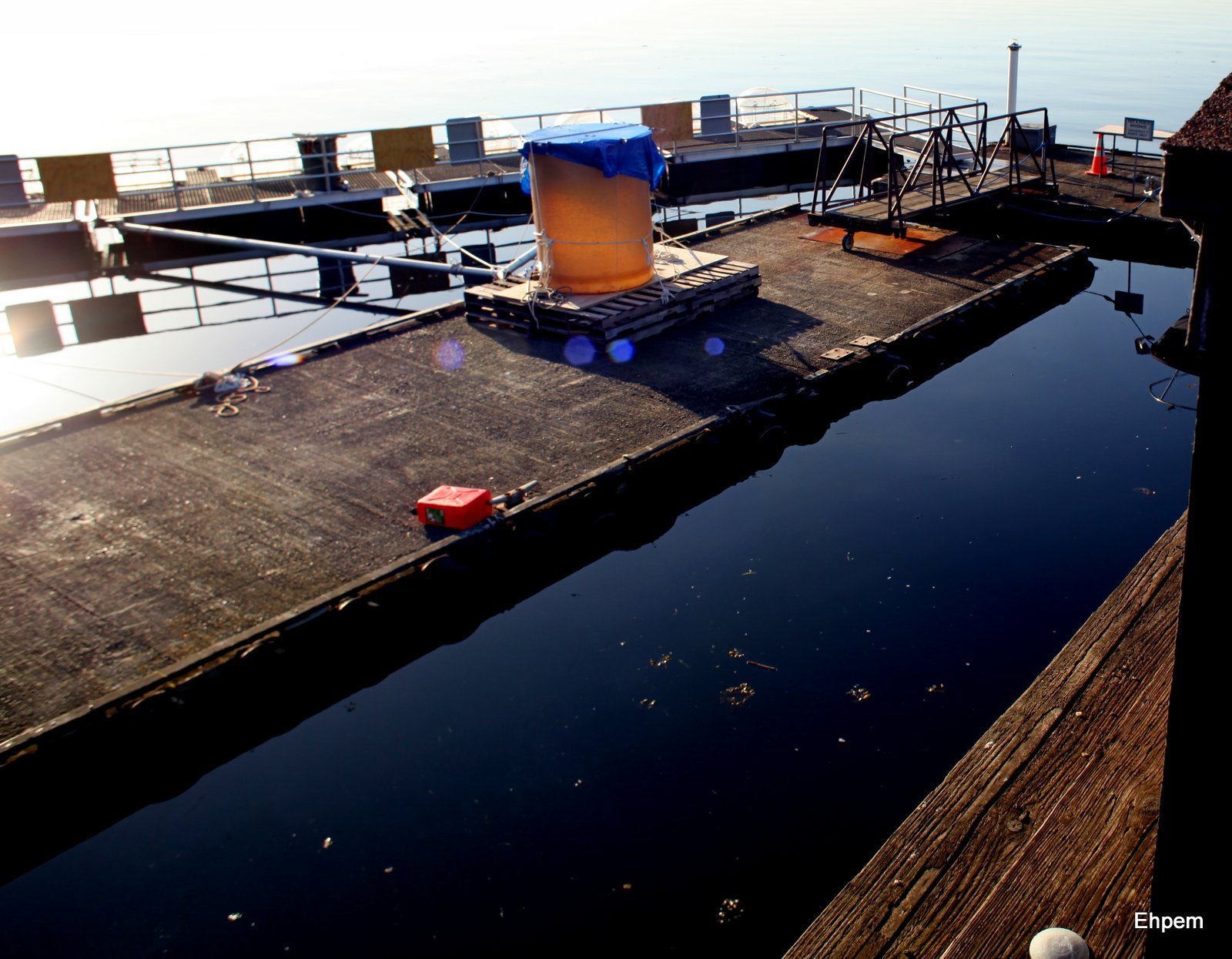
A couple of other views taken on the Friday Harbor lab dock early one morning on our weekend visit in May.
(more…)
Lab Dock III
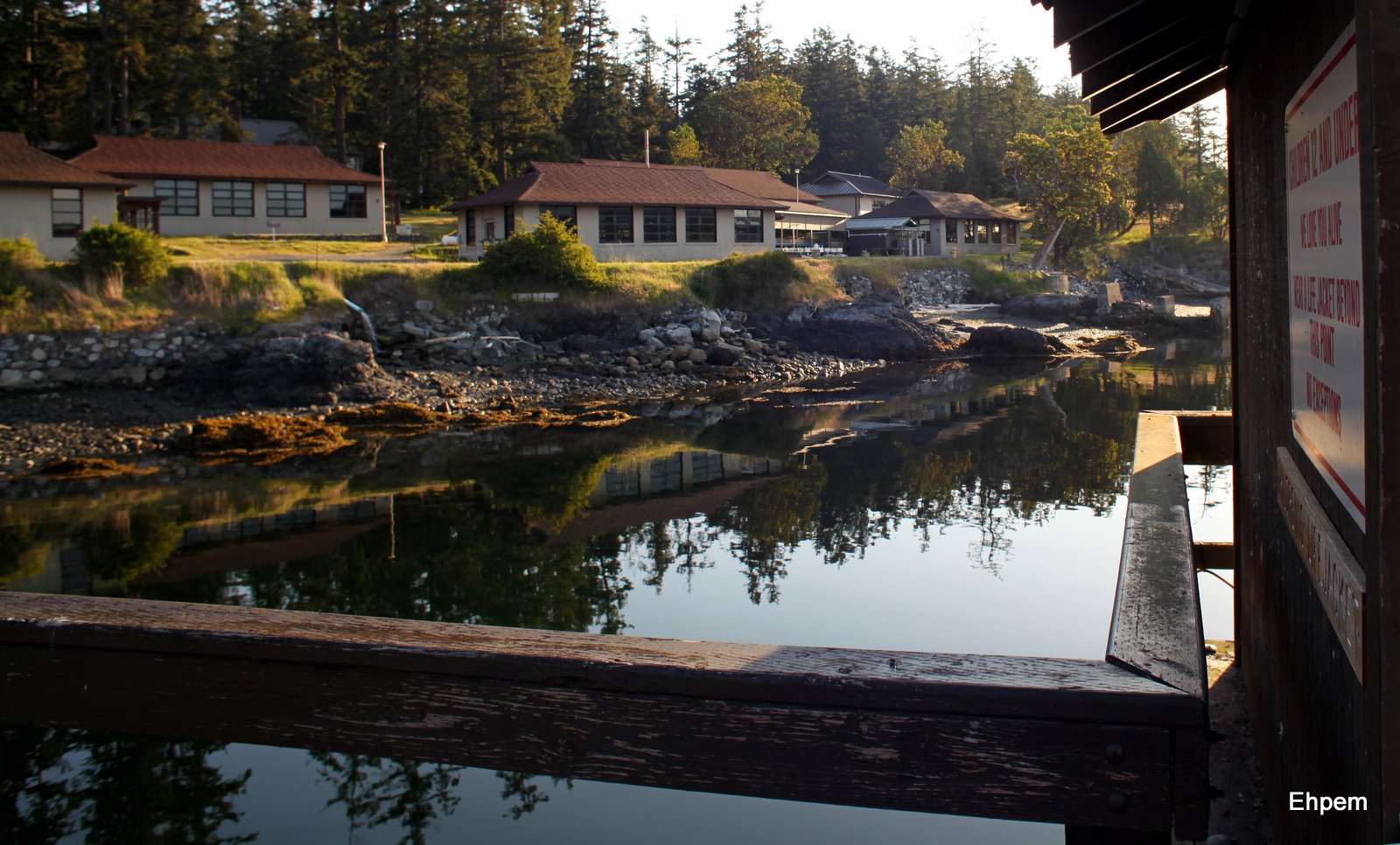
This is a view from the Friday Harbor lab dock taken shortly after dawn from in the shadow of the boat shed which can also be seen in yesterday’s post. I was inspired to take this picture by the reflected light on the under surface of the shed rafters, which has become lost in the rest of the photo, but contributes to the whole, at least for my eyes.
(more…)
Top Posts & Pages – Click Thumbnail To View


Recent Comments
♦ FUJITA (藤田光学工業) H.… on Fujitar P.C 35mm F2.5 Asahifle… ehpem on Child’s Grave Kyle Hoyt on Child’s Grave ehpem on Charles Elliott Pole, Universi… Lisa Kadonaga on Charles Elliott Pole, Universi…


 burnt embers