
Periwinkle Bud Up Close
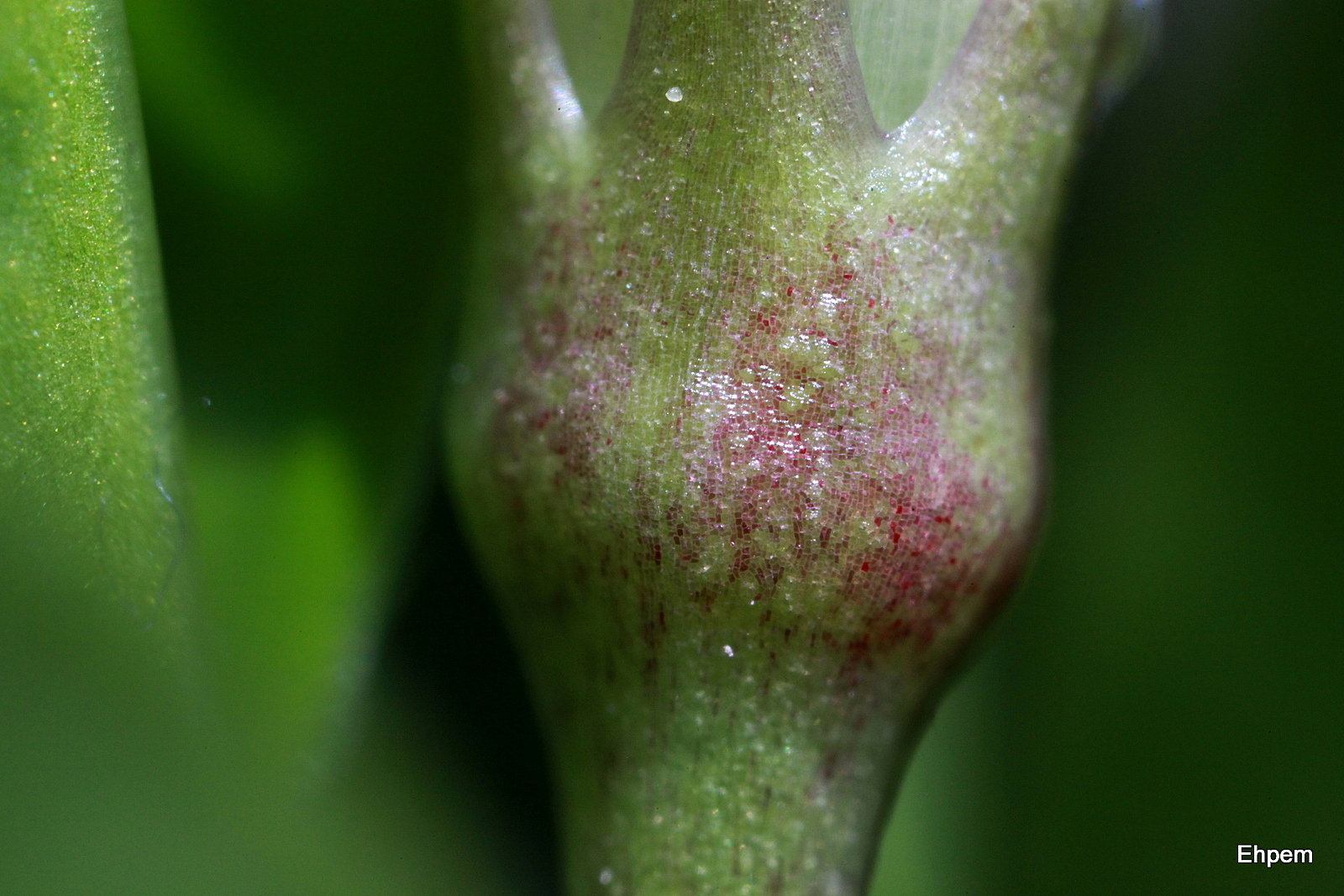
More shots with the Canon MP-E 65mm 1-5x macro lens that I rented over the Easter weekend. To find out more about the lens look at my blog Macro Salt Shaker.
Today’s pictures are of a periwinkle bud and some petal closeups too. Some of these images are at very high ISO values because I had a video setting interfering with the live view mode for stills. I sorted it out part way through these shots, but did not go back and fix all of them.
The shot above is at 5:1 magnification and is the bottom of the bud. This lens has the magnification marked on its barrel for 5x, 4x, 3x, 2x and 1x, although the magnification is continuous between those settings as well. The next 5 images are at those settings, in that order. Unfortunately I did not use exactly the same focus point for each shot, so they are not completely comparable, as with the ISO differences as well. To use a different magnification of this size means moving the lens each time, or the subject, and so the framing and focus point and other aspects change each time.
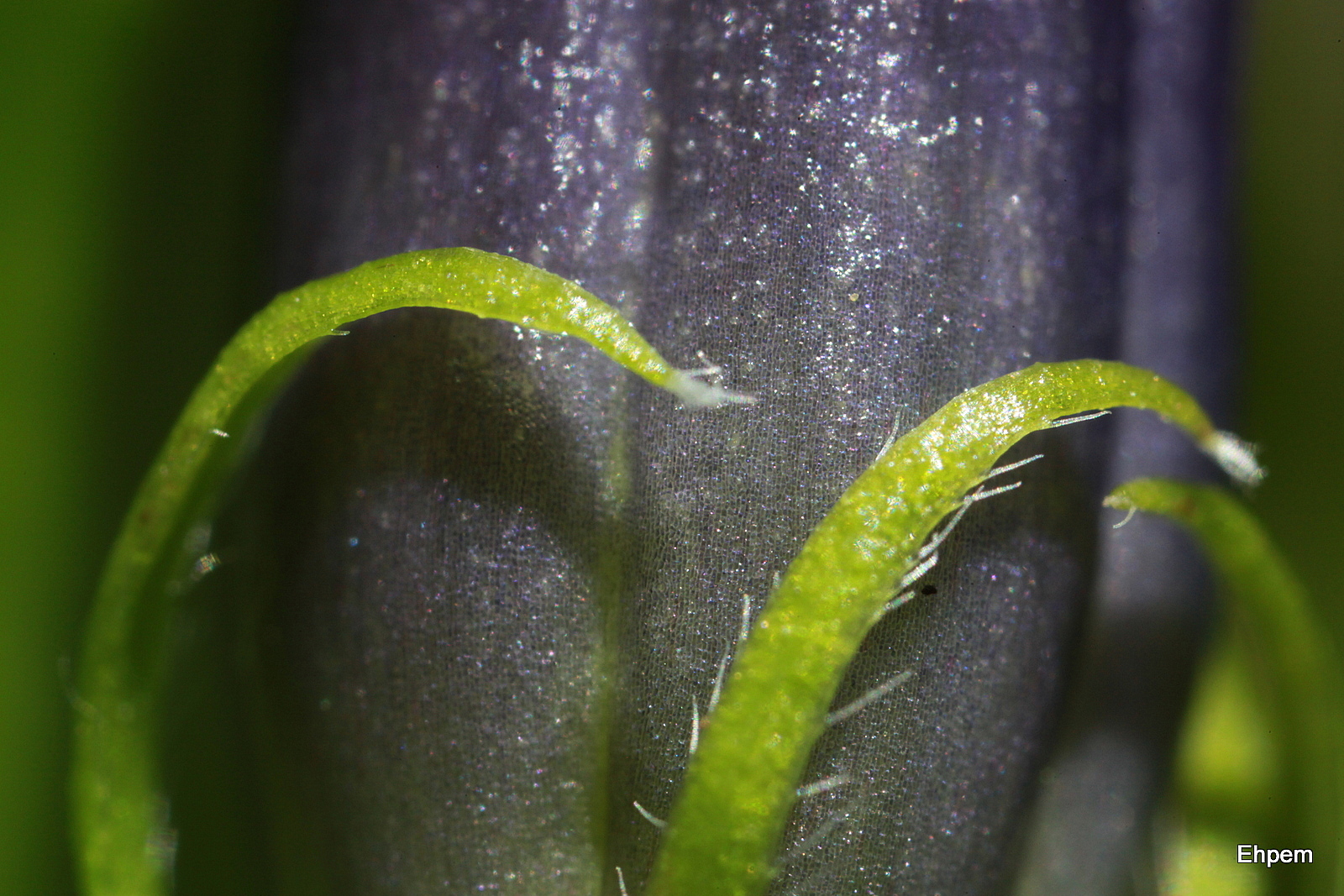


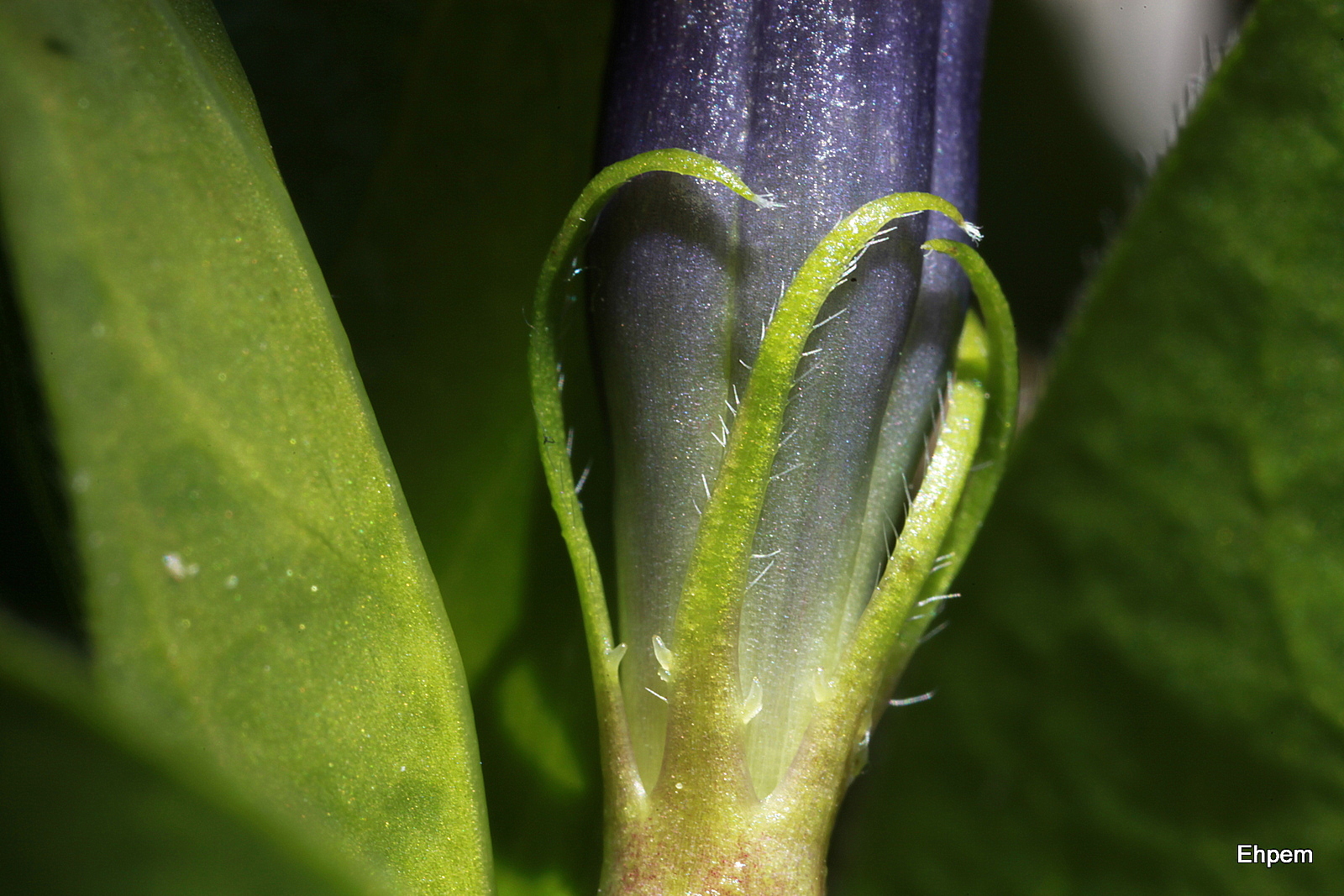
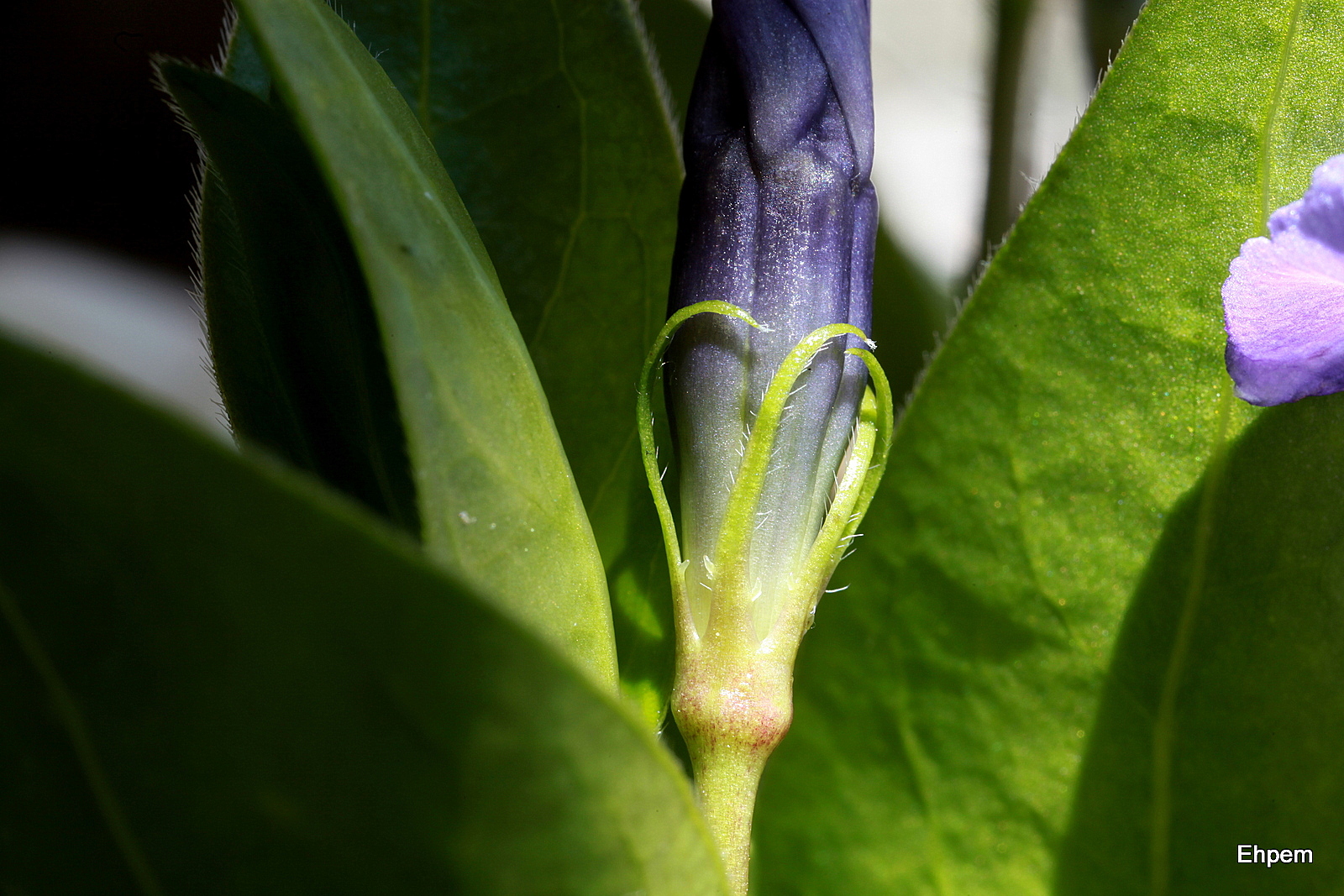
.
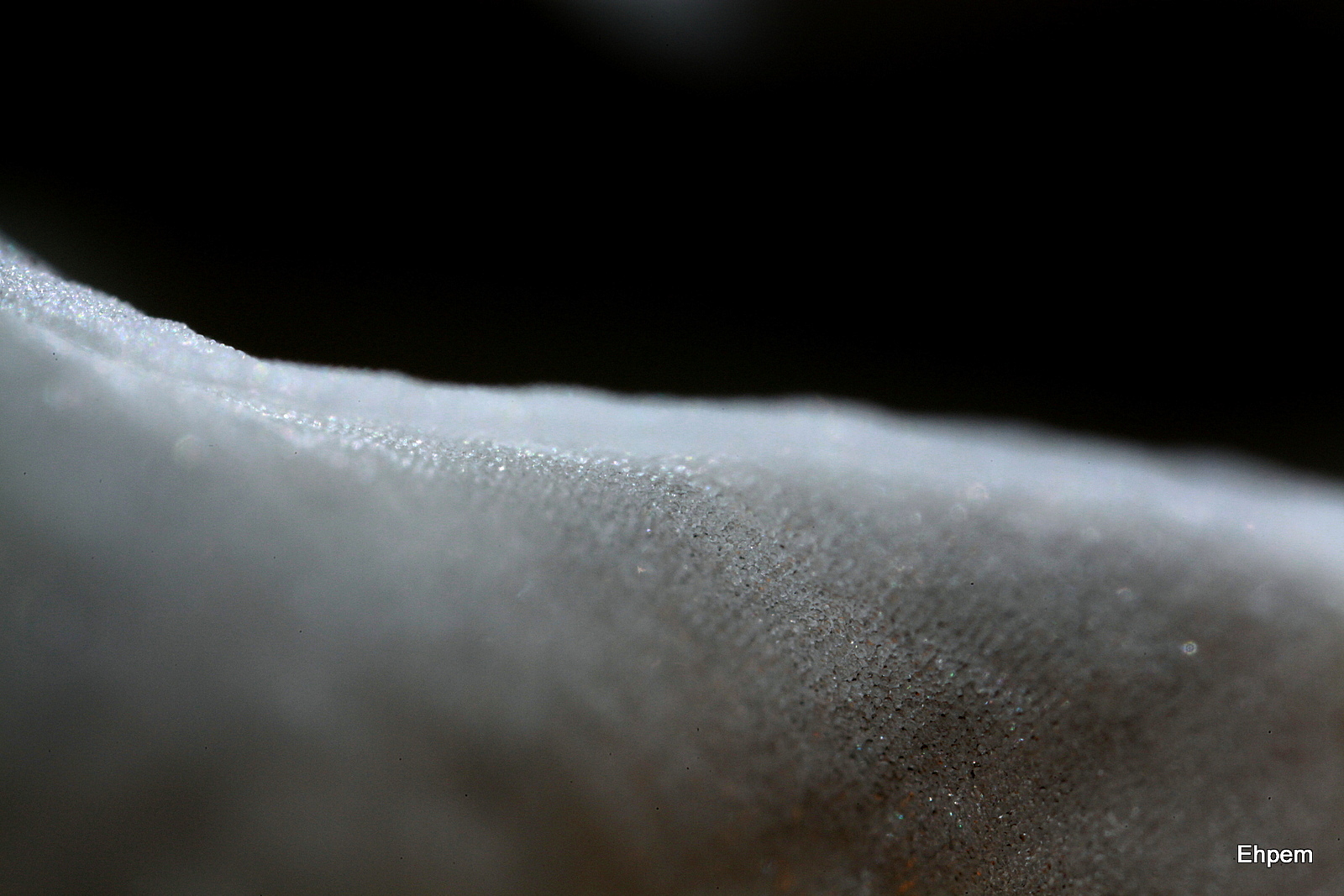
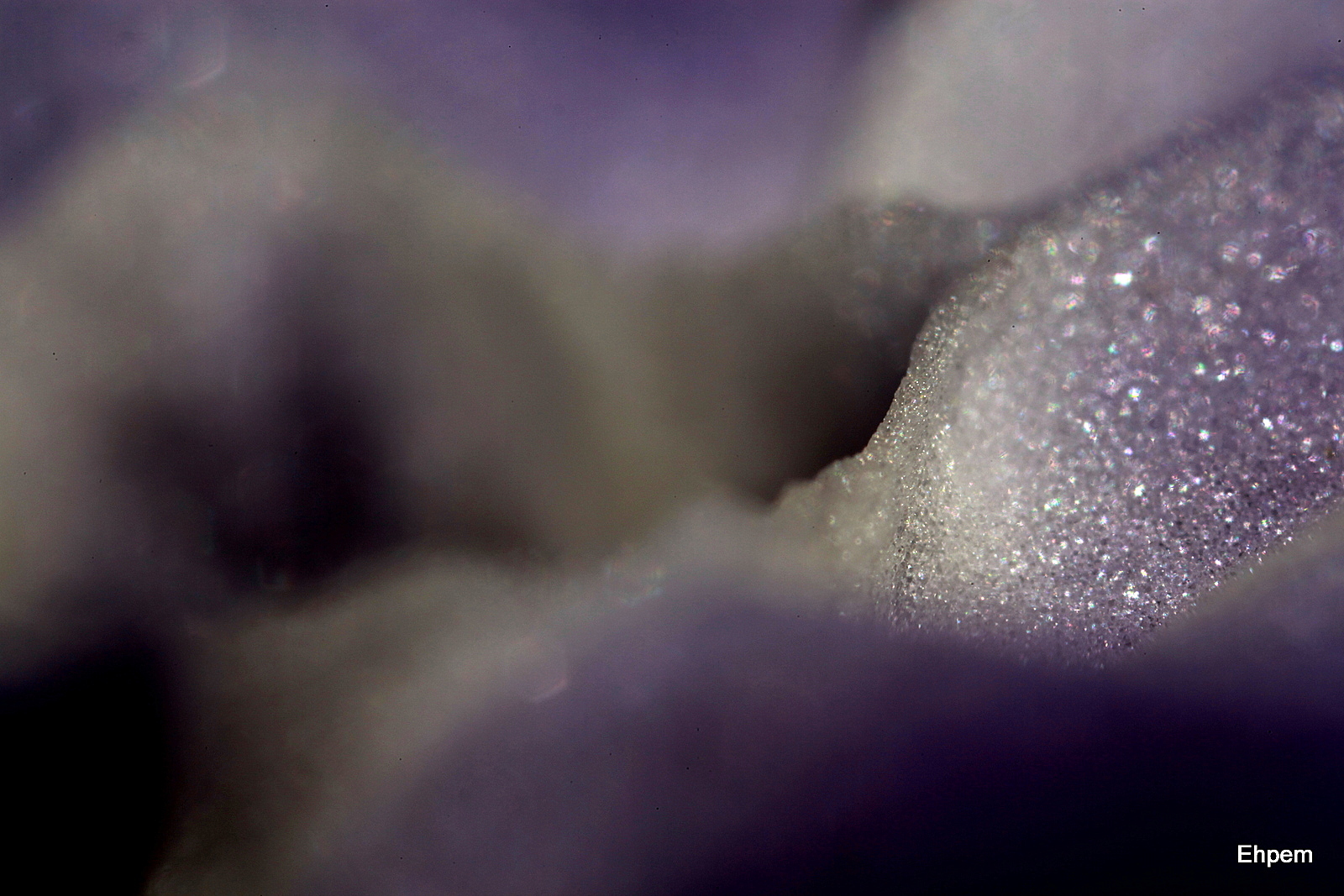
The following pictures are all at 5x of narcissus and periwinkle petals.
.

.
.
Canon 5Dii, Canon MP-E 65mm 1-5x Macro Lens. Exposure details:
- Top bud stem: ISO 1600, f-8, 1/80th
- Bud 5x: ISO 1000, f-8, 1/60th.
- Bud 4x: ISO 3200, f-16, 1/60th
- Bud 3x: ISO 200, f-16, 1/5th
- Bud 2x: ISO 200, f-16, 1/6th
- Bud 1x: ISO 200, f-16, 1/5th
- Narcissus petal upper, 5x: ISO 640, f-8, 1/80th
- Nacissus petal lower, 5x: ISO 640, f-8, 1/80th
- Bottom, Periwinkle petal, 5x: ISO 250, f-8, 1/60th
.
.


Wow, this is impressive ! With the 5x magnification it’s as if you’re looking at a new world, an unknown world and it’s beautiful !
LikeLike
Thanks Jocelyne – it is beautiful isn’t it? I am surprised by it, but should not be. It’s just that these are mostly everyday things that are never looked at so closely, so the surprise is the unfamiliar within the familiar.
LikeLike
Amazing! The detail of the “hairs” is great. I really like how you can clearly see the structure behind the leaves. The cell structure in the last few images is sublime.
LikeLike
Hi Ryan. Thanks so much.
I find that this kind of photography taxes my vocabulary past its limits. I know nothing of the names of plant parts. I suppose I could look it all up and be more technical, but then it might be like homework.
LikeLike
yuck! Homework is for children 🙂
I think the posts are just fine without all the tech. Maybe a gadener will inform us all in the comments. 😉
LikeLike
Yeah. I have been hoping for some enlightening input, and have had a bit.
LikeLike
Incredible shots, you even see the cellular structure in the plants.
LikeLike
Hi David – its such an awesome lens. I had a lot of fun with it (in amongst the concentration to get things working properly, there was actually room for some fun). A few more pictures still to come.
LikeLike
Those top few of the bud and the curled sepals are remarkable.
LikeLike
Thanks Andy. Sepals are they? Good to know that. I don’t usually notice them, let along the little spikes/hairs on them, or the leaf edges.
LikeLike
Holy SMOKES, my friend! You can almost see each molecule in the plant here! Amazing.
LikeLike
Thanks Toad – I am very pleased with these shots – all that cellular structure exposed to the world. I think I like the stem detail the best for that kind of information.
LikeLike
Your results from the fab lens are very addicting. Would it be too much to ask that you purchase this lens and shoot more for future posts?
LikeLike
Hi Ken – it is *so* tempting to own this lens. Fortunately, I can rent if for a reasonable rate over the weekend and I am sure I will do so again. Probably on a weekend where I have Monday off so I can can get the most time with the lens (if it is rented on a Saturday, it does not need to be returned till Tuesday, all for the a single day rate). I don’t have any of those coming up soon, at least not when I am planning on being in town. I do have many other things I would like to try with it, so future shots are certain to happen.
LikeLike
I have never looked at a pretty mass of Periwinkle flowers as close as you looked at the Periwinkle bud with your lens, Ehpem. This is another exciting exploration of the infinitesimal.
LikeLike
I have never looked at them very closely at all – I have pretty much given them a miss most of my life. I never new there were red cells in the base of the bud, for instance. And who did? A few botanists and close-lookers – a handful of people I expect.
LikeLike
That’s the thing about photography. With a camera you become an explorer. You want to go where nobody went before and you become a discoverer.
LikeLike
Makes it fun, eh?
LikeLike
Wow! I absolutely LOVE these! So inspiring. The next to last shot (Narcissus petal lower) just blew me away. I can’t stop looking at it!
LikeLike
Hi there – glad you liked that one – all those petal shots were so abstract I could not predict how people would react.
LikeLike
What a wonderful way of looking at things! It’s making me jealous I don’t have one… I think when I’m settled again I will give these macro lenses a shot, though how hard are they to use?, as you can see from my shots I am strictly on the amateur side of amateur!
LikeLike
Hi Ella – first off, your photos are very good and not any more amateurish than are my shots.
This macro lens has very limited uses and is very hard to use. If you look at the other posts using this lens (click on the tag for the lens name) you will see various descriptions of the difficulties in the post or comments. It will not even focus to infinity, so can only be used for macro work.
Most macro lenses will only reach a 1x magnification, and I think that may be true for all Nikon lenses, though I am not sure about that. I am not sure if your camera is a full frame sensor, but if not then it will change the effective focal length of the lens, and I suppose this could also change the magnification.
However, the standard macros, while not as incredible as this lens, are designed to be multi-purpose and are pretty easy to use. My old Takumar macro is something like a 0.5x lens and it does most of the things I need it to (though this Canon lens may have changed that feeling of satisfaction a bit). I would suggest that you look at macro lenses in the 50-100mm range – the latter often make great portrait lenses too.
LikeLike
Hey,
First off thanks for the compliment! If you’re passionate it shows I guess. And many thanks for the explanation and the details. I like using my everday macro setting on my camera, though I still find it a challenge to control it. I imagine that if/when I get my hands on something that offers that magnification I will end just just playing hit and miss and see what comes up, which is why it’s great to be able to rent something for a few days. I find that sometimes you get some interesting shots without meaning to that way… though obviously full control would be ideal! 😉
LikeLike