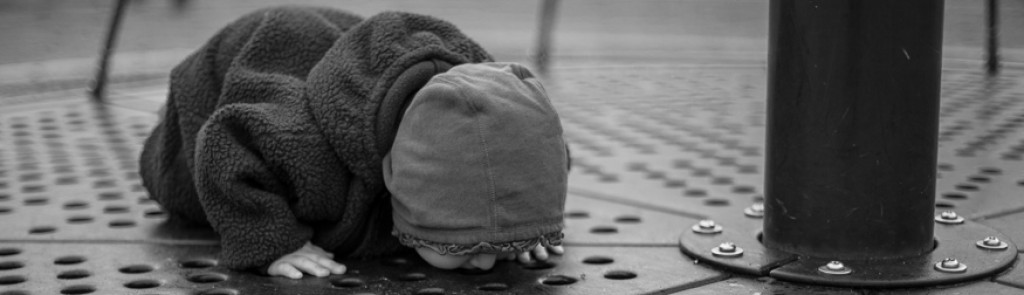
Bucket!
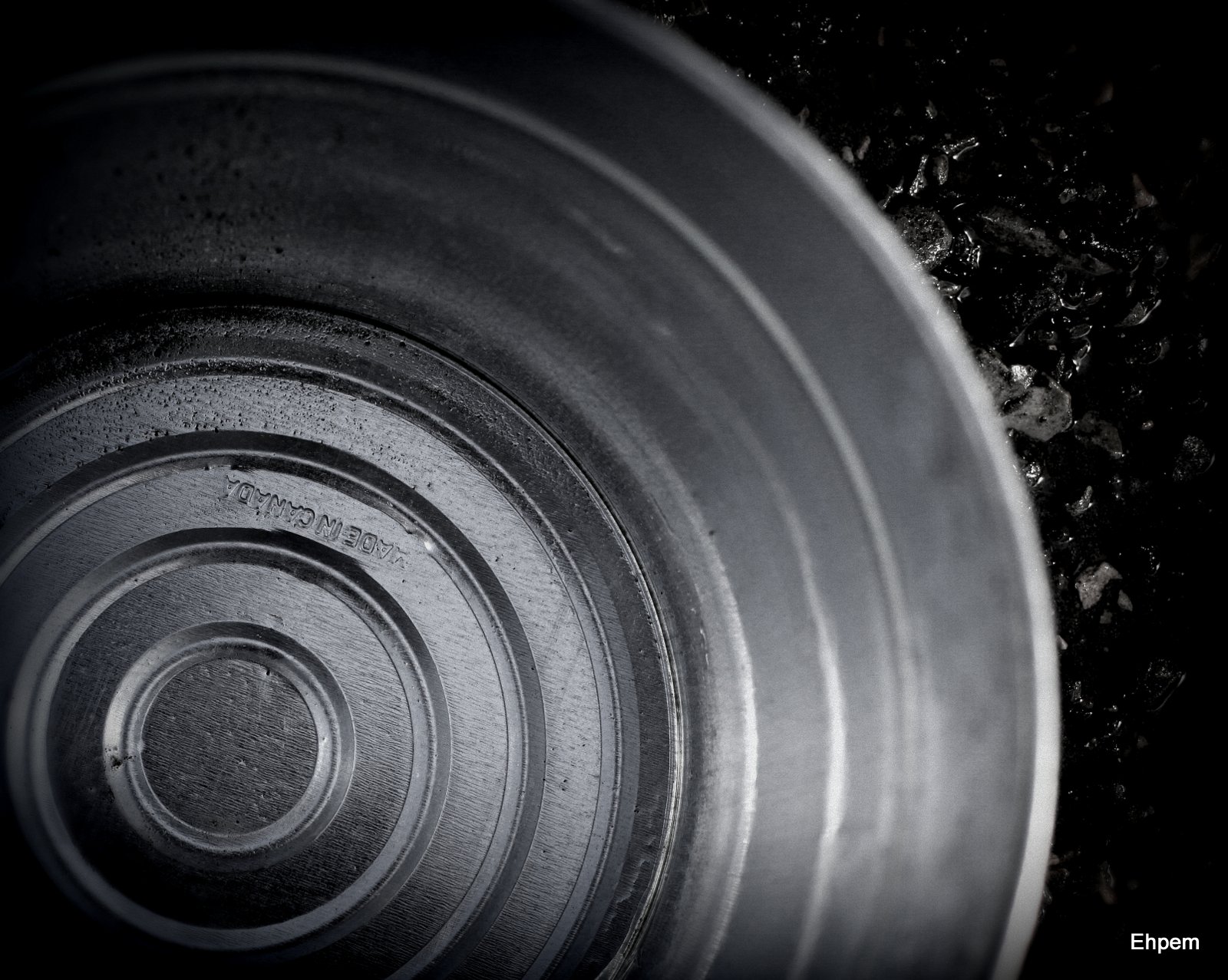
Bucket! It’s a common cry on an archaeological site, usually from the excavation unit, impatient to keep on digging.
Buckets are essential to an excavation. They have to be well made, tough, and preferably quite light. These metal buckets fit that bill – so much superior to the typical domestic plastic bucket that is only good for a day or two before it comes apart. And better than surplus commercial restaurant buckets – the big white ones – as they are too big and too easy to overfill, becoming impossible to lift to the screens without help. Besides that their handles come off.
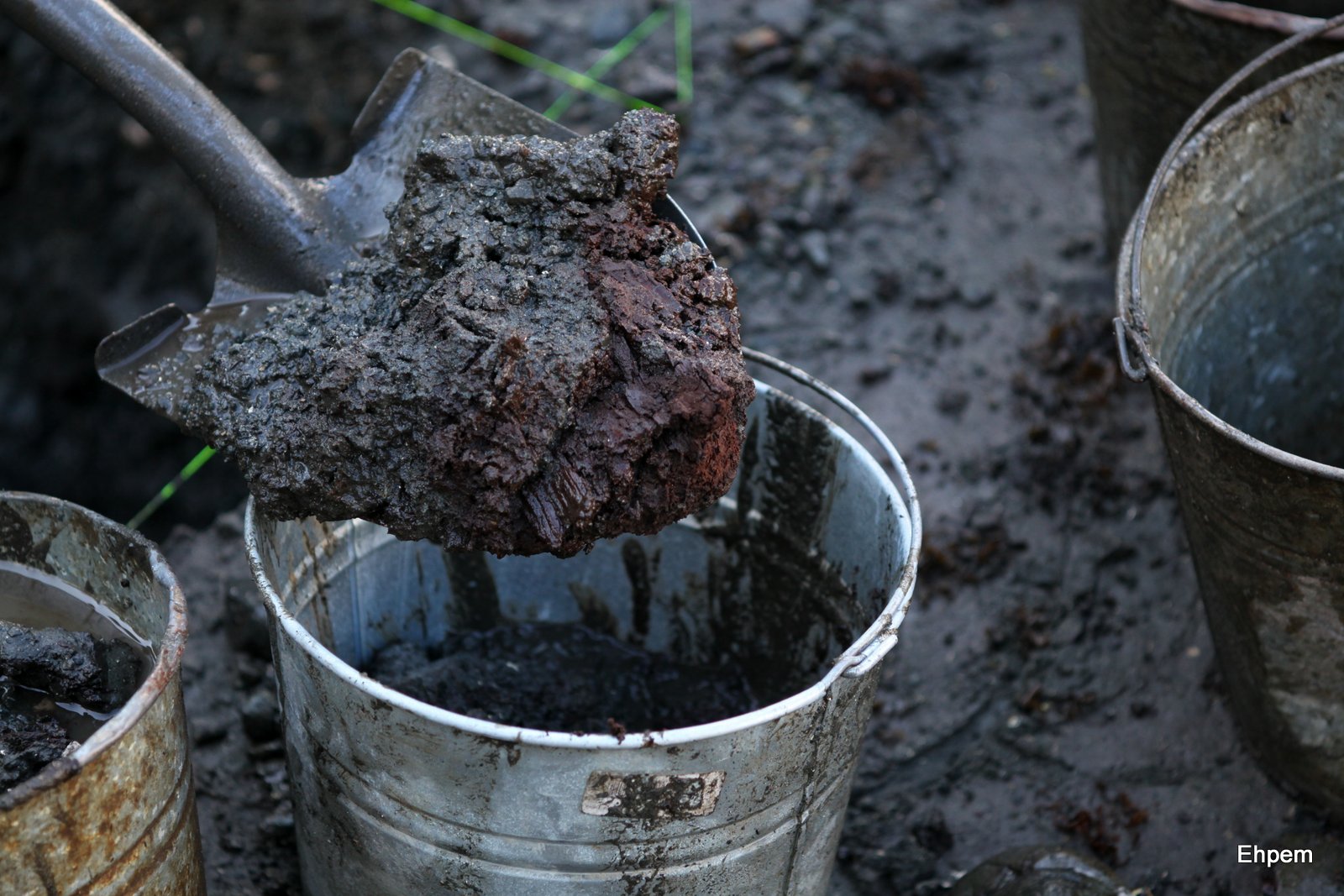
These metal buckets are the right size (Kilgii Gwaay sediments are mostly water and minerals so these buckets, when full, can weigh 50, 60 or 70 lbs), you can sit on them to take notes when a boulder is not conveniently placed and if they get thrown down or kicked aside, they dent but don’t break.
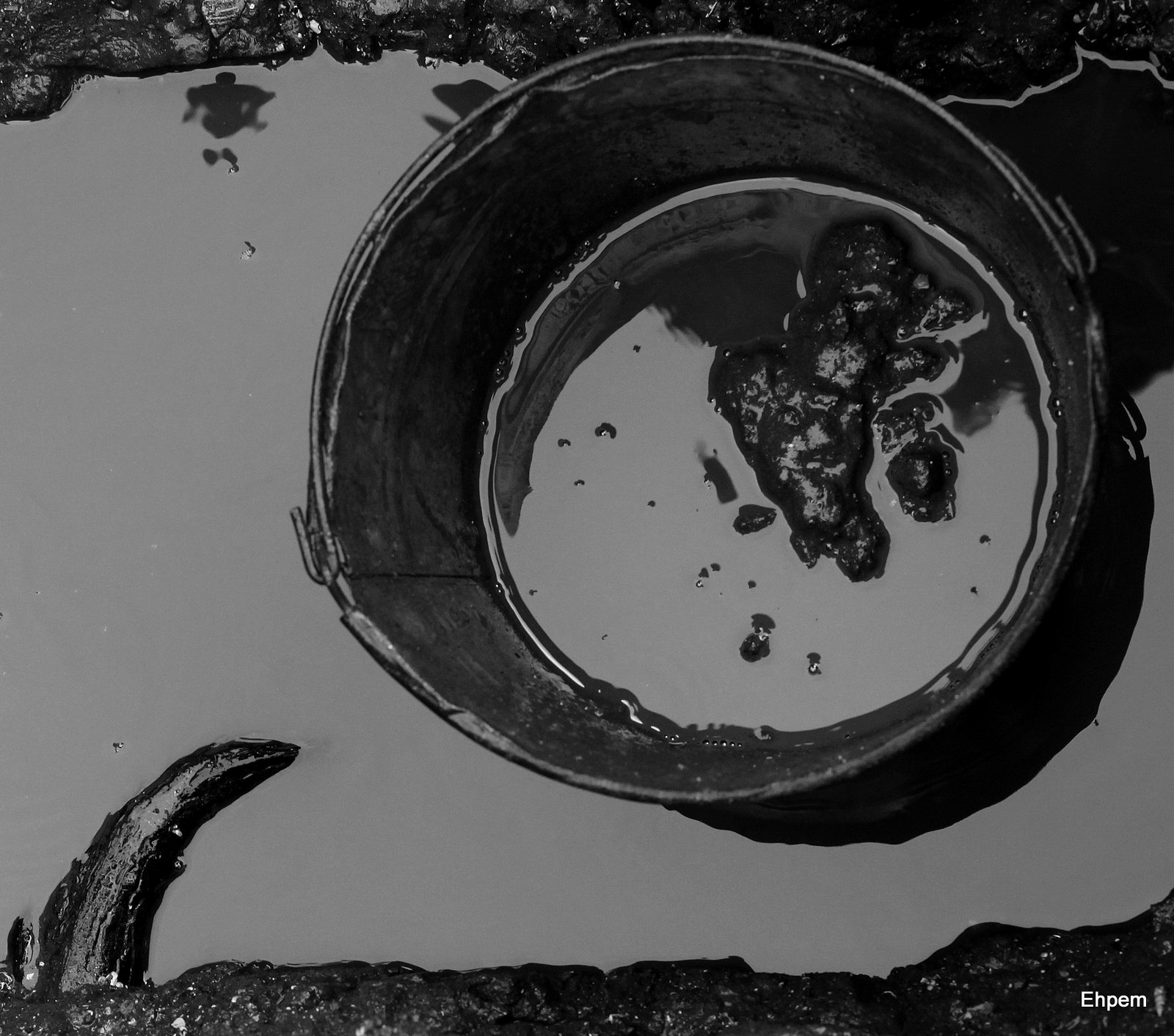
Bucket in unit with wet sediments
Buckets are just another tool. But like so many tools, from hammers to cameras, the casual observer sees nothing special in any one type while to the experienced practitioner they are the correct balance of competing interests to suit the purpose. At Kilgii Gwaay they are most often empty or full of dirt. Sometimes they were filled with fresh water beside the unit for washing artifacts. In the evenings they were stacked, often upside down to keep rain water out. Sometimes they held bagged samples for transport to the boat, or to a backpack down the beach. They were sat upon, stood upon, tripped over, used for bailing wet units and carried back and forth from the screens, over and over and over again.
They also contained the morning snack of urchins, eaten raw next to the screens, or out at the low tide line while gathering a few for later in the day (this will be the subject of another post).

Live snack, ready for slurping
Versatile things, these metal buckets. Appreciate them – they are worthy.
.
-

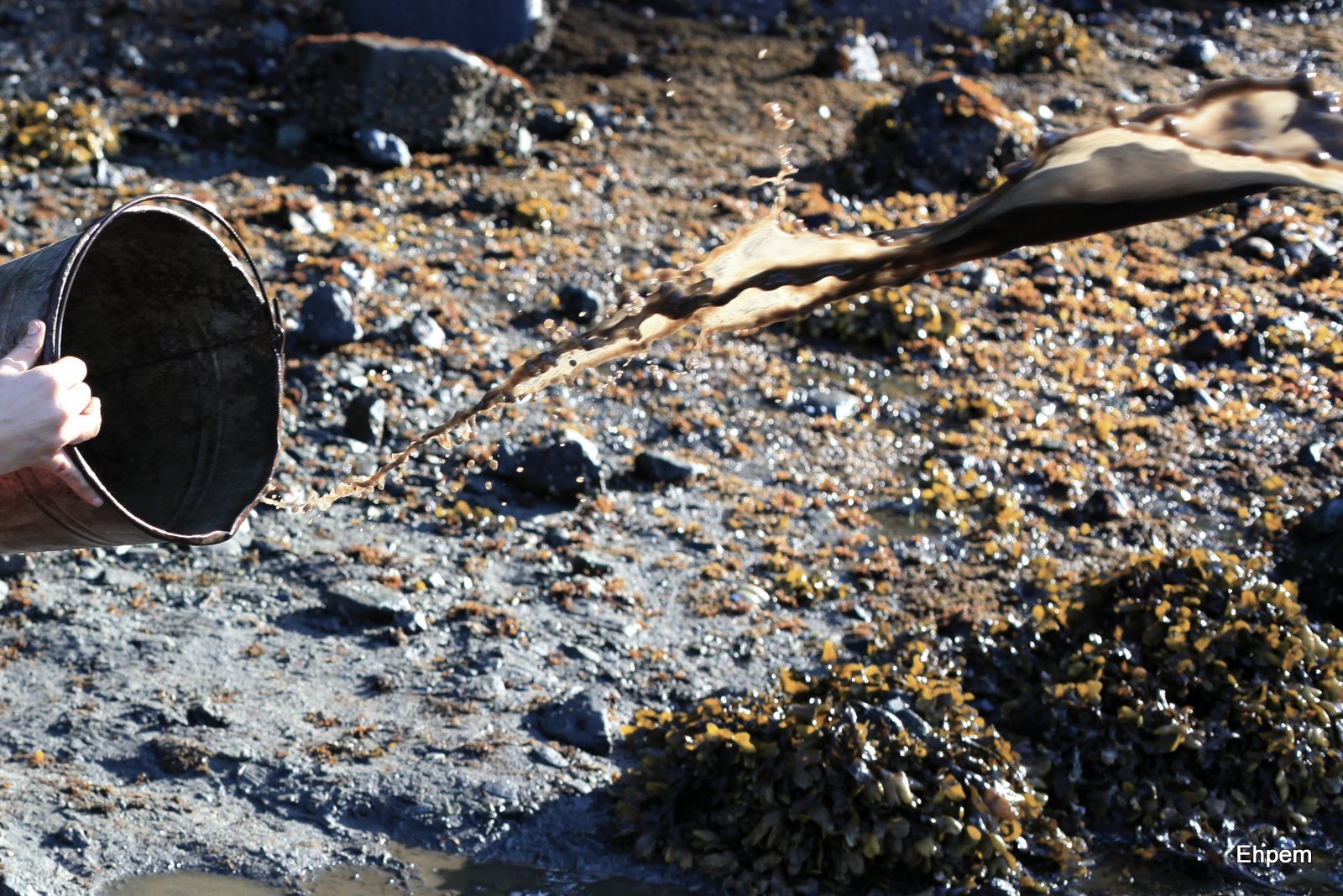
- water aloft
-

- Live snack, ready for slurping
-

- buckets about to be filled

-
- bucket with peat

-

- loading the bucket with peaty pond deposits
-

- fifty pounders waiting to stretch some arms

-

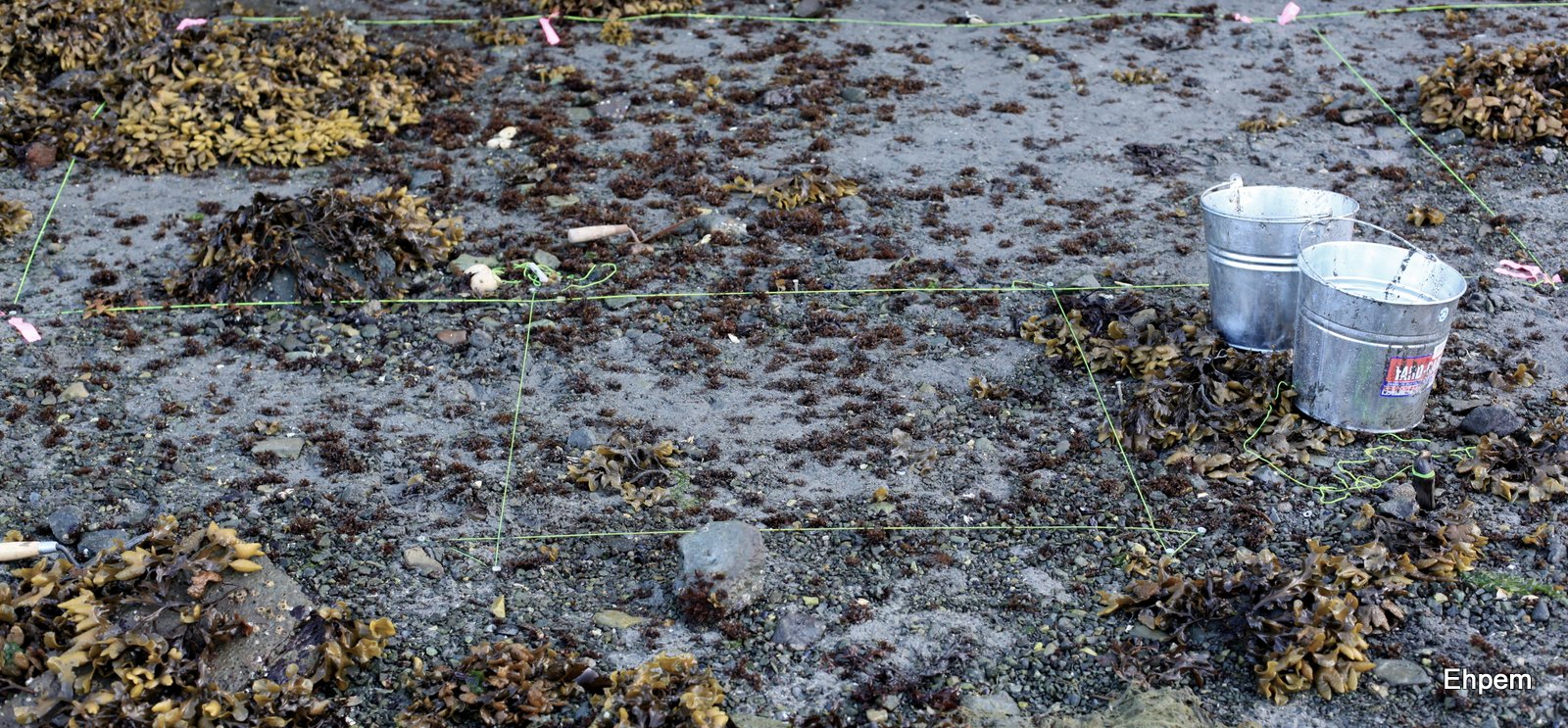
- A new unit, all ready to go with shiny new buckets
-
- Buckets need to be labelled with unit number, level, depth below datum and date so that the screeners don’t lose track when they back up.

-

- bucket in unit with wet sediments
-

- Shiny and new, replacing a multi-year veteran opened up by a fatal shovel strike
.
This link catalogues my posts on the project. I was accompanied on this trip by one of the Quimper Hittys, Tansy (sometimes found on an overturned bucket), who is blogging about the trip from a doll’s view. You can find those posts here.
Canon 5Dii, Canon 50mm/f1.4 lens and SMC Takumar 100mm/f4 macro lens. EDIT: I notice that the gallery view is inserting some EXIF data now, which for the Takumar lens is not accurate as it cannot register the f-stop and thus always says one thing.
.
.


I had a pashmina when I was travelling that functioned as many things like your buckets do. It was a shawl, a scarf, a skirt, a sarong, a blanket, a curtain and a towel at different times on a trip to South America! Love that type of item that is almost anything you want it to be!
LikeLike
The best kind of “tool” for sure. They have so many stories to tell.
LikeLike
Great theme – great eye. I love this set.
LikeLike
Thanks so much Ryan. The lowly bucket and I have spent a lot of time together.
LikeLike
I never in all my years would have looked at a simple bucket the way I will from this day out without seeing your post, my friend! How fun and informative is this?
LikeLike
Hey thanks Toad. These simple tools always mean something different to those that rely on them. That is always a problem of, for instance, a museum collection where the object rests separated from it’s stories and meaning. And in fact, it brings home an essential difficulty of archaeological interpretation – not only are archaeologists trying to understand an object that may contain only traces of its story (such as use-wear marks, chemical residues, repairs, and the things it was found in association with) but usually they are dealing with an object from another time and another culture, or an earlier time of their own people that is so different it might as well be another culture. Makes for an interesting task!
LikeLike
Great series of shots – real grit!
LikeLike
Lynn! A pun on my blog. Oh dear.
LikeLike
Another interesting post with some interesting photos. But I’m wonderin’ about the Live Snacks…
LikeLike
Sea urchins are a huge delicacy, but must be handled with great care. Their spines have barbs that drive them ever deeper, once they have broken off in one’s flesh, often requiring cutting to get them out. I have a post in mind about this delicacy…
LikeLike
Ken, I just noticed that the Gallery view has changed format, not sure when this happened. It now shows simple EXIF data, and provides a place for a comment. I guess this is good, but with the adapters for my old lenses, the aperture readings are false as the camera does not know what value that is. I wonder what it will show with, for instance, slides that have been scanned.
LikeLike