Hands Full of Knapping

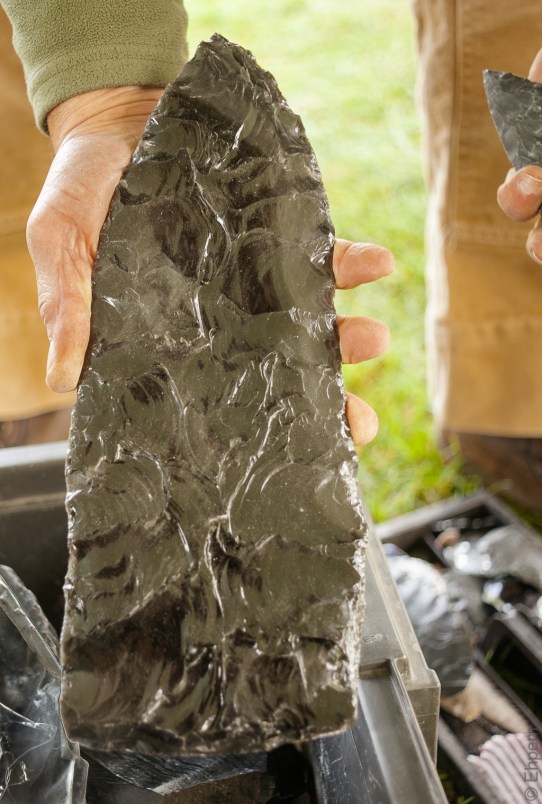
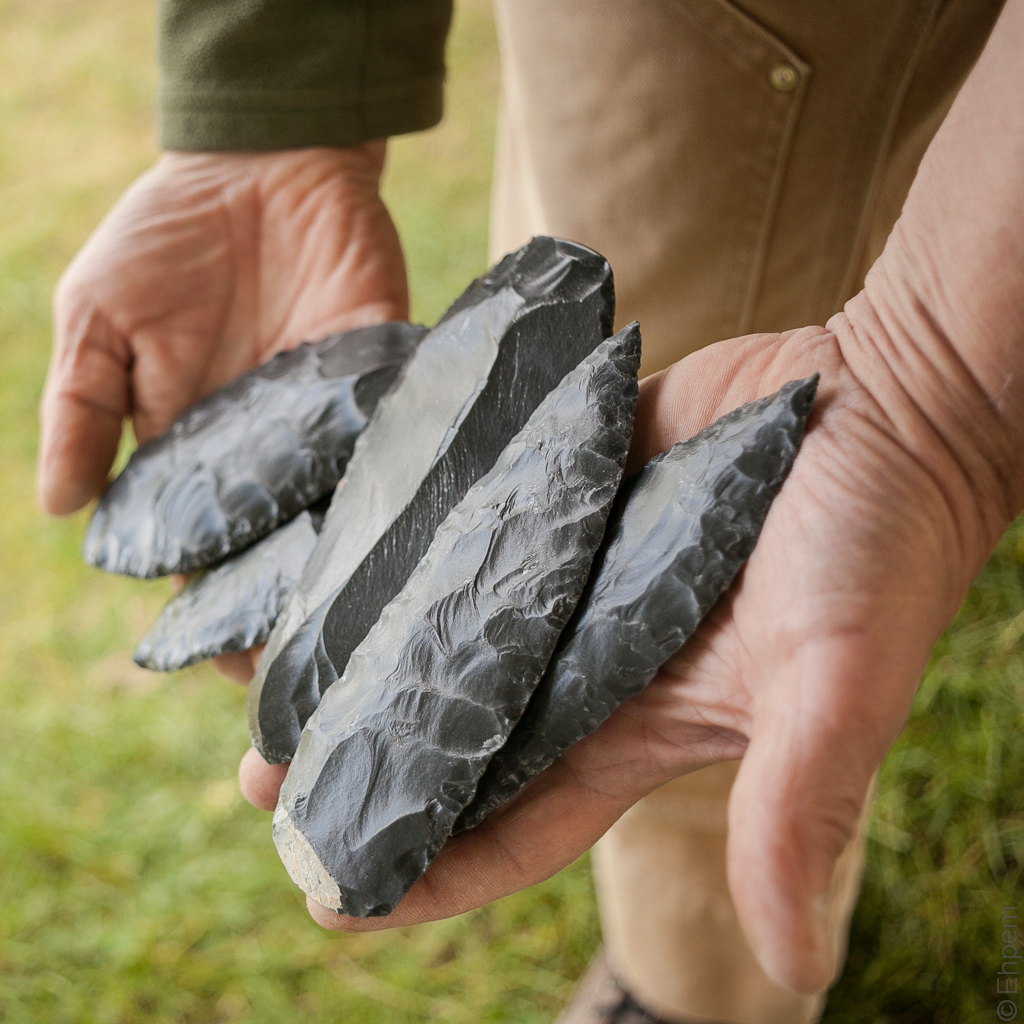
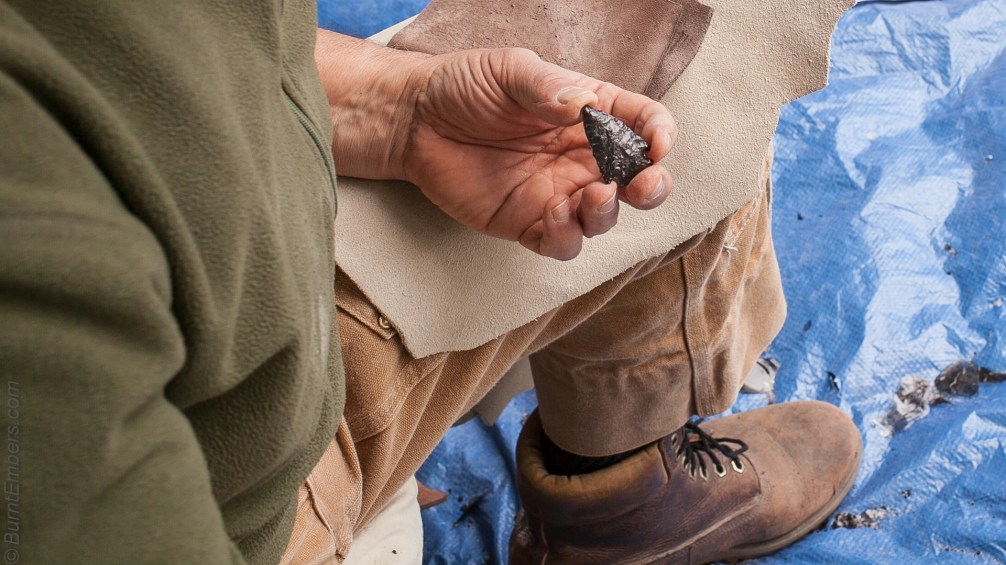
Some more pictures from Dan Stueber’s flintknapping class at the University of Victoria. As I explained yesterday, I had to look in his bench seat. These pictures are mostly of him holding the blanks from inside the bench. The third picture is of archaeology graduate student Jenny Cohen holding a projectile point she made in the class while acting as the teaching assistant to Dan. Pretty sweet summer job to assist on a course like this. Followers of my blog have seen Jenny here before – she was working on the Kilgii Gwaay site that I did a series on this time last year, a site that will be the subject of her master’s thesis.
The last picture is a teaser in the form of a still from an upcoming timelapse video we made together – the making of this small arrow point is the subject of that time-lapse. See the following link for more of this mini-series on Dan’s work.
.

.
.
I just thought I would add that yesterday’s and today’s pictures of Dan taken with my old 35mm Takumar lens from my Pentax Spotmatic remind me of how much I like that lens. Wonderful optics and colour.
.
.
Canon 5Dii, SMC Takumar 35mm/f3.5 lens (m42 mount) except 3rd picture taken with Nikkor-N Auto 24/2.8 lens; various exposures.
.


These are really beautiful items on their own – the facets reflect the light in magical ways
LikeLike
Thank you Andy. I totally agree. Beautiful objects, beautifully made. I did a macro study of one of Dan’s points quite a while ago now, and it really emphasizes the play of light on these surfaces – http://wp.me/p1R4lY-19N
LikeLike
Just checked the link out – that final image is a Jewel.
LikeLike
Thank you Andy – it is a bit reminiscent of ripples on water.
LikeLike
Wonderful photos of an almost lost art form!
LikeLike
Yes, almost lost, but it won’t be now. Too much interest in the archaeological community, and the survivalists too.
LikeLike
The knapping is beautifully done. And the photos are also well done. I’m glad you are able to take this opportunity to document this and be able to share. It’s not something most folks get any exposure to.
LikeLike
Thanks Ken – I feel very lucky to be around this kind of thing from time to time. To see anyone at work on something they are a true master in is fascinating, to be allowed to document it is a privilege.
LikeLike
Did Dan cover hafting too? There must be a lot of art to that too.
LikeLike
I don’t know if he covers it in this course in terms of hands on learning, I have not seen signs of it on my visits. It is after all a lithic technology course, and being taught to archaeologists who may never find a haft in their entire career. But he is very accomplished at that end of things too and I think he teaches, or used to, these kinds of skills on survival courses.
LikeLike
It’s fascinating to see pieces made from obsidian, when the British lithic culture was mostly from native flints. And great shots, by the way!
LikeLike
Hi Patrick, nice to see you here. We don’t have flint, at least not in the European style. We do have cherts and chalcedonies and other similar rock, all of which is essentially the same thing as flint in geological terms, though it does not look like flint. In many areas the most common rock used is a fine grained black basalt or something that looks like basalt such as dacite or rhyollite. They are a lot tougher to work than obsidian, but very beautiful things are made from them too. Dan lives relatively near to a large source of obsidian which is pretty accessible – archaeologists from BC drive down to that source as well to get a supply. In BC the obsidian sources are very remote – usually helicopter rides, so we don’t go locally. Besides, Oregon is closer for most of us than BC sources. In some areas the archaeological sites are not really close to any good rock source, and often the stone technology is different – smaller flaked pieces, often not very finely fashioned, or a lot of ground stone like slate.
LikeLike