Done With Elan

A few days ago I stopped by Clover Point in the area of the sewage facility to test a roll of film and new camera body. My regular visitors will recognise this as a frequent subject of my photography. This visit had the rare timing of the doors being open and the inner workings being partly visible, so some of today’s photos capture that aspect for the first time on these pages. There have been some changes since my last visit – all the main steel doors are now covered with photographs of the surrounding rock (my lead photo includes, on the right, a part of an open door laminated with a photo), and the signs warning it is foolish and forbidden to climb the rock walls have been re-posted, ironically on top of the un-climbable photo of the rock wall. The graffiti artists have come by to add their improvements to the photographs which makes me wonder had the city used photos with graffiti painted on the rocks whether that would have deterred graffiti on top of the photos. I know there are standards of behaviour in the tagging community when it comes to over-painting other people’s work, I just don’t know what those rules are. Painted murals don’t get tagged, but I guess that photographs do, or at least ones like this.
This post is a companion to my weekly post on 52 Rolls that has published simultaneously. The text in this Burnt Embers post concentrates on the camera but includes most of the photos from the first roll of film. The 52 Rolls post (find it here) has a selection from these photos and talks a bit about the film. Photos posted here that are converted to black and white can be seen in colour at 52 Rolls, and vice versa; so if you are interested then head over there as well.
For the past few months I have thought that it would be nice to have a Canon film camera body compatible my Canon EF lenses and the old manual lenses I have adapted to the EOS mount along with various filters and accessories that have accumulated, as they do. The ideal body should be capable of various functions I have become used to on the DSLR such as autofocus, automatic bracketing, full manual controls including over ISO, a wide latitude of options, high shutter speeds, easy exposure compensation, a useful variety of presets, programmable functions to store favourite configurations, and quiet but motorised film advance. Generally I was seeking the ability to apply what I have learned while using the DSLR to film photography in order to get predictable quality negatives. I love the point and shoots and the way it feels to make photographs with them, and ditto for the Mamiya M645, but it seemed that all have their limitations that sometimes I want to overcome. These thoughts lead me to research the last generation of 35mm film cameras, a generation I totally missed while plodding along with my Spotmatics near the end of my first and protracted stint of shooting film. I was surprised by how much of the capability of a good DSLR was to be found in the higher end SLRs from the 2000’s, so I decided to keep my eyes open for an affordable EOS body.
Recently three “better” (but not “best”) EOS bodies were advertised for sale at a very reasonable price by a single seller; two Canon Elan IIEs and one Elan 7N (labelled EOS 33V in Europe). From my reading it sounded like the Elan IIs might not give accurate exposures with manual lenses and that their eye controlled focus feature could be problematic for some people, especially those that wear glasses, like I do. The 7N literature suggested it worked fine with manual lenses (there are conflicting accounts on the internet but most seem to arise from the difference between a 7 and 7N). Also, the 7N does not have the eye controlled focus, which was fine by me as it is one less thing to go wrong. The 7N was only $30 (I seem to be on a roll -so to speak- for good camera deals right now!). I bought it hoping it would work with the manual lenses, and if not, that it would still be fun to use with my modern Canon lenses. Turned out it had a bonus – a roll of Fuji Pro 400H loaded but not yet exposed. That film sells locally for $12 so the $$ risk seemed ever lower. This post contains images from that film.

I won’t say much about the camera – it is well documented on the web because it came out in 2004 well after the internet came into its own, unlike most or all of the other film cameras I own which predate personal computers. My main impression of this camera is that, as a Canon DSLR user, it is very easy to learn even though it has some complex features, and it is an extremely competent instrument. It feels and acts a lot like my Canon 5Dii and feels even more like the Canon Rebel T3i that I recently obtained (that is another story: it came with a camera case I was buying, for the price of the camera case, but was not working. I had it fixed to be a backup body for my 5Dii which is showing the miles now). The weight and ergonomics are much like the T3i which is smaller and lighter construction than the 5Dii, and that fits with the market segment the Elans were aimed at which is the same one that the Rebel Tni series now aims for. The EF lenses work very well with it – they focus quickly and act as I am used to on the DSLR bodies.
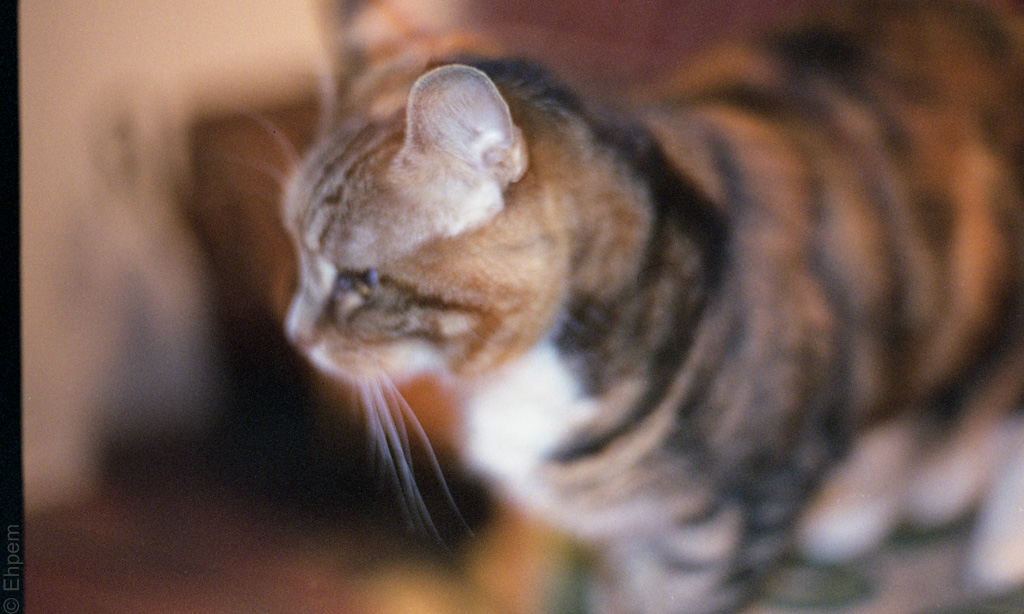
The first shots I took were with a SMC Takumar 200mm/f4 lens I purchased in ~1975 for use with my Spotmatics. It had just been in use on the T3i for some stills and video shots of birds for the Quimper Hitty blog. It was to hand on the table, while most of the other adapted Takumar lenses are out on loan for use in video work. This was a matter of a quick test to ensure that indeed the camera was getting accurate exposures, which was the only question I need to answer for those lenses for now. Thus, I shot hand-held in low light indoors in the evening. Blurry was fine so long as the exposure looked good. I also tried a modified Nikkor-N 24/2.8 but did not take a photo with it, I just compared its exposure readings to those when mounted on a DSLR to see that they were the same.

Manual lens tests done, I mounted a Canon EF 50/1.4 and headed out first thing in the morning to shoot the “free” roll of film, which only took about one half hour as the light was very good. I found the camera to be very familiar – a comfortable fit with my DSLR experience and I shot in aperture priority mode, something I usually do with the DSLRs and most other cameras that provide the choice. Really, it does everything I could want when trying for a very clean film product, including multiple exposures (up to 9 exposures on a single frame) which I have not tried yet, but will be playing with. The main things missing are a spot metering mode and rechargeable batteries, and I can live without those easily enough. The real downside is that it feels so much like the DSLR that I don’t get that film feeling the same way I do with all my other film cameras. It is so automated and slick that it does not feel analogue in any of the ways that have been sparking my creativity. I think this camera will have some very specific uses in circumstances where the look of film is wanted but where controllable results are important, such as at weddings, or shooting live bands. As to the film – I love it. It has terrific tonality and is quite fine-grained for its speed.

Click on any image below to open the gallery for larger sizes.
-
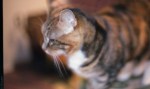
- Takumar 200mm exposure test, hand held indoors
-

- Takumar 200mm exposure test, hand held indoors
-

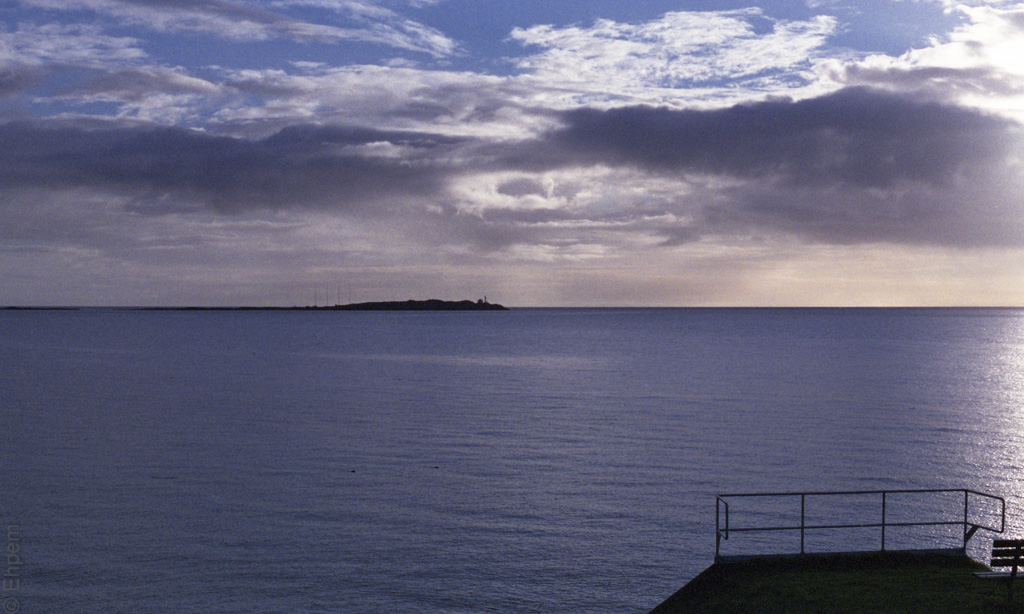
- Trial Island as sunrises
-

- Puddle at ocean’s edge
-
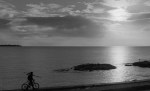
- Bird watcher
-

- Dog walkers with reflection
-
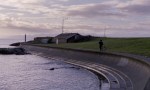
- Bird watcher with reflection, sort of
-
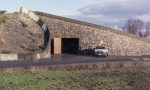
- Sewage works opened wide
-
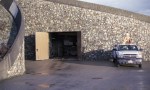
- Closer to the sewer works
-

- In the doors, testing exposure modes
-

- Another test of exposure mode
-

- In the main doors to the left
-
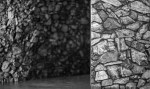
- Open door with photo, to right.
-

- Closed doors with photo and graffiti
-
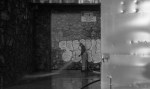
- Cleaning up
-

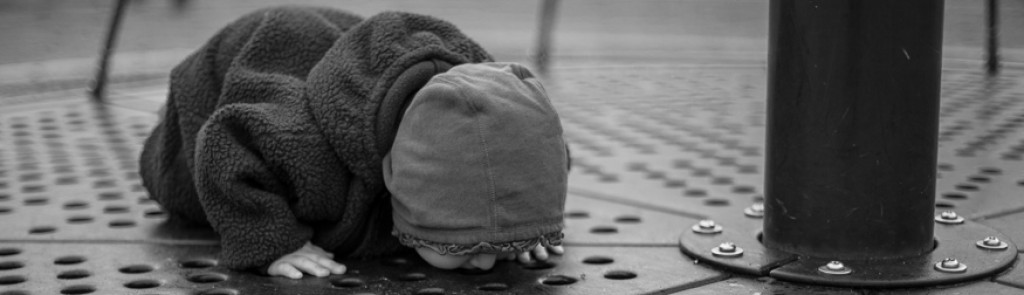
- Baby jogger
-
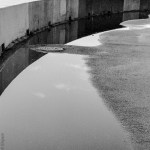
- Manhole converted and cropped
-
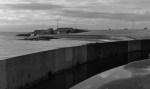
- Converted Curves
-
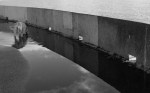
- Dog ripples
-
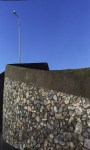
- Light standard
-

- Bench with railing over stinky vent
-
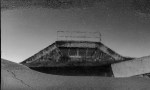
- stinky vent reflected
-

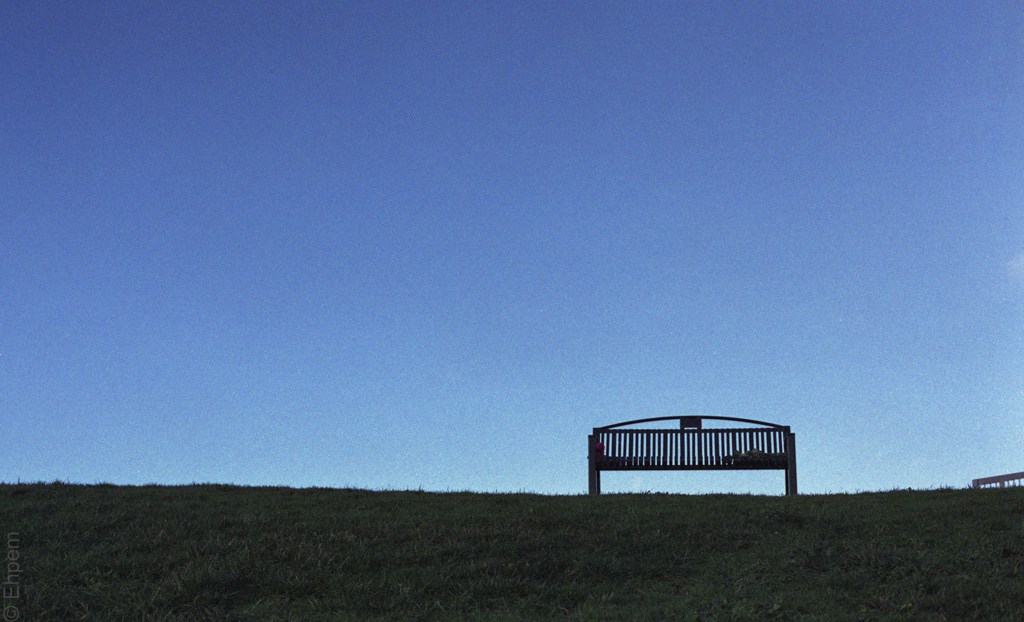
- Memorial bench
-
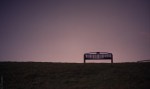
- Memorial bench deliberately under exposed
-
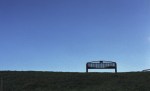
- Memorial bench exposed for scene
.
.
Canon Elan 7N with Canon 50/1.4 except cat and wood stove that were shot with SMC Takumar 200/4.
.
.
If you see an advertisement below, it is there because WordPress makes it so and I don’t pay them money to stop ads.
If the ad is inappropriate or tawdry and you don’t like it, then click on the “About these ads” link above the ad and file a complaint with WordPress.


 burnt embers
Pingback: Macro on Film | burnt embers
As a Nikon user, I’m totally unfamiliar with the Canon line but I do remember that they brought out some advanced features well before Nikon. While I lived in Minnesota, I purchased one of Nikon’s last film cameras and it is very similar to their present DSLR, at least as far as controls and handling. Your posts a good documentation not only for the photos, but for the equipment and techniques used to produce them. This could be valuable in the future.
LikeLike
Thanks Ken. I should not have been surprised at the similarities between the late model film cameras and the DSLRs, it’s not as if the DSLRs popped out of nowhere. But still, it was an interesting experience. If I had gone from my Spotmatics to one of these bodies without the DSLR experience I probably would have been quite intimidated by the technology.
I hope that people find some of my posts about older cameras to be useful. The Elan series falls into a bit of a grey area as there are lots of contemporary reviews on line, but not much from the perspective of reviving their use in the digital age, and quite a bit of confusing information about using manual lenses on these bodies. So, if I can show for one of the models how that aspect works, then perhaps it will be a contribution, if my post shows up in the search engines.
I get quite a bit of traffic on a couple of my posts for really old cameras, like the Vest Pocket Model B which someone looks at every couple of weeks. It is nice to have posts that live on for more than a day or two.
LikeLike