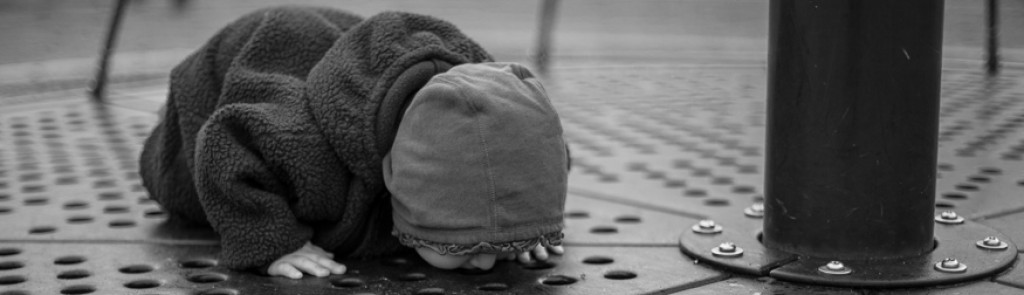
Moss Moon

A while back I made a macro post about a heavy frost that had covered moss with ice. This image is from that same time. It has such interesting bokeh that it’s worth presenting all on its own, but it only really works in black and white. I think the out of focus background was thin sticks of willow or alder, before the leaves came out, and with shiny bark.
(more…)
Troubled Bridge V
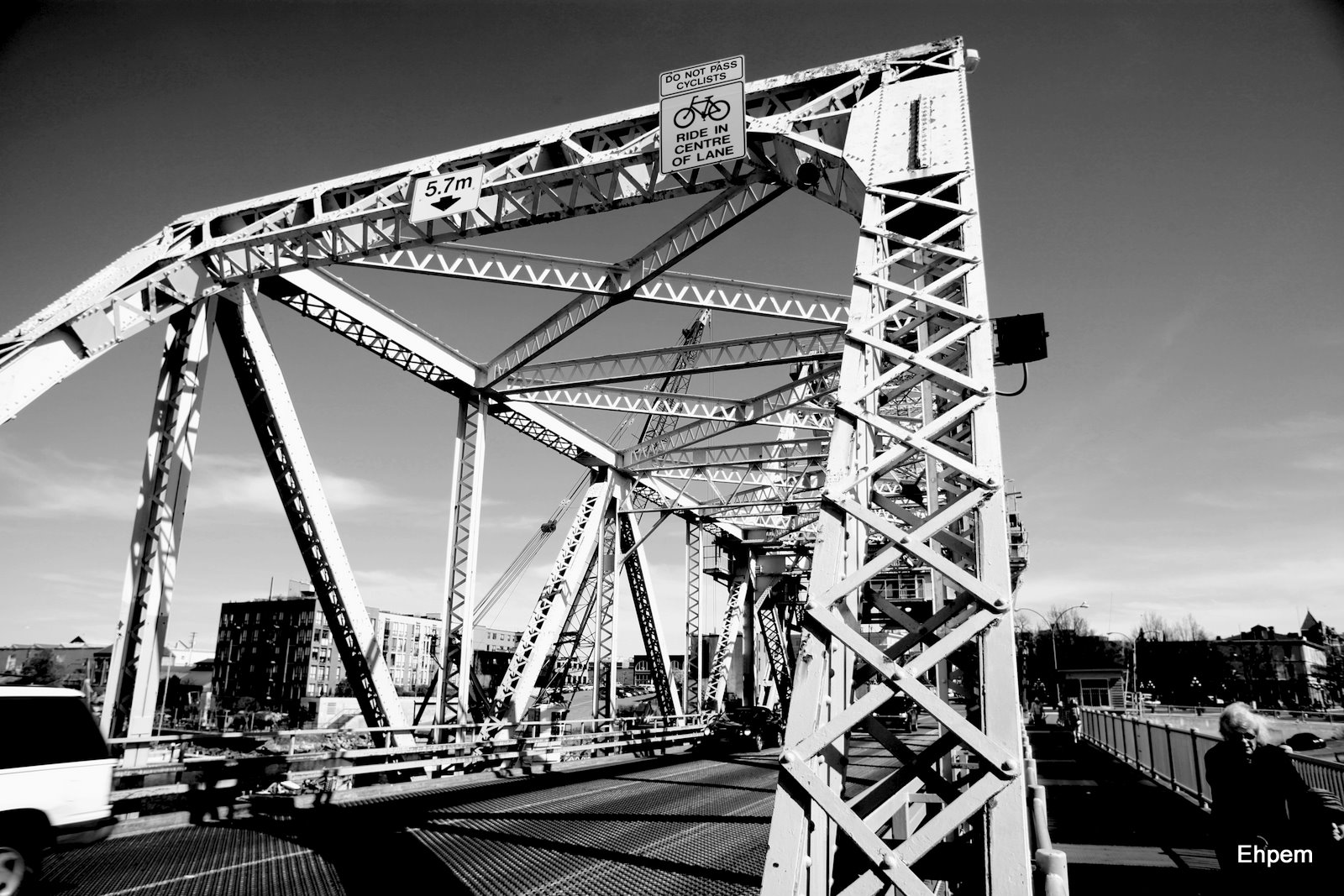
Another image from the removal of the railway span of Victoria’s Johnson Street Bridge a few weeks ago. This picture was taken several weeks ago when I went to the bridge with my then ‘new’ wide-angle lens to document more of what is left of the bridge, and its condition at that time.
The Flower Way II

Today’s post revisits the Flower Way Garry Oak meadow that I showed details from a few days ago. These pictures are the setting of this small triangle of meadow that has Garry Oak, some Arbutus and a grassy meadow of wild flowers with the occasional introduced species doings its best to ruin the local ecosystem.
Mother of Pearl Button
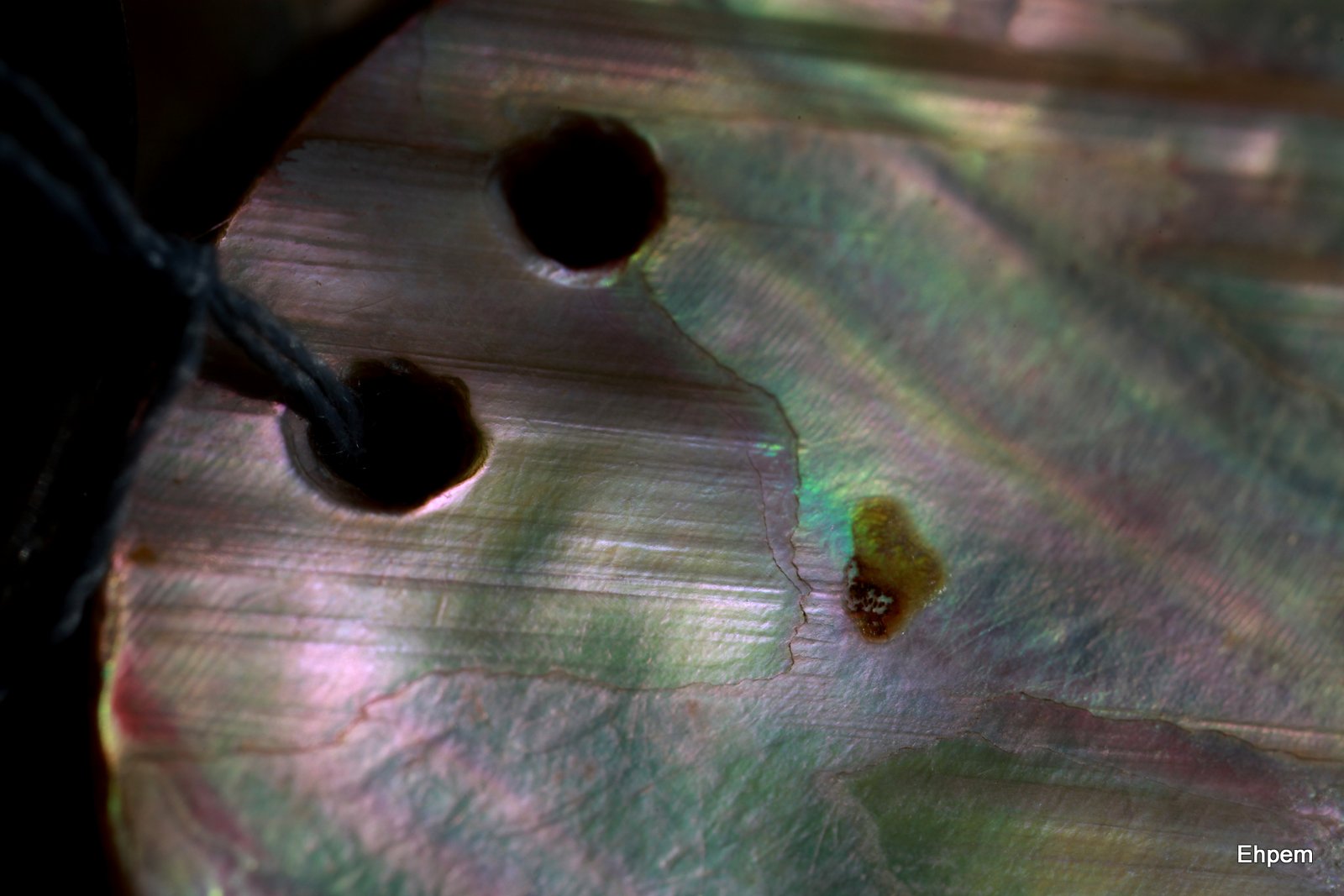 Today I present another old shell button shot through the Canon MP-E 65mm 1-5x macro lens that I rented a few weeks ago. To find out more about the lens look at the first of these posts.
And, once again, I am not sure it is a button because of the off-centre holes. I am calling it a button because it lives in a button tin and because it is flat with small holes for putting thread through and apparently (as they are pairs of holes) for sewing onto something rather than dangling them. If that does not fit button classification, then your buttons are different than mine, or they always have central holes and that may be a very boring state of affairs for you and your clothes. Anyway, compare this button with yesterday’s shell that looked not much like shell, they are similar design and size, but not part of the same set.
(more…)
Shell Button Details

Today I display an old shell button shot through the Canon MP-E 65mm 1-5x macro lens that I rented a few weeks ago. To find out more about the lens look at the first of these posts. They are photographed on a welder’s mask glass. This is an adaptation of an idea I saw on David William’s blog who uses black plexiglass for some of his macros.
I think this is actually two buttons, there are several held together on a small string. Since they are shot at up to 5x magnification I can’t see enough of these to tell if they are the same one or not. They reside in a button tin with other subject matter that has been seen on this blog, like glass buttons, an incised ball bearing, a small snap fastener and other sewing doo-dads. Occasionally an old button is used for some special sewing project. No one that has such a button as these on their night-shirt (of which I have half a dozen all with nice buttons some probably from this very tin, made of linen, cotton-linen, and even a cotton-raw silk mix, I think – aren’t I lucky?) would ever notice the tiny saw teeth marks on the margins of the button where it was cut out of the larger shell. The colour and textures of this shell, especially so close, looks very much like it could be bone, but that is just a trick to the eye. And, actually, I am not sure if these are technically buttons as the holes are off centre near one edge only so they may have been more decorative items of some type.
(more…)
Charles Elliott Pole, University of Victoria
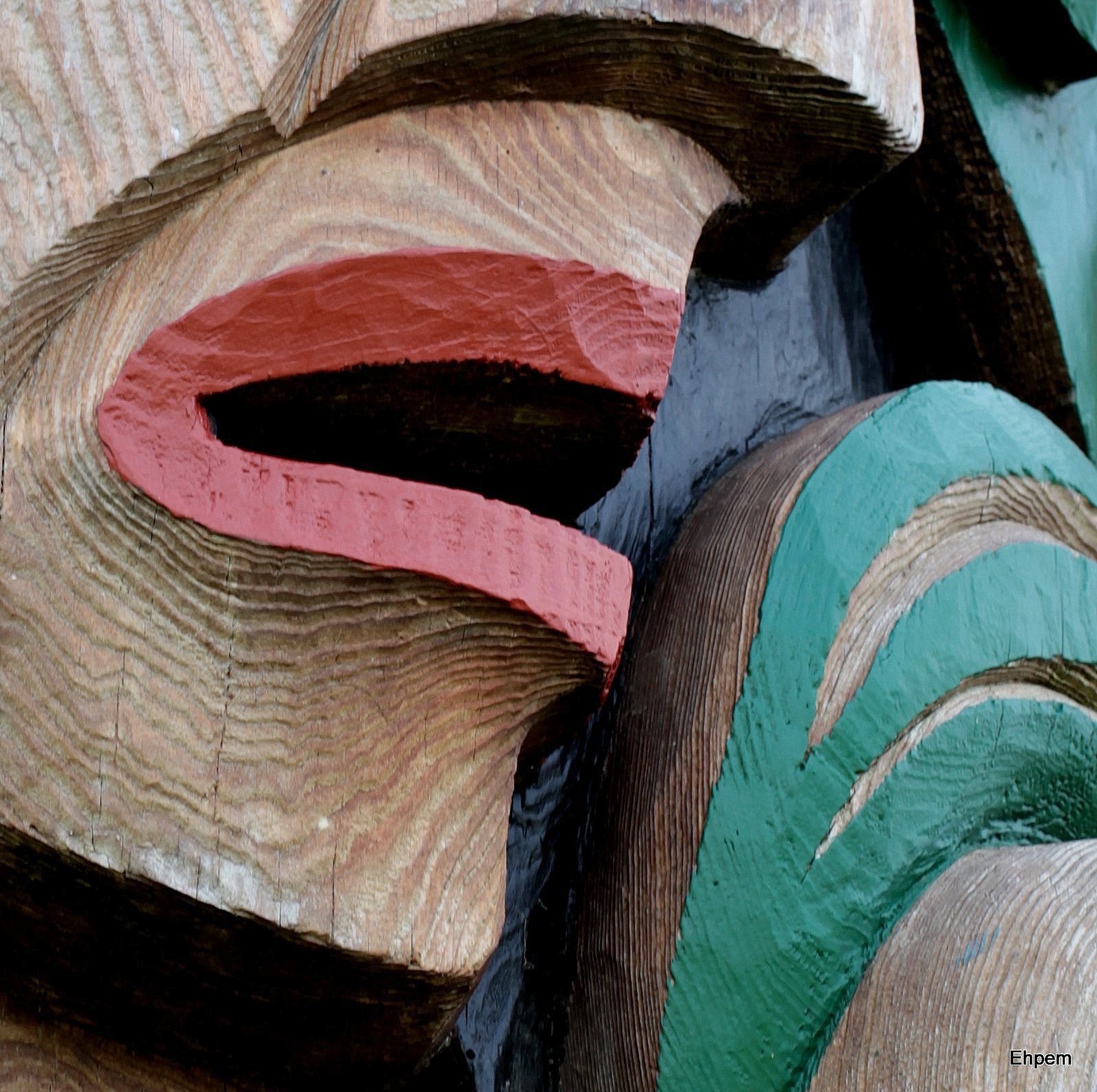
This is another pole carved by Charles Elliott of the Tsartlip First Nation – not long ago I featured a recently carved pole of his called Water Keeper. This pole has no name that I can find, but in fact there is almost no information about the pole available on-line. It is situated in the main quadrangle at U-Vic, across from the library and, appropriately, near to the Elliott Building. It was commissioned by the university in 1990 to mark the Learned Societies Conference held there that year. It is one of several poles and other first nations art prominently displayed around the university grounds. One post (showing a nice HDR photo of this pole) quotes from a university website no longer available that “Twenty-six feet high it tells an old family legend connected with the waterfront near the University.” That is pretty much all I can find out about the pole, it would be interesting to know more of the story behind it.
(more…)
The Flower Way
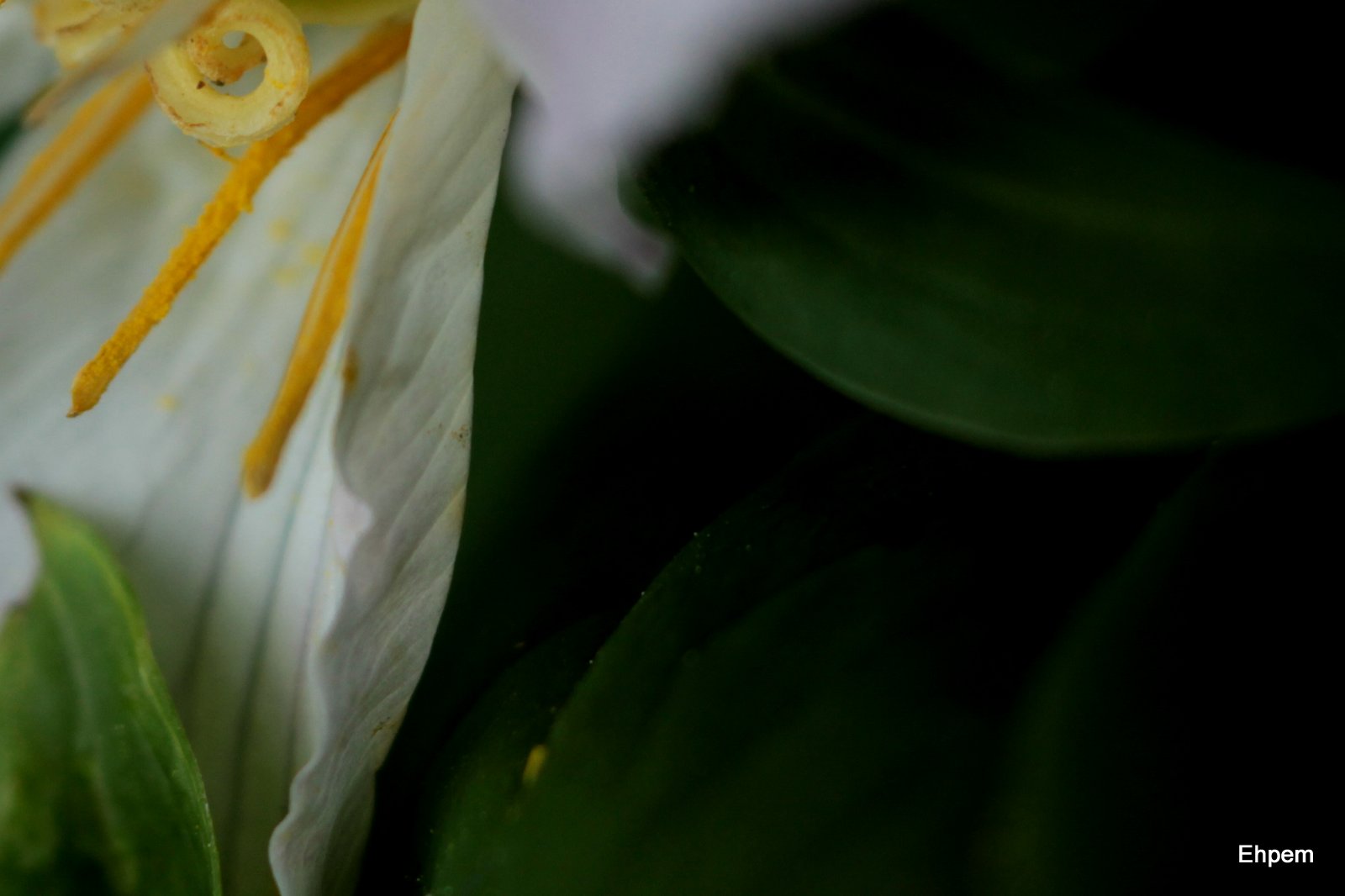
Today’s post has details (mostly) of various kinds of the local wildflowers found in Garry Oak meadows around the south end of Vancouver Island and adjacent Gulf Islands. Some are full frame, others are crops removed from otherwise uninteresting images, often out of focus areas that I like for their water-colour feel
Top Posts & Pages – Click Thumbnail To View


Recent Comments
♦ FUJITA (藤田光学工業) H.… on Fujitar P.C 35mm F2.5 Asahifle… ehpem on Child’s Grave Kyle Hoyt on Child’s Grave ehpem on Charles Elliott Pole, Universi… Lisa Kadonaga on Charles Elliott Pole, Universi…


 burnt embers